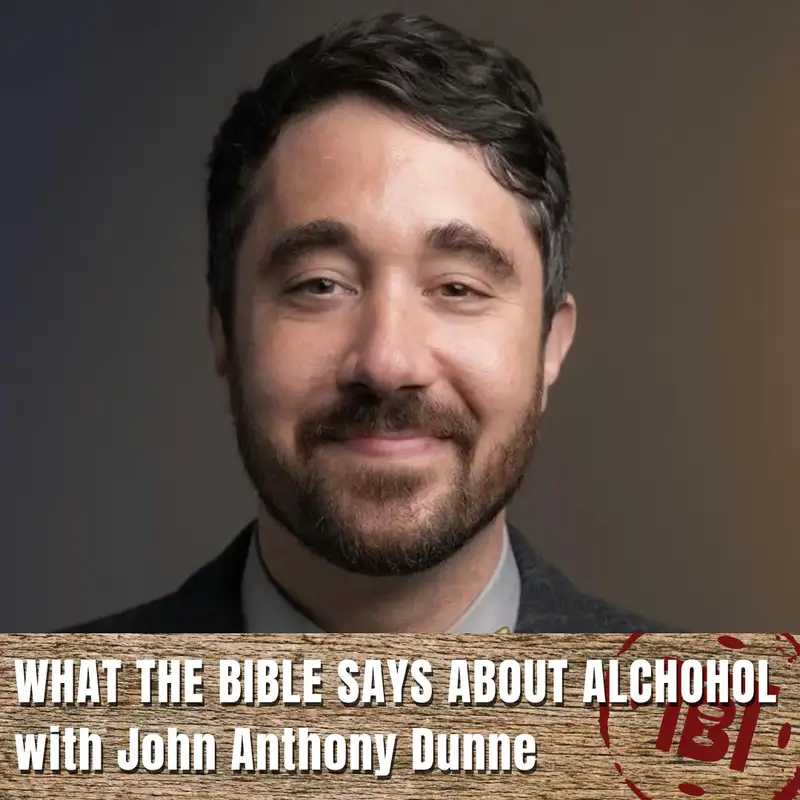
What the Bible Says about Alcohol with John Anthony Dunne
Episode 59 (John Anthony Dunne)
===
Andrew Camp: [00:00:00] Hello and welcome to another episode of The Biggest Table. I am your host, Andrew Camp, and in this podcast we explore the table, food, eating, and hospitality as an arena for experiencing God's love and our love for one another.
And today I'm joined by John Anthony Dunne.
Dr. John Anthony Dunne earned his PhD in New Testament at the University of St. Andrews in Scotland under the supervision of Professor NT Wright. He's an associate professor of New Testament at Bethel Seminary in St. Paul, Minnesota, where he has taught since 2017. And he's the author or editor of 10 books, including most recently, the Mountains Shall Drip Sweet Wine, a Biblical Theology of Alcohol published by Zondervan Academic, born and raised in Las Vegas, Nevada. John enjoys hosting cocktail parties, tasting events, and the annual S-B-L-A-A-R reception each year, which is an international craft for your bottle share event.
So thanks for joining me today, John. Excited, uh, to chat.
John Anthony Dunne: Thanks so much for having me. Appreciate that.
Andrew Camp: So, [00:01:00] you know, at this S-B-L-A-A-R craft bottle share, what's the best bottle that somebody has brought that you're like, oh my goodness, I can't believe I get to try this beer.
John Anthony Dunne: Oh yeah, I'm always, I'm always very excited, you know, when members of AAR and SBL who are coming from all over the world bring their favorite beers to share their local beers, they're hard to find beers.
So there's always a bunch of interesting things on offer at these events. Uh, I always try to bring some aged Bourbon County brand stouts by Goose Island, different variants. What's really cool is every year other people bring different variants too, and so I'm always really excited by those. It seems that most people who attend these events are, are quite pleased by those beers in particular.
When I bring them around and let everybody sample a little bit, they're, they're always quite excited by those and they tend to be. The highlights. I, I, I think I would have to go there. I mean, we've had plenty of the elder, we've had plenty of fantastic beers. We've never had [00:02:00] Westie twelves at any of our events, I don't think.
Uh, I know they did bottle their beer and release them that one year. I forget which year that was. Um, but other than that one time, I've never seen a Westie 12 in, in, in the Wild, so to speak. But I did go to the, I did go to the monastery in Western Belgium, uh, back in like 20 13, 14. Uh, it was a bit of a pilgrimage for me, and that was, that was a, a delightful experience.
But they don't normally bottle their beers except for, I think they had to pay for a roof or something like that. So they, they bottled it one, one particular year. But, uh, yeah, I'd have to say the Bourbon County brand Stouts.
Andrew Camp: Yeah, those are, I, it's been a number of years, probably, you know, close to 20 since I've tried one.
But I remember trying it and you're just like, this is, this is not a beer. To take lightly, like, you know.
John Anthony Dunne: Absolutely, absolutely.
Andrew Camp: You know, I think it's, you know, it rounds out around 18%, if I remember.
John Anthony Dunne: Yeah. It, it, it does depend on, on the variant. I [00:03:00] think, I think on average they're probably 14.5 to like 15 something percent.
Okay. Uh, yeah, it does, it does depend on, on the variance and the year, and of course, I age mine, so they do lose a little bit of alcohol value over time, but not much. Just, just as they're aging, you know, I have some bottles over 10 years old, for example, probably should drink them, but I, I like to, I like to host events and share them with people.
I don't just, you know, pop these by myself.
Andrew Camp: No, no, no. It's not a bottle you're gonna drink in one sitting by yourself, I think. Exactly. I made that mistake the first time and I'm like, ugh. Never again. You know, like Uhuh.
John Anthony Dunne: Yeah, exactly.
Andrew Camp: This, this is a two to three ounce pour and, you know.
John Anthony Dunne: Yes, exactly. Exactly.
Exactly.
Andrew Camp: So, you know, you're a lover of good food and wine, it seems. And so what, like, how, how has this love of food and beer and wine and alcohol, you know, this, the totality, how has that grown inside of you and like what, what was this relationship growing up for you? [00:04:00] Um, yeah,
John Anthony Dunne: well, yeah, yeah. Well, growing up, I mean, I, I grew up in a fundamentalist Baptist context in, in Las Vegas of all places.
You know, as you do, you know, there's kind of a, a sep separatist strand in Las Vegas. Uh, there, there's other, other ways of being Christian in Las Vegas, but one way is a very separatist way and. My experience was very unique within that kind of separatist sort of Christian experience, because both my parents worked in the casinos, they were dealers.
So it was this kind of weird tension where it was like, you know, we, we don't participate in any of that stuff. And yet of course, this is how the local economy works and this is where good paying jobs are and you know, that kind of thing. So, so it was really interesting tension, but I, I just never, um.
Really had the kind of appreciation for like, you know, wine and beer being things that you could enjoy as part of a meal or something like that. That was not part of the context. It was, it was just like it was drunkenness. Or it was abstinence, [00:05:00] right. Those were, yeah, those were sort of your options. Uh, or at least that's how I would, would've probably conceived it.
And I did appreciate food. Uh, but I would say my appreciation of both food and wine have have grown significantly as I've, as I've traveled and, and, you know, experienced different things. And it started with craft beer, I would say. And that has snowballed into an appreciation of, of, of scotch first. 'cause I went to Scotland to do my PhD, uh, and then into wine.
The, the, the way I got into wine was my. My, my mom was off on Wednesdays and after I finished my, uh, my PhD and I was, I was back home transitionally, you know, I hoped it was transitional, I should say, when I was applying for jobs and Yep. And, uh, and juggling four part-time jobs and trying to, you know, publish my thesis and all that stuff.
Um, my mom was off on Wednesdays and so we, we started this, this thing called Wine Wednesdays where we would go find a new bottle of wine. We'd split it together and. Let my [00:06:00] mom get caught up on all of her favorite shows, like The Mindy Project, a New Girl, and all that stuff. Okay. So, so Wine Wednesdays was really where my appreciation of wine started to be cultivated, because I think for a while, I, I, I would say like, oh yeah, I'm a oh.
I'm a, um, I'm a beer fan, and, and, and I kind of limited to that. Scotland opened my eyes to, oh, you can actually sip and enjoy scotch. You don't have to take shots of things. Right. I didn't have a, I didn't have a conception of that. Okay. Uh, prior to, prior to living in Scotland. And, and so that opened my eyes to, to Scotch Wine Wednesdays opened my eyes to wine, uh, and then.
And then, and then it really evolved from there into craft cocktails. And that, that's become definitely a hobby of mine really, since COVID, you know, when everyone was trying to figure out how to make sourdough, I was, I was like, I was focused on craft cocktails and, and, and the techniques around, you know, certain, certain cocktails, you know, like doing, [00:07:00] doing, uh, milk clarification or, uh, um, making your own bitters, you know, these, these kinds of things.
Yeah. Make, making your own clear ice. Like I, I was, I was really getting into all these little techniques and getting the right gadgets, and of course building out the personal bar in order to make interesting cocktails. And, uh, yeah. So I, I really just, it's, for me, it's all about craft. It's all about artistry, it's about enjoyment.
And I, it's, for me, it's quality over quantity every day.
Andrew Camp: For sure. I, I. Totally get that. Uh, so many questions I want to follow up on just 'cause one, I'm like, okay, what was the beer that made you love craft beer? Oh, yeah. What's the scotch that sent you? Yes. You realizing, you know, um,
John Anthony Dunne: yes,
Andrew Camp: you could enjoy all of this.
So, yeah, that's, I'm just curious, you know, like,
John Anthony Dunne: yeah.
Andrew Camp: It's always interesting to know, okay, what, what was it that. Allowed you to be like, okay, this is something I can, I really wanna enjoy.
John Anthony Dunne: Totally, totally. So I would say it was Chimay [00:08:00] Blue on the beer side. So going back to Belgian, Belgian styles. Yeah.
Trappist, Trappist, ales. Love the whole Trappist tradition. Love that. There's this, you know, precedent and really. Strong history of like Christians making beer. You know what I mean? Yeah. Like my fundamentalist Baptist self would have like, no sense of that, but just love, love. The whole Trappist tradition.
Big fan of, uh, Chimay Blue. That was really kind of the entry point, because I think before that, I think the best beer that, that I was exposed to, or the beer that I started to say, oh, I like this beer, was the New Castle Brown Ale. Okay. Which, which, which I think really speaks to the limited range of beers that I was exposed to.
Yeah. Prior to, prior to Chimay Blue. Uh, 'cause 'cause I, I used to think all beer tasted the same, which of course I always say if anybody says something like that, I always say, you haven't tried enough. You know? Right. Yes. Because, because there's. Such a huge breath. And that's what I love about craft beer is the variety.
Yep. And, and, and [00:09:00] Newcastle Brown Ale was really kind of that first beer that was like, oh, I like this. This is going to, this is my, my beer. But Chimay Blue made me realize like, there's a world here that I have not tapped into, I've not explored. Um, and so that, that is, is, uh, a crucial, crucial beer in this whole thing.
Um, the scotch that made me realize that I, that I'm open to scotch, you know, it really was a tasting night hosted at, um, the University of St. Andrew's, our divinity school, St. Mary's College. Led by Jamie Davies. Uh, he, he, uh, did this little kind of like regions of Scotland tasting and I don't remember, you know, which ones he had us try that night.
I just remember being like, wow, there's diversity here, there's variety here, and. And there's a craftsmanship that I just did not appreciate. You know, I I, I always thought hard liquor was gross and that's why you drink it fast. You know, that's why you take it, take shots of it. So that, that was so eyeopening.
And I just, you know, as I [00:10:00] was falling in love with Scotland, of course I'm falling in love with one of their greatest. You know, productions. Yes. You know, and, um, and so I started, I started kind of like working through, like, I, I, I have a bottle that I just, I, I'd always have a bottle in, in, in my office that I just, you know, pour a little dram of every now and again, uh, as, as, as kind of like my own personal education.
Education, yeah. Uh, in Scotch. And I, I would say, of course, the one that I fell in love with, uh, probably a lot of people, it's the, it's their go-to as well. It's Lagavulin 16, you know, I just, I, I love and I got to go to Islay for the, for the first time, uh, this past May with some buddies from my church in Minnesota.
And, and that was, um, that was just a blast going to Lagavulin going to Laphroaig and Ardbeg. We only had a handful of hours, so we had to be, we, we had less than 24 hours. So it was, it was a bit, it was a bit rushed, uh, for my, uh, for my taste. It was delightful nonetheless.
Andrew Camp: Gotcha. So you, you tend towards the peaty-er, you
John Anthony Dunne: know?
I do. I do, [00:11:00] but I do, but I love Balvenie as well. Yeah, I, that would be my favorite Speyside. I actually went to Speyside first before I ever, you know, went to, um, uh, Islay or anywhere else. And so I appreciate Speyside. Uh, but I do love more interesting peaty stuff. Although, although not like the kind of.
Gimmicky peaty stuff. 'cause there are, there are some gimmicky ones out there. I more just appreciate the, its incorporation. I love the kind of maritime saltiness of, of certain distilleries on the coast. You know, I also love that what you can do with barrel aging and, you know, the size of those barrels and what those barrels were previously used for.
Uh, so, so Balvenie does a lot of cool stuff with, with different casks, right? Yeah. Like the, the port, the portwood, you know, these different, different things that they do that are, that are quite, quite interesting. Obviously the aging and whether or not it's cast strength factors in massively here too. So I, I just, I just love that, that just breadth [00:12:00] of a possibility.
It's just exciting.
Andrew Camp: The, the breadth of scotch, the breadth of craft beer is, is mind bog blowing, you know?
John Anthony Dunne: Yeah.
Andrew Camp: I think people associate certain things with cheapness or, you know, like you said, totally the shots, you know, Jack Daniels. Yep. You know, cheap tequila, uh yes. Yes. That makes you feel horrible no matter what you do.
Yeah,
John Anthony Dunne: yeah. For the longest time I thought, I thought I didn't like tequila, and I realized, well, that what I didn't like was Jose Cuervo.
Andrew Camp: Yeah, exactly. Right. Yes. I think that's where I still am. I'm like, I, I don't drink a lot of tequila, but I think it's because I've had bad tequila I never had.
John Anthony Dunne: Exactly.
Yeah. Good stuff. When you, once you try some anejo, you know? Yeah. Some like really like fancy aged stuff by, by better producers, I mean. You know, the, I love the clase azul. It might be a little bit gimmicky with its like vase, you know, sort of bottle. Yeah. But I, I think the, the bottle's pretty awesome. So I have a reposado [00:13:00] of clase azul.
Um, Don, Don Julio is excellent, especially the, the stuff that's age. I mean, I think that's the thing is like, and even for me, like some people when they make marks, they're like, well, I like to use silvers, or, or, or something like hoven or something. It's like, no, no, no, I reposado at least. Okay. Like, I'm always like Cadillac, I, my marks are always Cadillac, you know, it's like you gotta, you gotta, you gotta have some life to that tequila, I
Andrew Camp: think.
Correct, yeah. Quality again, over quantity.
John Anthony Dunne: Yes, yes, yes.
Andrew Camp: You know? Um, so I think we could probably go on and on in talking about different alcohols and the enjoyment of them. Indeed. But you, you've, you've written this new book on a biblical theology of alcohol, which
John Anthony Dunne: Yeah.
Andrew Camp: Is, is an intriguing look. And so what, what was, what spurred you to write this book?
What did you see missing in sort of Christian literature? Um, yeah, because I think we we're seeing more and more books deal with food and the integration of food mm-hmm. And alcohol with spiritual life. Um,
John Anthony Dunne: right.
Andrew Camp: With wine, it's [00:14:00] Gisela Kreglinger, you know?
John Anthony Dunne: Yeah. Yep,
Andrew Camp: yep. A great voice for us, but yep.
Your book takes a different look and so I'm curious what mm-hmm. What led you to write this work?
John Anthony Dunne: Yeah, totally. I, you know, I think honestly that my Fundamentalist Baptist context has a lot to do with it because, you know, when I first started, um, our blog, the two Cities, which, which became a podcast and a blog in, in 2020, we started back in 2011, my very first blog posts when I was trying to think about, okay, you know, what, what are we gonna launch with?
What should I, what should I do a study on? I decided to do a two-part study on alcohol in the Old Testament, alcohol in the New Testament. And I did such a deep dive, uh, for those. I was really treating them like papers rather than just like blog posts. Right. And I wanted to, I wanted to be thorough and I, I was really kind of blown away.
'cause I think at the time I was sort of thinking like, because I was starting to become a craft beer fan, this was right before I went to Scotland and, and I was like, you know, [00:15:00] I, I wonder if like, maybe there's something I'm missing. 'cause of course, you know, when I grew up. Uh, in my fundamentals Baptist context, I, I had very negative views of alcohol.
Uh, it wasn't in the house, and so, um, it wasn't something that I, you know, even though I grew up in Las Vegas and like people are drinking like all over the city, uh, it wasn't like part of my experience so much. Right? And so I, except for like weddings, uh, but I, but I, I, um, I was like, maybe I'm missing something.
Like maybe I need to like take a closer look, um, and, you know, really, really, really explore this topic more thoroughly. Like, is there something I'm missing? So I just, I tried to find every passage I could, and I was really just kind of blown away, not just by the positive, uh, sets of. Concepts and images in the Bible, but really the mundane images in the Bible, I think that was maybe one of the most striking things for me is just how mundane like [00:16:00] wine is.
Because for me, it was charged, it was loaded, it was, you know, it was fraught. But like in the Bible, it's so casual most of the time, right? Mm-hmm. They're just, people are eating and drinking it, like, and it's normal stuff. And we have so much stigma associated with it, uh, that we sometimes just can't appreciate.
Its ubiquity. I think a lot of people are surprised, like, no, it's all over your Bible. Like there's, there's references everywhere. Um, and so I, I, I, I think I was just really struck by that. And I was also just really struck by, because in, in a lot of like the literature that I was familiar with or the conversations that I was familiar with around alcohol, it was about permissibility.
Can we, can't we, should we, shouldn't we? And I think when you limit the conversation to those sets of questions, so much of that material that I, that I wrote about for the blog, especially the mundane stuff, just never gets touched because it doesn't help you answer those questions. Then I was just thinking, wait, we're answering these questions without [00:17:00] dealing with the full scope of what the Bible does with alcohol.
We're, we're, we're picking our favorite passages. And, and on each side, whether you're like a teetotaler or somebody who appreciates uh, uh, wine and beer and stuff, you, you have your go-to passage. Well, Jesus turned water into wine. Well, Proverbs says, don't even look at it, you know, and it's like, it's like, and it's just ing back and forth and not thinking about like, well, how does this stuff all fit together?
And how does, um, how. The full breadth of what the Bible does with alcohol, uh, uh, relate to this question and not just a handful of passages. And so that, that was really one of the things that, that I, I thought, um, once I finally, you know, was thinking about this as a book project, because I knew I had laid the seeds for a possible project, but once it became this like possibility, um, because of, uh, Katya and vin's, uh, nudging, I, I, I thought, yeah, there's um, [00:18:00] there's definitely, uh, a need for a biblical theological approach that tries to pull these threads together in a way that's holistic and comprehensive.
And that was, that was ultimately my, my goal with this book.
Andrew Camp: I appreciate your book and what I appreciated most is your nuanced view that you're, you're, you're asking beyond the permissibility question.
'cause that is how we usually frame it. Can we or should we drink? Um, but not really. What does scripture, what does the totality of scripture say about alcohol, both for good and for bad? And your book is quite the opus. It's a lot of, you know, background and more, more information than I ever knew I needed about alcohol.
Uh, but for listeners, you know, where should we begin in scripture to look at alcohol? Or what are some key guiding passages that can help a normal person think through the image of [00:19:00] alcohol, the use of alcohol, the enjoyment, the dangers of alcohol in, in normal life.
John Anthony Dunne: Yeah, so the way that I decided to approach this book and this topic was to kind of organize all of the information thematically, because I, I, one of the things that I always feel when this topic comes up, you know, thinking about. Well, what, what does the Bible do with wine? What does the Bible do with alcohol?
Is, is this kind of, um, I would say kind of simplistic way of reducing the topic to a single concept. And so often that's something like, well, the Bible represents joy and blessing in the Bible. And, and of course that's true except for all the places where it's not true, right? There's a handful of places where it represents something quite drastically different than joy or blessing.
And so I wanted to try to highlight that nuance by [00:20:00] organizing, organizing the, the chapters thematically. And so each chapter kind of, kind of runs through the Bible in some ways to kind of explore a nuanced theme around this topic. And the way that I sort of. Conceptualize this. Is it sort of like how you have different varietals of grapes that make different kinds of wine?
Similarly, there's different varietals of the symbolism of wine in the Bible. So just like you've got your merlot and your cab sauv and your sauv blanc and plenty of other, you know, cultivars and varietals of, of wine beyond just the like 30 or so that like the, you know, the average wine consumer might be aware of.
You know, there's just like thousands and thousands of varietals. It's insane. And those are just the known ones, right? There's like thousands of thousands of known varietals. Um. Rather than just, just, [00:21:00] uh, think about wine in the simplistic way. I wanted to sort of say, well, you've got different varietals and so let's, let's, if you like, make wine with, you know, just this theme and let's make wine with just that theme, and then let's make wine with just that theme and really kind of trace it out and play, play, play out.
How does that. Theme or that sub theme related to wine sort of express itself. And so when I think about like where to begin, it's, it's, it's sort of like, obviously you could begin on page one and start reading your Bible, right? Because as much as this book is about wine, it's really a book about the Bible.
And I hope that there's hermeneutical implications, biblical theological implications that relate to much more than just this topic that can be a benefit for any reader of wine or any reader of their Bibles. And not just people who enjoy wine or enjoy beer, but anyone, even someone who's a tea toler, even somebody who's abstinent because all of our bibles have all of these references, right?
Uh, and so I think, I think of course you [00:22:00] could start on page one, um, but. The very first reference to, to wine and drunkenness, of course, is the story of Noah. Um, and, and the book of Genesis is an interesting, interesting text. If you just sort of start there, because Noah kind of represents this kind of like inventor saga, uh, borrowing some language from, uh, from.
Old Testament scholars where it's kind of like Noah is like Frankenstein, right? And he's, he's made this, he is made this monster, this invention that he can't quite control, right? Uh, and, and, and so he's overcome by his invention and, and ends up drunk, right? And so you kind of have this like, you know, not realizing how powerful your experiment is, uh, sort of story.
Um, and, and, and of course he ends up naked and, and his, his family sees it. And there's that, the, the whole story as it plays out from there. But, but this, you know, Genesis is really interesting because you have this, this, this [00:23:00] drunken story with Noah. Then you have this drunken story with, with lot and his daughters and the kind of sexual exploitation there.
In both cases, you have this kind of like overwhelming exploitation story. But then, uh, oh, well, another one is, uh, uh, you know, Jacob and how he, he is sort of, uh, um, uh, tricked, uh, uh, by his father-in-law, uh, through, through, through, through getting drunk as well. It's more subtle, but it's still there, you know?
Um, and these aren't the only stories related to wine, just drunkenness, right? Because you have, you have, uh, milk zeek with the wine and the bread, and, and you have, you have Abraham before that, uh, or Abraham also in that, in that sequence doing, uh, eating and drinking and, and, uh, hosting a mishteh, which is, which is a, a feast as it's often, uh, translated in our Bibles.
But that elides what the feast is about, because when you hear the word feast, you think food. And you think like the best food. [00:24:00] Uh, but that's not what mishteh refers to. And mishteh refers to drinking. It's a drinking party. Drinking is the focus. And so there's, there's, there's, there's references to a mishteh. Gado a, a great feast, which means a lot of drinking.
Yeah. Uh, but that, that's usually alighted in our English translations. Um, but carrying on with this like, theme of drunkenness, you know, you have these stories of exploitation and taking advantage, but then you have, um, Joseph and his brothers, and it says that they're getting drunk when they're reunited.
And this is before Joseph has revealed his identity, but it says that they're getting drunk and there's no. Like exploitation. There's no, uh, there's no violence, there's no sexualization. If there's any kind of trickery, it's the way that Joseph, you know, hides the cup in Right. Uh, Benjamin's stuff. So there is a little bit of sort of trickery, but it's nothing like the previous scenes.
And [00:25:00] so it's just really interesting just taking like the first book of the Bible where you have nuanced things going on, even with a topic like drunkenness. And so it just represents how you really have to attend to what's going on, narativally, what's going on thematically. Uh, and that's just the first book of, of, of the Bible,
Andrew Camp: right?
Because then, you know, as God's people are led into the promised land, one of the first images of the promised land we're given is these massive. Grapes that come back and, you know, the, you point out that the temple becomes a place, you know, of agricultural fertility and abundance and celebratory, you know, best food and best wine.
Um, you know, and, and, and so yet. So, yeah, those are the images I think that most residents stick out to me, you know? Mm-hmm. Of just you, we, we remember the land flowing with milk and honey, you know, but then we don't realize that the temple was a probably a place of great feasting as well. Yeah. [00:26:00] Uh,
John Anthony Dunne: And the temples, uh, sort of, um. Vitality is directly related in this interesting, almost like cause and effect relationship between the temple and the land. You know? 'cause if it, because the, in order to make all the offerings and everything, you need the land to be producing, you know?
Right. The, the grain, the, the, the, the, the grapes for the wine, the oil, the, you know, and then of course the livestock for the sacrifice. So all this stuff is, is, uh, you know, needs to be thriving. You need the, you need the right conditions. You need the right, like international, like national and social relationships with other like clans and tribes and peoples, you know, they can't be like warring against you and destroying your stuff.
You know, all, all these conditions need to be, need to be met, uh, in order for the temple to be thriving. But then also when the temple is thriving and when the people are, you know, uh, participating rightly. That's one of the things that prophets really kind of get at when it's, when it's, when it's when it's working.
[00:27:00] Rightly, uh, that then has this kind of like, uh. You know, backwards, sort of like causal relationship on the land. It, it perpetuates the land's fertility and the land's, uh, abundance. And there's, so there's this really interesting kind of symbiosis and dynamic where, where, uh, they both are interrelated, uh, to each other and, and mutually beneficial.
And so you see the inverse of that, uh, as things go awry, you know, as, as the covenant curses are poured out, for example, where you see, you see the, the, um, they're, they're tossed out of the land or the land doesn't produce, uh, like it, like it ought to, like it could, like, it should like, like God, uh, promised because of disobedience, because of the covenantal curses.
So there's this really fascinating kind of interrelationship there that I find, uh, very interesting as, as well
Andrew Camp: I, I'm curious too, because. As people who follow Jesus and live in this new covenant time, we're not tied to a land. And so, [00:28:00]
John Anthony Dunne: mm.
Andrew Camp: As you've thought biblically about the interconnectedness of land and fertility and abundance with temple worship and right worship, what, where do we extrapolate that for us today?
Or like, is there, like, how do we make sense of this today? Not being tied to land or, you know, tied to a temple per se? Um, like what does that mean for us as modern day Jesus followers?
John Anthony Dunne: Right. Well, I do think that the New Testament sets some trajectories for how we can think about these things sort of still still being ongoing and relevant for us.
So, for example, we're not making sacrifices and offerings and libations in these kinds of things, but we still have wine in our ritual, uh, practices through the Eucharist, right? Through communion, the Lord's Supper. And so, so there's still a continuity of wine's relationship to ritual practice that I think we can sort of connect those dots and see the [00:29:00] importance and relevance and central centrality really of, of wine in worship, which of course is a, uh, wonderful thing to say.
Um, uh, but we really, really, that's what we're talking about. Um. You know, wine has been part of Christian worship from, from the beginning. And, and, uh, it's only been, you know, since the advent of Welch Welch's grape juice. And, and, and that whole kind of interest in leveraging pasteurization for, uh, communion, uh, that, uh, that of course a huge chunk of the, the church has, has moved away from the use of, of wine And my own experience, my own tradition, my own background, uh, reflects that the use of grape juice, uh, for, for, uh, communion.
Despite my preference, it's not what my, my church does. And, um. And I'm okay with that. But, um, I, I have had, and I talk about this in the book, I have had some, some powerful [00:30:00] experiences, um, in Anglican context. Uh, where, where the use and actually in a, a Baptist context as I retell in, in a, in a, in a, a church in, in, in Paris.
And I, uh, didn't quite understand what, uh, what, what the, what the, uh, pastor was saying about the communion elements and, uh, mistook the, um, the wine for grape juice. But, um. But I've had some powerful experiences with the use of a common cup, for example. And so I, I do have strong like inclinations and preferences and I, and I, and I think for biblical reasons, you know, I see the common Cup, uh, language reflected in, in Paul, uh, even beyond just the, the Last Supper as a kind of precedent.
Um, and, and I also think, you know, when I look at what Paul says about the breaking of bread and elsewhere in, in Acts, for example, I take the Breaking Bread references to be eucharistic. I'm after the pattern of, of Emmaus and [00:31:00] Luke 24, 4. I just, I just think like this, this is all sort of Christoph Fanic in a way.
The breaking of bed is, is when they recognize Jesus. And I, I I, I take that, uh, seriously. And I just think, I also think, you know, when we're, when we in, in my church context, so I, these are things I'm mindful of and, and experience some tension with. You know, when we have our little. COVID approved still like the wrapper?
Yep. With a little piece of bread underneath, and then it, it's sitting on top of your little thimble full of uh, uh, very sweet grape juice. Um, I, I just feel like, oh, we're not breaking bread, you know, you know, like we're not literally breaking bread, which is the ritual act that, that, and so I, I do feel like there are, I, I just think ritual is important.
Yeah. I think we should have conversations around these things and, um, uh, and I, I would say that. That, that's something that has really stood out from [00:32:00] my, from my work on this. Coming from a Baptist context, coming from low church context, the ritual use of, of, of wine has, has just really been heightened for me, uh, as a result of this.
Now, it's not the sacrifices and the libations, et cetera, no. Like it was in the Old Testament, but you, there's still this kind of like, this is what we do with wine and I think we need to like, think about that and take that seriously as this is what it looks like for, for the church to use wine in worship.
Uh, so that's, that's, that's an example that I think of. Another thing is, you know, we don't go to the temple, but one of the themes in, in the New Testament is that in dwelt with the spirit, the church becomes a temple. The church becomes, uh, a, a a place where, you know, the presence of God, uh, can be found and.
That's, that's a, a major theme in the New Testament. It's one of my favorite themes in the New Testament. And, and this dovetails, I think, interestingly, with a handful of New [00:33:00] Testament passages, you know, the Pentecost pouring out of the spirits and the, oh, they're drunk with new wine. And this whole, the whole notion of being drunk in sacred space is kind of, I think, uh, tapped into a little bit.
'cause you're not meant to be drunk in sacred space. And of course they're not drunk at Pentecost. But that, there's this, there's this interesting dynamic there. I mean, it kind of hearkens back to Hannah's story, you know, and, and, and, and, and, and some other things. I also think about Ephesians five and this, you know, don't, don't be, uh, drunk with wine in which is debauchery, but be filled with the spirit.
And, and, and for me, as I argue in the book and as I've argued at, at. Greater length in an article elsewhere. I think that there's this, there's a kind of temple motif in that passage that are helps to further explain this connection between wine and, and, and the spirit. One of the reasons why I think this is because of the references to singing and corporate worship that follows.
Mm-hmm. So priests [00:34:00] aren't meant to be drunk while they're serving in the temple. Now they only do this like, you know, a couple weeks out of the year. So we're really just talking about a, a a a, a very temporary period of abstinence for priests. They could drink any other time. They're just not meant to do so when they're serving in sacred space because they need to be able to distinguish the holy from the profane.
In other words, they can't drink on the job. Right. And that makes total sense. But I think that this kind of logic is being applied to the church in Ephesians five. And one of the things that buttresses, that is not least the temple references and temple illusions throughout Ephesians, and there's a ton and there's an explicit one at the end of chapter two, but there's others that I think are, uh, really important here.
Um, but also the idea that singing isn't this kind of like. Um, casual thing that happens all the time singing, especially in biblical text, is Levitical activity. This is what, this is [00:35:00] what the Levis do in sacred space, and so the, the association between worship and, and the spirit and wine. I think all of that kind of comes together as a way of talking about, oh, the church gathered together is sacred space, and in that context, there should not be drunkenness.
And, and so I think this is, this is Eucharistic. There's even a, a use of the, the, the Greek verb in its part partal form. In that passage, uh, Eucharist, uh, to give thanks, which is where we get the term Eucharist from. Uh, and so I, I do think there's a kind of, uh, eucharistic context there. It's, it's similar in some ways, although not with the socioeconomic issues.
It's similar in some ways to First Corinthians, uh, 11 with the drunkenness there in the Eucharistic uh, setting. But I don't think Ephesians is leveraging the kind of socioeconomic issues that First Corinthians does. But you do [00:36:00] get these household codes that follow. And I think, I think one of the, the implications is this is talking about house churches gathered in Jesus' name, in dwelt by the spirit.
That is sacred space and should be treated like the temple in Jerusalem, you know, in terms of its sacredness. And so I, that that's you, you're right. It's, it's, it's not the same sort of thing, but there are threads and there are continuity and there's trajectories that give us a sense of seeing how, um, there are, there are things that we can glean as a church, as Jesus followers, uh, from the Old Testament.
And, and it's, you know. Uh, very interesting and different, uh, uses of wine and, and ways of, uh, uh, thinking about wine that, that are still applicable and still relevant and, and still, uh, something that we can learn from and, and apply. And I think you see that in some places in the New [00:37:00] Testament
Andrew Camp: for sure.
And you gave us a lot to digest there. Yeah. A lot of great information. Um, you know, from even, you know, what, how we think about the Eucharist, which I want to come back to. 'cause I loving food and wine and spirituality. I think the Eucharistic shapes so much of what. The church should be, and yet it's downplayed, you know, growing up evangelical, it's downplayed.
Um.
John Anthony Dunne: Mm-hmm.
Andrew Camp: But, you know, and then that Ephesians passage of what it means to think about, you know, 'cause that is the passage we quote a lot. Don't be drunk with wine, but be filled with the spirit. Yeah. You know, it's like,
John Anthony Dunne: right.
Andrew Camp: If there's one verse that's quoted about alcohol and evangelical churches, it's, it's that verse.
Yeah. Um, yeah. But I love how you're nuancing it and giving us something to think about, but I wanna come back to the Eucharist. 'cause you were, you know, making this correlation between Temple and the celebration of the Eucharist. And I've always thought, you know, with these COVID, even pre COVID, you know, the,
John Anthony Dunne: yeah.
Andrew Camp: The elements we used in the evangelical church, I think yeah. Did not do justice to what the [00:38:00] Eucharist should be like. If this is what Jesus tastes like, Jesus is pretty stale and Yeah. Not, not nuanced. There's no nuance. It is just bland and sweet like there, like
John Anthony Dunne: Right, right, right.
Andrew Camp: You know, whereas like, if.
Pe the Jewish people brought their first fruits the best they had to offer at the temple. Like, should there be the same intention and beauty we bring to the Eucharist? Yeah. Where like the bread is more than just stale matza. Yeah. All the, the,
John Anthony Dunne: yeah.
Andrew Camp: Wine, you know, and or grape juice. I, I think having grape juice available for people is, is needed, right?
Yeah. Like nobody's, you're not saying that in the book and
John Anthony Dunne: Right,
Andrew Camp: right. But that wine should be more than just, it should be more than just Welch's grape juice or boxed wine, you know? And so like,
John Anthony Dunne: yeah. How,
Andrew Camp: how does this idea of beauty then, how can beauty and a full appreciation of what the Bible says about alcohol inform [00:39:00] our celebration of the Eucharist?
John Anthony Dunne: Totally. Yeah. I, I, I like, I like the point, and it's not one that I make explicitly, but the idea that, you know, we, we could be using better stuff and we should be using better stuff a after this precedent and model of, you know, offering the best. Um, and not least when we're saying that like, this represents the body and blood, uh, uh, of Christ.
And I want to say it, it does more than just represent, uh, to be clear, but, um, it at least represents and right. Um, at yeah, why wouldn't we want the best to represent him? Uh, and, and that inter dynamic of like culture, like our, our best, right? Thinking about Christ meeting us and, and, and what we're sharing with him is some of the best stuff that we have, uh, made.
And I just think, yeah. Um. Now, it'd be one thing if we're talking about like, you know, good wine or like pork in [00:40:00] the case of like common cup type situations. But, um, even in the case of grape juice or like non-alcoholic, uh, wine, you know, there's dea alcoholed wines that are pretty good, that are much better than um, Welch's grape juice.
And just, just for any listeners who aren't aware of decolonized wine, it's the idea that you let the wine ferment and then you remove the alcohol through a couple different po possibilities, different processes, and you can remove the alcohol. So then it, it is non-alcoholic, but as opposed to Welch's grape juice, it actually went through a fermentation process, right?
Yep. Welch's grape juice never does go through that process. So I do think like, you know, things like that, like just thinking about the dealcoholized, um, approach, you know, better, better wine in that regard, at least I think that that's something I like the idea of like, you know. Especially smaller churches can get away with this, but like baking what we're going to [00:41:00] like, consume together and, and I, and I wanna say not just baking, but breaking what we're going to consume together.
I think that's the ritual act that that, that we really ought to be incorporating. I think, I think it's pretty clear in the New Testament. Uh, but yeah, I, I, I guess I'll just affirm that I, I really appreciate that point and I don't quite make it in the way that, that you did in the book, and I, I do agree with it and I, I think, um, yeah, I think we could definitely do a much better job even in our low church settings.
Yeah. I think we could do a much better job of, of, uh, yeah. Improving our, um, eucharistic, um, practices to be better reflective of what, of, uh, scriptural precedent and, and the significance of, of the, uh, ritual.
Andrew Camp: Yeah, I've always thought had this idea, this dream of walking up to a church and smelling the fresh baked bread.
Like what would that do to people as they're entering [00:42:00] into worship, if they're smelling the bread, baking or, you know, that just coming outta the oven. 'cause there's nothing like walking into a home where bread has just been baked. Like there's some,
John Anthony Dunne: yeah,
Andrew Camp: and I grew up with a mom who baked bread, so it's like, it's obviously ingrained in me.
Like there's core memories associated for me.
John Anthony Dunne: Yeah.
Andrew Camp: Uh, fortunate enough to have those core memories, but the smell of baked bread brings something
John Anthony Dunne: totally
Andrew Camp: out of people. And so I think you know that, you know, obvi, we're taking this beyond the alcohol ideas, but just what does the Eucharist mean and how does it enhance our cell?
You know, like what does the Eucharist need to be to actually help us engage Jesus in ways that remember our embodiedness, remember the goodness of creation.
John Anthony Dunne: I absolutely love that idea, that smell of baked bread. And if you think about it when we're talking about. The counterpart in the Old Testament in the temple, it smells like a barbecue.
Right, right. You show up. I mean, it probably smells like a whole lot of other things too, but Yeah. But it, it, there's a, there is a [00:43:00] massive barbecue, essentially that's what we're talking about is a, is a massive barbecue and, um, any kind of like, you know, family picnic or any, any kind of like outing like that, you know, the smell.
I mean, if you're a vegetarian or a, a vegan, you might not appreciate the smell of like, cooked meat. Of course. Um, but I think a lot of people do appreciate that smell. And, and, and, and, and the Bible talks about it as a pleasing aroma. In other words, God appreciates that smell too. Right, right. And so I think that that's like really significant.
So the, i the idea of like that smell of baked bread, I mean. That has a lot of scriptural precedent. And so I, I love that idea. And, uh, it would be, it would be great if, I mean, I know like my church we're getting too big for something like that. Um, but that would be just a fantastic ministry, you know, like, oh, what do you, you know, what, what ministries are you involved in?
Oh, I bake bread. Like, yes. That's awesome.
Andrew Camp: Right, exactly. And it, you know, when you're talking about serving people a little piece, you're not talking, [00:44:00] you know, a lot of bread that is needed for each Sunday. Uh,
John Anthony Dunne: yeah, exactly. That's true too. Yeah.
Andrew Camp: Uh, you know, and again, size makes, you know, things complicated, uh, for churches.
Uh, but the prophets also have a lot to say about vineyards and wine and, um, the, I think the prophets, given what's going on politically, culturally, the, the prophets are getting a lot of play right now. It feels, you know.
John Anthony Dunne: Yeah.
Andrew Camp: Uh, and so. What, how, how does wine and vineyards factor into the prophets? And then what does that mean for us in this already?
Not yet ideas, because I think there's a lot at play here.
John Anthony Dunne: Totally. So I love the prophets. Um, you know, the book is named after a prophetic line from Joel and Amos, you know, the Mountain Shell Drip Sweet Wine. Um, I, I took a handful of classes on the minor profits, so the book of the 12, uh, as it's, you know, more preferably called, [00:45:00] um, and just absolutely love Amos in particular.
Amos is, is probably my favorite, uh, of the book of the 12. Just really enjoy the critiques, the socioeconomic critiques. And one of the things that we see is that. You know, the kind of predominant concern as it relates to, uh, you know, drunkenness 'cause they are concerned about drunkenness, they're concerned about how that relates to exploitation of resources, how that relates to, to leveraging one's own leisure.
Uh, such that there's a, uh, an abate abdication of one's responsibility to, to the poor and the marginalized. And so there's a really strong socioeconomic critique in the profits. That, um, uh, that also relates to this topic. But despite that, you know, when, when the prophets anticipate what it looks like for God to restore [00:46:00] everything, to restore Israel, to restore the temple, to restore, uh, the land, to, to restore creation, there's just an abundance of wine.
And I think for, for them who, for who? A a lot of people are living at subsistence level, who, who are below it perhaps and, and who are, um, you know, uh, in need and what that would represent to an agrarian society where things are highly precarious because of weather and, and. Enemies and, and, and whatever else.
And, and, and even, yeah. Yeah. So many factors. But, but, uh, what, what that's going to speak to them as, as it reflects stability and as it reflects economic, uh, uh, um, um, uh, an economic boon and, and, and, and these sorts of things beyond just like, oh, I get to, you know, have a bunch of good wine and I won't run out of wine at my next party.
Right? Yeah. Uh, but, but that, like, this [00:47:00] means stability and economic success and, and so many other things. I think that that is just, uh, this is just really powerful. And so, you know, for us, we don't, we don't live in that same, uh, position of. You know, need and, and, and desperation. And so, you know, the, the wine, the mountain stripping with sweet wine, I mean, my total, my total wine has, has a ton of wine.
You know, uh, BevMo has a ton of wine. All these places have a ton of wine. And so I think one of the things is that we really need to cultivate the enchantment and posture that ancient people had with wine. For us, it can just be very casual and very, um. That's like mundane in a way that I would say, um, cuts against the heart of what's going on in scripture.
You know, they don't understand how fermentation work. They, they don't [00:48:00] understand exactly what's going on with wine. So for them, this is like a divinely touched beverage, right? This is something that, that has its intoxicating powers because of some like, let's call it miraculous, uh, set of circumstances where, whereas, you know.
In our modern day, we understand fermentation. We, we have, we have just gutted the enchantment from wine. It's, it's u it's ubiquitous in ways that it wasn't in the ancient world. And we have these kind of scientific post-enlightenment way of like talking about wine and everything. And I just think there is a, there's an en enchantment, um, that we, we really do need to cultivate.
Again, you know, the, the good gift of wine, like Psalm 104 talks about God gives all of these great things. And one of those things is wine to gladen the human heart and. You know, do we really believe that that's what wine is, that it's God's provision, [00:49:00] uh, for us? Um, yeah. And when it is so common, and I can just go to any grocery store except in Minnesota, you can't do this at, at a grocery store in Minnesota.
But I can just go to, like any grocery store in most states and buy, uh, buy cheap wine, uh, buy a lot of it, you know, that it loses some of its enchantment. It becomes, it becomes, uh. Yeah. It, it becomes something so, so easy that, uh, that we might, we might miss and we might fail to reflect on how it, it, it is God's provision and God's, it can, it can be God's goodness, uh, to us.
And so I, I think we really do need to work at cultivating that, that posture and that that heart attitude 'cause that, that's, that's the posture that biblical authors have.
Andrew Camp: No, and that it reminds me just of Gisela's quote of every sip is a prayer. Like to sip is to prayer.
John Anthony Dunne: Yeah.
Andrew Camp: Yeah. You know, and that's, you know, her work is really like, what I love about it [00:50:00] is like, okay, there's a space for the sommeliers and the experts, but like wine tasting is in this beautiful thing that, okay, what does it do to us?
What does it help us imagine? You know, our core memories. Yeah. Our beliefs, our experience of Jesus. Um
John Anthony Dunne: mm-hmm.
Andrew Camp: You know, and so I love that enchantment, and like you said, there is such a glut of. Wine available where, you know, we can, you know, wine makers can manipulate vintages to taste, so it's so they're the same.
Right. You know, like everybody wants Yeah. You know, a
John Anthony Dunne: Right.
Andrew Camp: Whereas to, to taste sort of these smaller wineries who are still doing it for a craft or love of, of the land, love of the grape, love of the process. Yeah. Like there is, there is a uniqueness, and it goes back to what you said of quality over quantity.
Like, yeah, sure. I can go get whatever alcohol I need from my local grocery store in Arizona. We can do it. We lived in Utah for a while. You had to make sure that the, the liquor, the state liquor stores were open, you know?
John Anthony Dunne: Yeah.
Andrew Camp: You only
John Anthony Dunne: had, [00:51:00] and you had a liquor li you have to have a liquor license too, right?
Or like some kind of like permit or,
Andrew Camp: no, not anymore. Um, oh,
John Anthony Dunne: oh, I was gonna say in the, in the past
Andrew Camp: used to be like
John Anthony Dunne: that I
Andrew Camp: think. Yeah. It was weird. Yeah. Utah has their own uniqueness. Um,
John Anthony Dunne: yeah.
Andrew Camp: Yeah. Love 'em. But yeah, when it comes to alcohol, it's a weird place, but we can go get whatever we need whenever.
Whatever we need, whenever we want it. Right. Um, which does the beauty of the process.
John Anthony Dunne: Totally.
Andrew Camp: It doesn't do that process well. Um,
John Anthony Dunne: totally.
Andrew Camp: You know? Totally. And so I think to think through, okay, what does it mean, you know, to love if you do drink alcohol, what does it mean to love alcohol in a way that does honor to the earth, to the, to the gifts, to what it means versus just, you know, buying a handle of, you know, Evan Williams.
Like, you know.
John Anthony Dunne: Yeah, yeah, yeah,
Andrew Camp: yeah.
John Anthony Dunne: Yeah.
Andrew Camp: And, and so I think that's, there's, there's some interesting things to think through and, and I think too, like what your book [00:52:00] helped, you know, 'cause you know, you and I growing up, alcohol was never talked about in the church and
John Anthony Dunne: mm-hmm.
Andrew Camp: People avoided it or it was done in secrecy mm-hmm.
Whereas
John Anthony Dunne: Right, right.
Andrew Camp: You know, most of us now are, feel the freedom, uh, to drink. Mm-hmm. And we don't think about all the nuances. And so like, for. Our generation for us who have, you know, grown to appreciate the love of the beverages. And, you know, what, what do we need to be aware of from scripture that to like, you know, guide us, maybe realign us, or, you know, make sure we don't veer too far off track.
John Anthony Dunne: Yeah. So in terms, yeah, in terms of veering off track, you know, so I do think that, you know, there are some very clear warnings in scripture, right? About excess, about drunkenness and these sorts of things. I do think that moderation is the best, you know, so, so the, the admonitions to be sober minded, I, I take that to be the prerogative of everyone, right?
So [00:53:00] I know, like, for example, alcoholics Anonymous and, and people who identify with different, like recovery groups, they talk about being sober and they distinguish people who abstain from people who drink on the basis of being sober. And the way I think of it is sober mindedness is for everyone to pursue.
And there's different ways of pursuing that. There's, there's, you can pursue that through moderation or you can pursue that through abstinence. And so I, I think. I think there's a principle of drunkenness that I think we should all take, uh, seriously. Like I said, other than that passage with Joseph and his brothers, um, when drunkenness is brought up, it's, it's, it's, it's usually negative and either narratively, it, you see exploitation towards sexualization or exploitation towards violence or judgment.
Or there's explicit like prohibitions or restrictions as it relates to drunkenness that, uh, we should take [00:54:00] seriously as, as well. Um, and so I think that principle of, of drunkenness is, is really kind of the way that I would frame it, where it's not about what you're drinking. So whether it's scotch or cocktails or wine or beer, it's about how you're drinking it.
And, you know, if you can, if you can sip, you know, a couple of drams of scotch and, um, uh, remain sober minded, then great. That, and that's, that's, that's I think something that I, I would commend as opposed to yeah, taking shots and trying to get blitzed. Right, right. There's ob those are obviously different, different postures.
So for me it's also, uh, sort of another way of thinking about it is, you know. Are we being utilitarian in our approach to alcohol? Right? Is it, are we, are we using alcohol as a means and, and the goal is drunkenness? If that's the case, then we are, I think, being inappropriate with our use of this great gift.
If the wine is the goal [00:55:00] itself, right? That it's to enjoy this thing, uh, the beer to enjoy this thing, this cocktail, this, this, this, um, this scotch, whatever it is, I think that is an important principle. You know, for me, like I think about this with coffee. I'm, I can be very pragmatic about coffee now. I love coffee.
I'm, I'm a snob. I mean, I just made a really nice Ethiopian pour over before, uh, before I sat down for this. I'm really snobby about coffee. Um, I really like fancy hipster coffee spots. Uh, I really like getting into, you know, where the coffee is from and everything, but. In a pinch, I will make a Keurig. I hate it.
I really do. I really do. Uh, but I will do it nonetheless because I, I feel like I need it. Right. And I will like, get the caffeine boost, even though I, I, I know this is garbage coffee, it's subpar. Um, and it's just not, it's not good. No. Um, um, [00:56:00] but I don't approach alcohol that way. Right. If I'm at a party, let's say, and there's only Bud Lights available, well, I'm drinking water then, you know.
Right. Um, uh, or, or a soda or, or something else. Like, I'm not gonna drink Bud Lights. Uh, and you know, mileage varies. I'm not saying that everyone needs to agree with me on Bud Light. Bud Light just happens to be something that, for me, it's a stand in for all beers that aren't worth drinking. Right, right.
Um, um, and so, yeah, I think, you know. Don't drink. Yeah, don't drink something just to drink. Right. Drink something that you like, that you, that you love, that, that, that helps you cultivate that sense of generosity, that sense of enchantment, that sense of recognition of God's provision. Uh, o otherwise, um, yeah, it's just a waste of time and, uh, waste of calories and a waste of whatever else.
Andrew Camp: Yes. Yeah. I, I, I would tend to agree. The only nuance, you know, I would add with that of like, Hey, you know, if, if it's only Bud Light, like there have been times where you go, I've gone over to a [00:57:00] neighbor's house and they only have Bud Light, and she's like, Hey, you want a beer? And you're like, I think to be a good neighbor, do I accept, how do I be a good neighbor?
Um, sometimes you have to, you know, you sit and drink a bad beer with a neighbor because the relationship is more important than, you know, true. Um,
John Anthony Dunne: yeah, fair enough. Fair enough. Yeah, fair enough. I'm more, I'm more thinking of, uh, I, and I said the word party. Yeah. What I'm really thinking of are, are receptions that I've been at, at, uh, for sure.
A-A-R-S-B-L, for example. Yeah. You know, and these are catered by hotels and it's like all these cheap beers and cheap wines and I, oh, I always hate it. Now if there's an IPA there, I'm usually happy. I'll be like, oh yeah, I'll have the IPA. Yeah. But this is part of the reason why we started our S-B-L-A-A-R slar Society for Beer Lovers and Assorted Academic Research, uh, is its full name.
Okay. This is why we started that reception back in 2013, um, and we've been running it, uh, ever since. And, and the one of the [00:58:00] ideas beyond just, Hey, we're coming from all over the world. Let's share our favorite and hard to find beers with each other, but also. Man catering at a lot of these receptions, at these hotels, at these convention centers is sometimes rough, right?
So, so, so in instead of, you know, uh, saying, uh, I guess I'll have a, a cheap beer. And that's just, that's not something I'm ever going to say to be clear, but for me it's like, ah, no, no, no, just, just save it for our event, you know?
Andrew Camp: For
John Anthony Dunne: sure. We'll, we'll, we'll host something Good then. I get that.
Andrew Camp: I understand.
Um, and so I'm curious too, as we begin to wrap up, like as you've done all this research, this writing, this reading, like how has your spiritual life and your love of Jesus grown? 'cause it's easy just to get stuck in the details in the head, right? Like, you know, we both probably read more than we need to.
Um,
John Anthony Dunne: yeah.
Andrew Camp: And so like, how, how has this working through this theology of alcohol helped you love Jesus and love others more? [00:59:00]
John Anthony Dunne: Yeah. Well, I think, you know, because this topic is so ubiquitous and because it touches on so many other topics, you know, kingdom Covenant, uh, theology proper, even, um, you know, Jesus', uh, humanity and, and all, all kinds of interesting topics for me, I just think it, it just, it opens up, you know, further this sense of wonder about, about the Bible and about the Christian experience, and that's why I really gravitate towards the, the ritual dynamic quite a lot.
I, I think about, like I said, my, my experiences at those Anglican churches and that, that one Baptist church in Paris, um, it's just being like some of the most powerful, uh, experiences that I've had, uh, spiritually, uh, religiously, ritually, and, um. And so for me, like even though I'm, [01:00:00] I'm, my church doesn't part partake of, um, uh, the Eucharist with, uh, wine, but instead grape juice, I still think about how I, I I reflect on the experiences that I have had, if that makes sense.
Mm-hmm. When I take the Eucharist, even with elements that I, I think, oh, we could do better, you know, as we were talking about, we could do better. But, um, I do think that, uh, you know, I have had experiences that I think have, have been really, uh, powerful, and meaningful, uh, to me.
And as it, as it relates to Eucharist and, and ritual, you know, uh, the language in, in one Corinthians, right, as often as you drink, do this remembrance of me. There, there's, there's a discussion that I saw once, and I don't think this works exegetically, uh, but there's a discussion I saw once where it's, it's not about as often, as often as you drink this cup, this cup of blessing.
So, so we're talking about a cup that has [01:01:00] been ritually blessed, right? Um, as often as you drink this, do this in remembrance of me, um, but I saw one person say it's not about that cup of blessing so much as it's anytime you drink wine. So in other words, every time you drink wine, every time you drink of any cup, do it in remembrance of Jesus.
I don't think that works, but. I have to say, I really like that. Yeah. And there's nothing, there's nothing wrong with having that sort of a posture. No. And so that has been something that I have, uh, tried to cultivate, again, going back to this point about enchantments and appreciation, recognition of God's providence and, and, um, God's love thinking about, uh, thinking about that every time you take a sip.
And I, you know, as pulses, uh, do all things through the glory of God. And that's another, another way of, of saying, uh, uh, of saying this, but just thinking about, you know, as often as you drink this, as often as you drink anything, do it in remembrance of Jesus. I mean, I, again, it's about, it's about the Blessed [01:02:00] Cup in the ritual practice of the Eucharist.
But I do think, uh, I quite like the idea of every sip of wine. Uh, uh, the Gisela comment, as you mentioned, you know, ZZ drinkin is zba, right? The, the German expression to drink is to pray, uh, I do think that. That there is, uh, this similar heart attitude of, you know, every sip of wine can, can become a, a reminder of, of, of what, what wine in the Bible is ultimately pointing towards, which is, which is the blood of Christ.
And that's, mm-hmm. That's how I sort of understand the kind of culmination of the biblical theology of wine is that it's all pointing towards the Eucharist. And I, you know, articulate this, uh, more fully by saying each of those individual varietals that we've kind of looked at in the book, um, that that may seem disparate in their nuanced sort of articulation.
They all culminate into this [01:03:00] blend that is the Eucharistic wine that all of these themes find their, their goal, their culmination in the Eucharist. And so for me it's just, it's all pointing towards how wine in general makes this. And, and should make us think more about Jesus and what he's done for us and how God has provided for us in Jesus and in and in all sustenance.
But, um. But yeah, so that, that for me, I think is really the heart of it is just, uh, um, you know, seeing, seeing how all of this is, is it's not just a, you know, a literary thing. You know, I wrote about it in the book, but it's, it's, it's part of how I think about the wine that I enjoy, uh, and, and the beverages that I enjoy, uh, with, with, with friends and family and mm-hmm.
And, uh, yeah, and just seeing how all of that, um, can be, can be worshipful, you know, for sure. Can be, can. And I, and, and so the inverse, I think, you know, it's that drunkenness is a distortion of worship. And [01:04:00] so there is, there is a kind of, uh, sharp edge to this. 'cause all of God's good gifts can be abused and distorted.
And wine is, of course is no exception. Um, and, but, but, but I think it highlights that, um. That the proper moderate consumption of, of wine, uh, in reflection on God's goodness is, is worship.
Andrew Camp: Yeah. For sure. I love that. Um, you know, and I, in the wine world, I sell wine and so get to taste a lot of good wines.
And every now and then, you know, you will share with other, um, distributors. Right. You know, like you'll be sitting around, you know, and meeting with clients and you know, hey, you gotta try this. And it's always fun when you can surprise somebody with a wine and that they get goosebumps. Mm-hmm. You know, and like, you get to see them enjoy it, you know?
Right. And they're not cognitively or explicitly worship. Right. Yeah. But there is something like, you see a guy who has [01:05:00] lived 30 years in the wine world, be surprised by a wine.
John Anthony Dunne: Mm.
Andrew Camp: Mm-hmm. Um, and you're like, you know, it's cool to watch people.
John Anthony Dunne: Yeah.
Andrew Camp: Take out the like, you know, the analytics of it and just enjoy it and be like, wow, this wine gave me goosebumps.
Like Right. You know?
John Anthony Dunne: Right, right.
Andrew Camp: You can still be surprised. Um, you know, and to taste something, you're like, wow. Like, okay, this is, this is phenomenal. It's
John Anthony Dunne: beautiful.
Andrew Camp: Yeah. Um, and some fun questions to wrap up. Centered around food. Yeah. What's one food you refuse to eat?
John Anthony Dunne: Oh, bananas and mayonnaise.
Andrew Camp: Oh wow.
Okay. That there was no hesitation in this one.
John Anthony Dunne: Just full stop. Full stop. Yep. Together. Separate. Doesn't matter. Bananas and mayonnaise.
Andrew Camp: Man. Mayonnaise though, like,
John Anthony Dunne: yeah, so I always think about substitutes for mayonnaise. So cream cheese, sour cream, avocado. So deviled eggs. Tried deviled eggs with avocado instead of mayonnaise.
It will make, it will make it a [01:06:00] little green. Yeah. You put a little piece of bacon on top. You got green eggs and ham. Perfect. Everyone will, everyone will love it. Everyone will love it.
Andrew Camp: Okay. Fair enough.
On the other end of the spectrum, what's one of the best things you've ever eaten?
John Anthony Dunne: Oh dear. Oh gosh. Well, I mean, I'm obsessed with Thai food, so I think, you know, certain, certain curries mm-hmm. Are up there. Um, I'm also somebody who, like, when I travel, I like to go to like Michelin star restaurants and just like splurge a little bit.
Yeah. Um, the last one I did was in Adelaide. So I was in Barossa. I was doing, you know, a bit of wine tourism and I went to this, uh, fancy restaurant. I was all by myself. You know, normally you think of a place like that, that's a place you go on a date, right? Yeah. So I did it all by myself and it was such a like.
Almost like a spiritual exercise. Mm-hmm. Because, you know, normally when you're spending that much money [01:07:00] on, you know, these little plates that are just full of little subtleties and nuance, right? Yeah. You're just reflective. But when you're in a conversation with somebody, you, you're, you're maybe talking about the experiences that you're having, but you're talking about other things too.
So I was sat there for three and a half hours, you know, with all my different plates and the different wines that were paired with them. All I could do was, was be reflective and be mindful and be grateful. So it was such a, such a beautiful experience. So, um, you know, I don't know what's the best thing I've, I've, I've ever had, but I know I've had a lot of great things because I, I pursue, I pursue great food, you know,
Andrew Camp: for sure.
I love that you, you know, to enjoy that meal by yourself and to have, it takes a certain level of confidence and security to do, to do that. But, um, yeah. What that eating alone can do to your enjoyment of it. Uh
John Anthony Dunne: mm-hmm.
Andrew Camp: Because, yeah. Uh, in your own reflective 'cause yes, when you're in conversation, you may not enjoy it all, [01:08:00] but then you can share and bounce off like, Hey, did you taste that or did you taste that?
Totally.
John Anthony Dunne: Oh, totally. Yeah. And it, and it's not that my experience is the best way to go about it, but I just realized that there was a value in doing that, you know? Yeah,
Andrew Camp: exactly. Um, and finally, there's a conversation amongst chefs about last meals, as in, if you knew you only had one more meal left to enjoy, what would it be?
So if John had one last meal, what might be around his table?
John Anthony Dunne: Oh dear. Oh dear. Uh, I feel like that's one I would need to like seriously think about. Sure. And it's probably the one where after I answer it, I'll be thinking about, oh, I should have said this. Yeah. Or I should have added that. Right. Oh, oh, gosh.
Well, I, like I said, I do love Thai food, so, you know. And, and I'm an, I'm an eclectic person, so maybe in a kind of a Thanksgiving style way, I, I would definitely want like, you know, some, some red curry, um, you know, like roast duck, [01:09:00] uh, red curry of, uh, some kind. Um, I, I also love, like steaks, like the way my, my dad grills steaks.
Um, I, yeah, one of my dad's, uh, steaks and, um, oh dear, this is really difficult. Um, there's a, uh, there's a barbecue shrimp dish, um, at this fish place in Las Vegas that, um, I usually get at least. You know, every time I come home, uh, to visit my parents and um, I just order a ton of bread, like extra. It comes with bread, but I order even more because all I want to do is dip up the sauce 'cause it's so good.
So may maybe I'll say something like that, like one of my dad's grilled steaks. Um, uh, a a a roast duck, red curry [01:10:00] and, um, that, uh, barbecue shrimp dish with, with a bunch of, uh, extra garlic bread to dip it in.
Andrew Camp: For sure. I love it. Um, and I have to ask curious, 'cause we were both Biola students, Talbot students.
Oh yeah. So La Mirada has this famous Renu Nakorn, um, oh,
John Anthony Dunne: I did. I went there. Absolutely. Absolutely.
Andrew Camp: Okay. Okay. Yeah,
John Anthony Dunne: that was one of, that was my, that, that was really my introduction, uh, to Thai food. Okay. I, I had grown up appreciating like Chinese food. Um, and I, we probably did have Thai food, actually, now that I think about it growing up.
But I would say Renu Nakorn was kind of the, the, um, maybe where I made Thai food my own for sure. Let's say.
Andrew Camp: Yeah. Well, 'cause then Vegas has this great Thai restaurant. I've not eaten there. I've just heard of it. It's Lotus of Siam, I believe. Um, which Anthony? Oh,
John Anthony Dunne: Anthony.
Andrew Camp: Anthony. I don't know Anthony about that
John Anthony Dunne: one.
Andrew Camp: Anthony Bourdain. Okay. Went there multiple times. Um, I think if my history moves correctly, it's even, you know, the family that started Renu Nakorn also [01:11:00] started Lotus of Siam.
John Anthony Dunne: Oh,
Andrew Camp: okay. Like there's a connectedness maybe. Okay. Don't quote me on that, but,
John Anthony Dunne: well, well, so, um, if, if I, as I mentioned earlier, my mom, my mom and I did wine Wednesdays.
On Tuesdays. My dad and I did Thai Tuesdays 'cause he was off on Tuesday. Okay, nice. And we always went to, we always went to this, um, kind of subpar, uh, Thai place because we really liked the family that worked there. Okay. And we always knew like, yeah, this isn't the best, but you know, like subpar Thai is still better than a lot of other meals, in my opinion.
For sure. Absolutely. Um, but then we discovered this place called Thailicious. And if you're ever in like Henderson Green Valley area, um, Thailicious is absolutely fantastic. I really love, I think they have this like Thai basil, red curry. Uh, dish that, uh, that I get, and it's just delightful.
Andrew Camp: Awesome. , My wife and I love Thai food as well, and I, you know, again, for the entrance of time, we won't continue down this road of
John Anthony Dunne: [01:12:00] Yeah.
Well, 'cause then I'll keep thinking of things I should have said.
Andrew Camp: Yes, for sure. Uh, well, John, I've really appreciated your time, appreci, um, and your book, your work. And so if people wanna learn more about you and what you're up to, is there a place they can find you?
John Anthony Dunne: Yeah, so I mean, I'm, I'm on social media.
I, I have a podcast, like I said, it's a collaborative podcast. There's a handful of other team members, uh, who are part of it with me called the Two Cities. We have a website, the two cities.com. We're on Apple, uh, podcasts, Spotify. Mm-hmm. All the, you know, sort of normal platforms. Yep. Um, but yeah.
Andrew Camp: Awesome.
Yeah. And if you are interested in learning more about a biblical theology of alcohol, I do recommend the Mountain Shall Drip, drip Sweet wine published by Zondervan available wherever you find your books.
If you've enjoyed this episode, please consider subscribing, leaving a review or sharing it with others.
Thanks for joining us on this episode of the Biggest Table, where we explore what it means to be transformed by God's love around the table and through food. Until next [01:13:00] time.