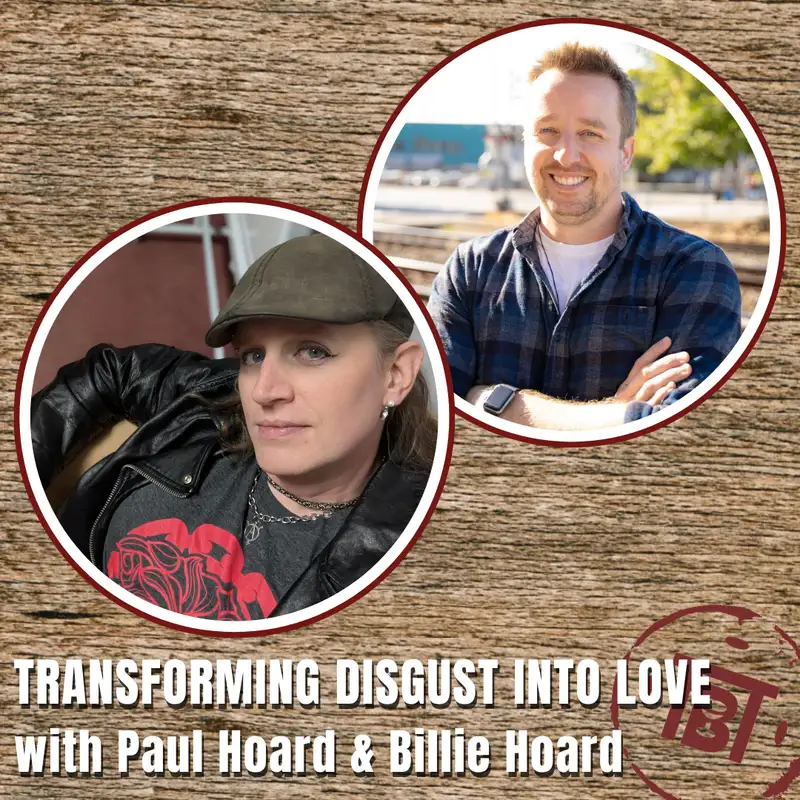
Transforming Disgust into Love with Paul Hoard and Billie Hoard
Episode 60 (Paul and Billie Hoard)
===
Andrew Camp: [00:00:00] Hello, and welcome to another episode of The Biggest Table. I am your host, Andrew Camp.
In this podcast, we explore the table, food, eating, and hospitality as an arena for experiencing God's love and our love for one another.
And today I'm joined by siblings, Paul and Billie Hoard.
Paul is a licensed counselor, psychoanalytic psychotherapist, and associate professor of counseling psychology at the Seattle School of Theology and Psychology. His scholarship focuses on lacanian, psychoanalytic theory, sexuality, white body supremacy, perpetration induced traumatic stress, and the theological logic of disgust. He has spoken and published internationally on topics including purity, culture, trauma, eucontamination, and the intersections of theology and psycho-analysis.
Billie is a trans woman, teacher, writer, and something of an anabaptist radical. Together with her brother Paul, they co-authored the book Eucontamination. Billie holds an MA in liberal arts from St. John's College and she writes [00:01:00] about queerness, fairytales, CS Lewis Theology and Philosophy.
So thanks for joining me today.
Really enjoyed your book. We first met at Theology Beer Camp, I guess that was back in 24 in Denver when you guys, um, did the, uh, sort the pre-game conference on eucontamination, um, that whole meal
Paul Hoard: and the entire experience thing.
Andrew Camp: Yeah. Yeah. It was fun. It was, it was one of those moments where I was like, oh, this is what I've been looking for and wanting to experience and like, made me realize, okay, these are my people.
I need, we need to, we need to talk more. And, um, so yeah, it's been fun to read your book, um, and to, to stay in touch.
Paul Hoard: Mm-hmm.
Andrew Camp: So glad. So we're just gonna start here. Not many people write about disgust or think about disgust until like, how, like what made you want to be interested in writing a theological discourse on disgust?
Paul Hoard: So I'll, I'll jump in, Billie. Um, [00:02:00] okay. If that's all right. I think do it. We, we, we mentioned just before he hit recording, uh, Richard Beck's book Unclean. Mm-hmm. So both of us had read that one, um, had read his book, and it got the wheels turning in my head quite a bit as a,
Billie Hoard: um,
Paul Hoard: you know, as a, as a mental health professional professor of counseling, psychology, obviously right.
In kind of my wheelhouse in many, of, many of those ways. But also, um, I think some of it also was from my own professional background. I, um, I cut my teeth as a therapist working with individuals, um, who had been adjudicated for various offenses, some of them sexual offenses. And so I'd already like spent a lot with people that had been labeled disgusting, that had done things that are horrific, that are monstrous and sort of.
The l the, the lens of disgust had already been something that was already kind of in my professional mind. Um, I'd done some work around, um, inappropriate or maladaptive. Sometimes it gets called if not aggressive or abusive kind of spectrum there of sex, different types of sexual behavior and that that obviously borders on [00:03:00] disgust and there's a lot of overlap there.
So I was sort of primed for it professionally as a therapist in that sense when I ran across Beck's work. Um, and then it was really the combination of Beck and Haidt's work that, um, Haidt's in particular, his earlier stuff on like Moral Foundations theory. I think it's The Righteous Mind was his popular book on that.
Billie Hoard: Yeah.
Paul Hoard: That got Billie and I really talking about it. And part of what was helpful is that, um, we, we started getting interested and then it started being really useful. Like it just be, became a really helpful way to understand or begin to make sense of what was happening in our world, what was happening in ourselves, happening with my patients.
And so we kind of kept. Digging further, further into it. Um, and I remember it was, it was sort of, you know, uh, like many therapists, I loved the, the movie Inside Out, you know, the first one when it came out. You know, I think it's one of the requirements to get your license these days, I think, but, and disgust was one of those, one of those little characters.
It's probably the most surprising one that's there. You know, like anxiety makes sense. Joy makes sense, or [00:04:00] anxiety wasn't in the first one, but, you know, sadness makes sense, fear and all that. But disgust is sort of like, that's interesting that that would be one of, you know, these core emotions. Wrestle with disgust, but the more we dove into the literature and the research on disgust, and the more I was getting into kind of researching psychoanalytic theory and getting trained as an analytic therapist, um, the more central I realized disgust is to the formation of the self, both individually, but then also corporately as we think of like the, the us And that just became this really helpful lens to begin looking into things.
Billie Hoard: Mm-hmm.
Paul Hoard: Billie, anything else you'd want to add there?
Billie Hoard: Um, uh, I mean, so again, I was having the same, I mean, Paul and I were having these conversations back and forth. I know this all sort of started with just, we would read things and, and then recommend 'em to each other and then have these, I had a, an hour long commute back then, so we would have these like hour long conversations a couple times a week.
Um, and, uh, you know, so just hashing out stuff and, and like Paul, um, discussed, seemed. It caught me as something that was underexplored and [00:05:00] then was surprisingly effective as a framework for understanding what I was seeing around me. Right. And for me, I was, I was not yet, uh, when, when all this started, I was not yet out.
I think my egg might have cracked. So I might've realized I was trans, but I was not out as queer at all. Hmm. Um, but I was, um, in the kind of space of, uh, queer advocacy in the church and trying to, and, and the degree to which disgust as a framework made sense of the behavior and rhetoric I was seeing from non affirming people.
Towards queer people as Christians, um, was really, really helpful, right? It, it made thing, it made, made behaviors make sense that otherwise I couldn't find an explanation for, you know, we have, we have questions around like, well, why, why do, why do Christians treat queerness so differently from other things that they believe to be sins?
Are you gonna bracketing the whole question of the sinfulness of, of, of, uh, homosexuality or whatever? Um, you know, even if I were to grant it, why do they treat it so differently? Right? Becomes this, [00:06:00] this really big question and a disgust made sense. I disgusted, makes their behavior make sense. So I think both Paul and I found disgust to be, uh, compelling both as just this, as, as an under-explored topic and framework, but also as an, uh, almost overly like, surprisingly, overly effective framework for analyzing and understanding what was happening.
So not well enough explored and really far more useful than people seem to give it credit for being.
Andrew Camp: Super helpful. Um, and so then what is disgust like help us name, like, okay, what are we actually talking about? You know, because we all have an idea of it, but we don't probably have words to fully explain it.
Paul Hoard: Yeah, yeah. And that's part of it, right? We talk a lot about fear, we'll talk a lot about anger. Um, those are pretty common emotions to talk about. But then disgust is sort of like, well, it's just gross. Something gross. It's just, I don't know, it's disgusting. [00:07:00] And that just sort of ends the conversation typically.
Billie Hoard: Mm-hmm.
Paul Hoard: Yeah. So w when you dive into it, one, just kind of trigger warning to your listeners who may be here for eight. Something about food.
Billie Hoard: Yeah.
Paul Hoard: We are gonna talk about disgust. Uh, those two overlap. So if you are eating, maybe put the food down for a second while we, we talk about this. 'cause, um, discuss, we'll bring it back.
I promise. We, yeah. Disgust is directly tied to eating. Right. In fact, even the, the facial expression of disgust is that of, of, of vomiting. Or being about to, because discussed is about, um, the emotion that helps you delineate what's able to be taken in to be a part of me, to become me. If you think about food becomes us, what's gonna be mentality and what is poison?
What needs to be expelled, what needs to be spat out, eliminated, gone, uh, and differentiate between. So it's the emotion that it's, it's a protective emotion and it's really, really important. So some theorists speculated, you know, we evolved disgust to deal with what's called the omnivores dilemma. Humans can eat almost anything, but some things will kill us.
Yeah. So we are, we develop disgust [00:08:00] to avoid that. Um, others look at it more from a developmental standpoint, that actually babies aren't born with disgust. They'll kind of do the finger paint with their feces as opposed to being gross. And it's, and it's adults that have to help them be like, Ooh, no gross.
That's yucky. Mm-hmm. We don't touch that. That's yucky. Right. Whereas they wanna put everything in their mouth. We have to teach them what is gross. So disgust becomes this. Oh, go
Billie Hoard: ahead. I'm jump in. Paula, even the sound we make when we're teaching that I've been thinking about this, right? As we say, eh, eh, we sort of, yeah.
Mime or, or hint towards nausea or vomiting as the, like, that is the proper response to this substance that I don't want you to be touching right now, child.
Andrew Camp: Hmm.
Paul Hoard: But it's this, it's this really ambiguous, and I think it's, it's very contextual, right? Because the very idea that you can have a phrase these days like, don't yuck my yum, indicates that there's something that I'm gonna find yummy.
That you're gonna find yucky. Right? That which means it's less about the inherent thing and more about my relationship to the thing. So there, there's, there's a couple of examples that I think are helpful here. Um, one being like, there's a great [00:09:00] Jerry Seinfeld standup on, on hair, right? How hair on somebody's head is kind of beautiful and we're often attractive and we enjoy it, but as soon as the hair leaves their head, ew, get it off me.
Right? Because suddenly it's, it's ambiguous. Is the hair still them? Or is it not? That? Is it, has it become something other? Whereas when it's attached, it'd still feel like, oh, this is me. This is part of me. You're, you're, you quit pulling on me. I might say, if you're pulling my hair, whereas if you're just holding my hair, that fell off.
It's just a hair. But it disgust is what helps us create this clarity in the face of ambiguity and doesn't necessarily follow logical lines. Right. And another clear example that's often used in, in the literature to sort of like this thought experiment of if I had, if I had a perfectly sterile cup and asked you to spit in it, um, very few people would be open to drinking their own saliva.
Even though every time you drink anything or eat anything you are doing, you are consuming your own saliva, right? Nothing magical happens to it when it leaves your mouth in its essence. But everything happens to it in your relationship to it. It is no [00:10:00] longer you, it's other. And so it can't be taken back in and disgust is what helps.
Delineate that. And so a, a couple things that are important to keep in mind about disgust is that it's very embodied. We feel disgusted, connected to our, to our mouths. It's very much a part of our physical selves. Um, and so I think all emotions actually are, but in the US we have a tendency to emotions from our mind and act as if those are all disconnected when we are quite integrated.
And so disgust is a helpful reminder that like, you know, we are, we are very integrated, who we are, what we take in. This is very much about who thinks we're, who we imagine ourselves to be. Those are all deeply connected and so disgust is this really fascinating emotion that protects us, but then also can be often over applied so that it becomes difficult for us to interact in a nuanced and complex way with something that we experience as as other.
And so this is where like, again, on a very simple [00:11:00] level, if you have toddlers at home, you have run into this like, please eat your broccoli. No, that's yucky. As soon as the broccoli is disgusting, there's, there's no arguing with that. It just is, and you might, every parent's gonna deal with that, how they, they will.
But the fact that ew, it's yucky isn't an invitation to like, well, let's talk about the yucky elements and what might discuss this and attack a little argument. No, no. This is an ontological statement about the broccoli and that, or actually what it is, is a statement of my relationship and that I do not want that to become part of me anymore.
Mm-hmm. I'm gonna refuse that. And this is one of the, one of those things that I think is really important was as soon as disgust as present, we've created a binary of what can and can't become me, and disgust also is this fascinating way that the, we, the, the technical terms is docent sensitivity.
Mm-hmm. It doesn't matter how much of the bad thing. Like, it's not just that I don't want to eat the broccoli, it's, I don't want the broccoli to be anywhere near my macaroni and cheese. Like, I don't even want 'em to like think about each other. Like there needs to be like a gap in the bowl. You know? I'm thinking about my toddlers, my young ones here, like Yeah.
[00:12:00] They can't be, they touched each other. It's infected. And that's literal, make those
Billie Hoard: plates for them that
Paul Hoard: have with dividers on the plates to take care of this
problem.
Billie Hoard: Yep.
Paul Hoard: But we do that in our lives as well. Right? Yeah. Um, and so it's, it's, you know, if I, again, going back to like thinking about hair. If, if my hair got into somebody else's drink, they're gonna doesn't, you wouldn't say, well, how much hair got in there?
You just go get yourself a new drink. Right. Or if somebody sneezed, you don't really check. Well, a little bit of sneeze got in my water. It's any amount of sneezing.
Billie Hoard: Mm-hmm.
Paul Hoard: And that, that's when we know disgust is prevalent because. Fear is another one. And I realize, I just realized I'm talking about it. So Billie, take over in a second.
But fear is very similar to discuss in that it protects us, but fear can be mitigated somewhat with what was called like a harm reduction approach. So like it's dangerous and kind of scary to drive a car. Many of us have learned to cope with that. We put on seat belts, we follow rules, we operate our vehicles in very particular ways to minimize the safety.
But there's an inherent risk there. We're not disgusted by it. So we're [00:13:00] willing to tolerate that risk. Whereas if somebody sneezes on your water, there is a risk that you'll get ill. It's actually probably pretty low, honestly. But most of us, like it doesn't matter because it's not fear, it's disgust at play.
So any thought of it, of the sneeze, getting in my water is enough to make me go get a new water.
Andrew Camp: Mm-hmm.
Paul Hoard: And so you see, see that difference where there's that like it's this binary operation as opposed to a harm reduction pick up from here. Or what
Billie Hoard: you
Paul Hoard: wanna add to that?
Billie Hoard: All the directions I would go would be theological at this point are, uh, social.
So I'm gonna hold off and wait for the next question. Why
Paul Hoard: don't you go sociological? Actually, why don't you go more social? I, I focused on the individual
Billie Hoard: there.
Paul Hoard: Okay. You take,
Billie Hoard: yeah, no, that's probably worthwhile. Okay. So, um, one of the like, sort of fascinating things and I, I did jump in with the sociologist again, my, my interest came from sort of that, that sphere, um, is that this, um, this affect.
Translates up, if you will, or transposes up from the biological, what we eat, what we consume, when we think of, you know, just [00:14:00] substances to the social very, very easily. Right? Um, and be, and, and a lot of this has to do with the way that we identify as members of groups, right? So, um, you know, in in the church we use the phrase the corporate body, you know, we talk about the, you know, the, the, the, the body of Christ.
We are, you know, the, the corporate, um, you know, structure, uh, that is the church, the body, uh, that is this group, right? And if we are a body, then people coming into that body become themselves potential contaminants, right? They, they become potential sources of disgust. And this is where what can, at a biological level, be a problem again, if it's over applied, if it becomes overdeveloped and you get somebody who becomes such a picky eater that they won't, can't eat anything.
And, and I know that there are whole issues that can develop around that. Um, like, but when that,
Paul Hoard: for example,
Billie Hoard: absolute. But when that translates up to, to the social, this means people that can't tolerate even being in the presence or having other persons [00:15:00] be members of their body, be members of their social, corporate collective body.
Um, and a lot of the mechanisms that we use at the biological level to react to things we find disgusting also transpose up to the social level and have their own sort of transposed iterations. Um, right. So the, uh, the kind of violent ejection of people, the mm-hmm. Uh, the, um, really sort of, um. Overly energetic quarantining off of certain types of people or of ideas, right?
This, it, it, it transposes in other directions as well. It transposes into, uh, you know, into, into the intellectual sphere. It transposes, uh, in the religious sphere. And we can probably talk about that some too. Uh, so there are all these ways where all of a sudden this again, overdeveloped, overexposed disgust reaction or discussed mentality, if you will, um, can become a real problem.
And that was sort [00:16:00] of, we started with that knot, right? So we kept going back down and back up, you know, down and back up to the biological, you know, down to the biological backup, to the social, down to the biological. You know, we, we, we see a lot of this acting at the political level these days. Um, and we think that, again, discuss has a lot of explanatory power for what we're seeing.
Andrew Camp: I love that you brought it to the sociological level. 'cause like Paul, you mentioned you, you know, disgust helps literally save our lives, you know? Yeah. In a food related way. And disgust is very food related. Um, you know, my wife's reaction to oysters is one of disgust, whereas I'm like, give me more oysters.
Like, give them to me. Right. Like to her, they're snot to me, they're just these perfect, delightful delicacies of salinity and umami. And when you drink it with champagne, it's beautiful. Right. But like for her, she just can't get past it. But the, it's this, it's at the sociological level where we see disgust that begins to harm.
Right. You know, and that's where the ostracization of people, um Yeah. Begins to make sense. And this then [00:17:00] ties into the biblical idea of then like purity and holiness. Like we gotta maintain our collective identity and be pure. And then disgust comes into play with that. So like, where, how. Extrapolate that for us so we can understand how this actually impacts my walk with Jesus.
'cause that's hopefully, ultimately what we want help to help people unpack a little.
Paul Hoard: Well, I'll start with this, Billie, and then I'll let you go for it. You land it.
Andrew Camp: Yeah,
Paul Hoard: because
Andrew Camp: I'll say I'm, I'm gonna run, but you, you say
you
Paul Hoard: thing first. You got you. I can see you all here for this. Um, I'll, I'll just start with, uh, discuss it's culturally say, at least in the US, and make a broad statement.
And of course it's a generalization, so keep all the caveats with that. But generally disgusted is not something we generally would feel ashamed being like disgusted, acknowledging that we're disgusted by somebody. What that means is we rarely tell that conscious story to ourselves. So I'm guessing most of the listeners don't walk around thinking, oh yeah, that [00:18:00] person disgusted me and that person disgusted me, and that group disgusted me.
Instead, we often tell ourselves stories like they're a threat, they're dangerous. They're bad, they're predators, whatever. We use these other terms to kind of code it to hide the disgust from themselves. Mm-hmm. And so the first thing is to notice actually that we are disgusted. And that's why I kind of spent so much time talking about the logic of, of how disgust works.
Because you're rarely gonna see it explicitly unless you're looking for it. What you're gonna notice is that, oh, the way I react is as if I'm disgusted by them. And so that's where like disgust is gonna happen prior to the story you're telling yourself. So in, in the US we tend to think that we, we we're thoughts first, and then once we've understood the world, then we have emotional reactions based on our understanding of the world.
But actually we have an emotional reaction. And then we tell ourselves a story to make sense of it. So if I'm disgusted
Andrew Camp: mm-hmm.
Paul Hoard: By, by you, Andrew, let's say, I will first feel that disgust and then I'll tell myself this story that makes sense of that disgust. Well, well obviously Andrew [00:19:00] has glasses and a big microphone, so obviously he's a terrible human being that's just gonna ruin our children.
Right. I'm gonna first feel that ine and rationalize that the reason this matters is that when I, if somebody tries to talk to me about my rationalization, you could show that that doesn't make sense and I'll just come up with a new one. Yeah. It won't, it doesn't change. It won't help me better understand myself.
It'll just get us both frustrated because we're not dealing with what's actually causing it, which is that there's something disgusting. Ma'am, my affect is being triggered in a certain way that like, I feel a threat and then I'm make gonna make sense of it later. What we need to be able to do is slow down to notice the emotional reaction that's happening in order to be able to, to be able to have differences.
And so. This matters about theology in Jesus is because often we tell ourselves sin is a threat or that like I'm just trying to do what God tells me to do. We have all these stories, but oftentimes we're actually just reacting out of our own disgust. And what we're protecting is our own ego is our own sense of self is the image of who we are.
Billie Hoard: Hmm.
Paul Hoard: Which another word for that, and we can argue about this later, would be an [00:20:00] idol.
Billie Hoard: Mm-hmm.
Paul Hoard: Would be this idol of ourselves and of the world we want, as opposed to dealing with the reality of, oh, we're actually disgusted by each other and God's command, Jesus' command for us to love requires that we confront our own disgust in order to be able to move past it.
To see the humanity and the dignity and the image of Christ in the other without pretending that there also may not be threat and risk and their wisdom. And that's why I love that phrase, let's be wise, a serpents and innocent as doves. Yeah. Because I think that's sort of what um, this discussion around discuss can help us see with theology.
But I'll let Billie connect those dots better. 'cause I think I'm. Veering off in another direction. So, Billie,
Billie Hoard: be the plane. No, you're very good. Uh, go ahead.
Andrew Camp: I'd love to hear your thoughts, Billie. And I'm curious, like, I'm just gonna make this real for my listeners. Like there might be some of my listeners who, when Billie was introduced, might have had a reaction, like, you know, and, and to like, hopefully they didn't turn it [00:21:00] off.
And hopefully you're, as a listener, engaging, but to recognize, like, did you have a reaction when I introduced Billie as a trans woman? Like
Paul Hoard: mm-hmm.
Andrew Camp: Like let's just own, like, be honest with what may or may not be happening with the listeners, um, who come from every walk of life. Absolutely. And so, like, I think that's just even important to name as we're talking about this in a
Billie Hoard: Yeah.
Andrew Camp: Theological Jesus centered way.
Billie Hoard: No, I, I, I think it's, it is absolutely relevant and, and, and, and true. And I would, and I would encourage people to sit with it. Right. Um, again, uh, I think a, a common, um, reaction people sometimes will have is to say, well, no, I wasn't disgusted. And I think Paul's right. Uh, in, in saying that we are far more frequently disgusted by other people than we care to admit.
We reserve that designation of disgusting. For severe moral a approbation, right? So when I'm trying, when I'm searching, when I'm reaching for a way to express to the world [00:22:00] that I am profoundly troubled and utterly reject somebody's moral behavior, somebody on moral grounds, at that point I might say I am disgusted by them.
Right. Um, and which I is probably true at that point, by the way. Like, I'm not, I'm not suggesting that at that point we're not disgusted. I'm suggesting that, but that because we hold, we use it in that way. We've sort of elevated it to this like extreme rejection because of the way that like, because of the way disgusted works, um, because of the implications of a person being labeled or categorized as disgusting, that we then do not recognize how frequently we actually are disgusted far earlier than, than when we reach the stage room.
We're willing to actually say and say, and name that, name that out loud. Um. So if we bring all this together and we, I wanna get to the theological point on it, right? So disgust has this docent sensitivity. It has, uh, it's this binary, uh, logic that says you can have it in if you, if it's there you're contaminated, period.
That's end of story. If it's not there, you're pure. [00:23:00] Um, there's no, there's no gray area, there's no space in between. And, um, what that does among other things is it places all the power in the contaminant, right? So the contaminant is the term we would use for the thing that is the, uh, object of our disgust, the thing that threatens to contaminate us and therefore we experience as disgusting.
Whether we accurately or inaccurately identify that thing as potentially contaminating us, it becomes the contaminant, right? So, uh, we we're gonna treat it that way. And, um, what that does though is it puts all of the power into the hands of the contaminant because I, uh, to use the sort of the classic example, um, if I have a bucket of pure water and I ask you to drink it out of, you know, a large cup of pure water, I ask you to drink out of it.
You're gonna be happy to do that. Um, if I introduce just the smallest amount, Paul used a sneeze. If I sneeze into your cup, not a lot of material has entered your cup and yet you're not willing to do it. Right? But if I take a cup full of my sneeze product and I [00:24:00] introduce just a thimble full of pure water to it, you're still not going to be willing to drink out of it, right?
So what that tells us. Is that the power is all with the contaminant. What is what we identify as pure. We also identify as fragile, as weak. What we identify as disgusting, we also identify as powerful, right? Um, there are a lot of really troubling political implications to this that I'm gonna leave alone for half a minute and maybe we can come back later if we want to.
Um, but at a religious level, this creates a theological problem that I think needs to be called out, right? This is one of the things I'm most theo excited about, theologically, about our, our, our work. Because the implication of this, and it's an implication that I think no orthodox Christian would ever, most or unorthodox Christians would not want to acknowledge.
The implication would be then that sin is more powerful than holiness. We associate holiness, we associate the church, we associate God with purity. But what is [00:25:00] pure is fragile. In our, you know, in the, in the sort of basic logic of disgust. What is pure, pure has to be fragile. What is contaminating is powerful, but we, but we would, in the same breath, need to deny if we're gonna stay anywhere near the realm of orthodoxy, that sin is more powerful than goodness, that sin is more powerful than holiness or love or purity.
So what do we do with that? Well enter Jesus. Yes. I love bringing Jesus into the conversation. Right? Um, Jesus comes in and when, when, I'm gonna go narrative here for a second and say that when Paul and I first started talking about all of this, we kind of had this idea, and I think it is probably a, a natural first idea that Jesus, um, just sort of abolishes disgust, logic.
Jesus says, no, that's all wrong. At least as applies to people. Like that's just not correct,
Andrew Camp: right.
Billie Hoard: Um, right. Because, and Jesus certainly does act as though I, he is not threatened by being contaminated by sin. He is [00:26:00] not threatened by that which the world around him sees treats, identifies as morally or physically disgusting.
Right. He's touching people who are thought to have communicable skin diseases. He is. Eating with people, um, with whom at a religious level, eating with those people is supposed to, to, to contaminate him at a, you know, also at a religious level. He's, he's doing all these things and he's acting as though he can't be, he can't be, um, contaminated.
And so our first past sort of assumption was that Jesus sort of is says no and abolishes discuss logic. But as we pushed harder, we found that actually the opposite is true Jesus. Well, sort of, Jesus does not abolish discuss logic. He actually inverts it, right? Mm-hmm. So instead of saying, you know, they're kind of equally, you know, purity and, and contamination or equally powerful or just discuss logic doesn't work.
He actually sort of affirms disgust logic, but he re re situates the good and love into the place [00:27:00] of the contaminant, into the place of the powerful thing, which when introduced in any quantity to the. Wrong, broken, sinful body begins a process of good transformation. Right. This is where Well, and go ahead Paul.
This
Paul Hoard: is salt and lights
Billie Hoard: yeast. Salt yeast.
Paul Hoard: These metaphors of like, just a little bit of this works its way through, right? The, the little bit of yeast in the whole dough. Sorry.
Billie Hoard: Mm-hmm.
Paul Hoard: Just interrupting you today.
Billie Hoard: Well, no, and this is what's really exciting is that when, once we saw that, that Jesus is actually inverting the dis the logic of disgust rather than abolishing it, right?
Um, you start to see that actually this is, this is also operant in the physical world. Jesus had actual examples to draw on, and Paul's talked about salt and light and yeast, right? That there are substances which when introduced bring about good change, right? In [00:28:00] almost any, you know, introduced in almost any quantity.
A little yeast works its way through the whole dough, as really any baker can tell you, right? Give it the time and give it some sugar. It's gonna work its way through the whole dough. Uh, it's gonna work its way through all the beer. It's gonna, you're, you're, you're, you're gonna have really good things happen over time.
Andrew Camp: Mm-hmm. But what's interesting too is like, at the same time, and again, I think this is gonna nuance and, you know, Jesus uses Levin as an example of the Pharisees, like a little leave from the Pharisees. You can corrupt too. Like, so it's a weird, like, it's not as again, you know, black and white always, you know, um, as we want it to be.
But I think you're right, Billie, in saying like, you know, Jesus becomes this good contaminant unless our listeners think, well, I've, I've never bought into this idea. Like, think back to youth group. Like you and I, I think we were all raised in this evangelical subculture of youth groups where like, Hey, be careful.
You know, if you get in with the wrong crowd, they're going to impact. You're not gonna impact them. They're gonna impact you. You know, [00:29:00] like, you know, and that's what it was always about. Like the wrong person is going to. Impact you, their sin or their whatever they are, is going to be more powerful than what who Jesus is and me.
You know, it was always the story in youth group.
Billie Hoard: No, it was, and it it, looking back on it now, right? As a 43-year-old woman, it really has me wondering like, what happened? How did I handle how, how, you know, I don't even remember experiencing as cognitive dissonance. The fact that I would hear that one Sunday and the next Sunday I would be reminded greater is he that is in you than he that is in the world.
Do not be afraid. I have overcome the world. Right? How do I hold those? I didn't have a way of holding those two things together other than just not looking at both of them at the same time.
Andrew Camp: Right. Well, and we were 16 and didn't have prefrontal cortexes. Like, come on. Like we, there were very few things I was thinking about in high school of how to hold these two in, you know, conjunction.
I was thinking about girls, like, let's be honest of what our minds were thinking about in youth group. Like, so, you know, I don't think, you know, the church obviously didn't give a space to hold these [00:30:00] nuances. Mm-hmm. But I, again, I don't think my 16-year-old brain was capable also.
Billie Hoard: Yeah. And I think one of the, the danger
Andrew Camp: Yeah.
Billie Hoard: Needs to be remembered, right? Like, there is, there is significant danger and there is significant harm that is caused
Andrew Camp: right,
Billie Hoard: by a failure to examine the role that disgust is playing, right? Yep. Um, when we, and, and I think one of the things that really stands out to me more and more as we sit with this, you know, with, we researched and then we talked and we wrote this book and we drafted it, and then we redrafted it, you know.
Is the degree to which all, you know, I talked about transposing from the biological up to the so sociological and over to the, to the religious and, and political and all the rest of that. It's that these things are constantly pinging around within us. Like our, you know, at a psychological level. I don't think we're making this distinction a whole lot.
We're, you know, we are experiencing disgust. We experienced disgust discuss in particular ways. Like Paul said, it's just this very physical embodied affect. All effects really are [00:31:00] physical, um, are embodied, right? But it's, it's just the thing that's happening. And so then we just grab onto whatever mechanisms we have developed for responding with to discuss it's get it out, get it out, get it out, get it off, get it off.
Get it off. Kill it with fire. Um. And I wanna, I think, well, I'm gonna go ahead. I'm gonna go here. I'm gonna go here. I'm sorry if, uh, uh, we're gonna go controversial or I hope, I don't know. I even feel bad now saying that, but I'm going that way. I think we're seeing, I, I want to drive home how dangerous, how bad, how, how harmful this can be.
Um, we're recording this one on, on, on January 12th. Right. This is less than a week after a woman was shot by ICE officers. Mm-hmm. And as I have been watching the way that the nation has been responding to that over the course of this last week, I feel like, um, a, a particular political cartoon I once saw, uh, whereas a sort of old, uh, college professor looking fellow sitting in a chair saying, [00:32:00] those who don't study history are doomed to repeat it.
Those who do study history are doomed to sit by and watch while others repeat it. And I feel a bit like that as a, as a scholar of disgust right now. Um, because what we have watched is this, these videos of this woman being shot by. A, you know, an agent of the state. And then we have seen as people who want to vindicate that action work to inculcate disgust towards that woman.
Her queerness is being emphasized, her leftism is being emphasized. They are floating rumors and suggestions that she was, whether they're accurate or not. And honestly, I don't know, you know, that she was actively part of one of these anti-ice watch groups. Um, and, uh, in fact, uh, I found out today that yesterday the president was arguing that, well, she was being very rude to this officer, uh, that she was being very, very, very, uh, inappropriate, uh, in the sense of like, she was harassing him and saying, saying nasty mean things and people shouldn't.
And [00:33:00] if we pause for half a second and put on this, this discussed analysis framework, right? What's happening, I would argue is that. Uh, the, the, the, these officials have, have understood at a kind of basic level that if they can get the public to feel disgust towards her and who she is to identify her as a potential contaminant to society, then they will not grieve her, loss her death.
Whether it was done in a way that is legally appropriate, whether it, her, her murder was accomplished in a way that we would actually, in any good society want our law enforcement officials to follow. If even if you do, I know I'm a pacifist, I don't think anybody should be shooting anybody, but even if you, like you, except there's a context in which a law enforcement official should be shooting people, that that's way outside any realm of like, you know, uh, good governance and jurisprudence that won't matter if they [00:34:00] can get you to feel disgust towards her.
Andrew Camp: Yep.
Billie Hoard: Because at that point, the affect of it all is get it out, get it out, get it out, kill it with fire.
Andrew Camp: Right? And then that buys into what you guys talk about in terms of the, the bullshit we, you know. Mm-hmm. Again, we're just gonna be controversial this episode, you know, like my family friendly episode's no longer family friendly.
So, you know,
Billie Hoard: sorry.
Andrew Camp: It's all good. No, it's perfect. But it's important, right? 'cause this, this does mm-hmm. Like, this is real life. This is what's happening in our world, and I think what the media wants, you know, they feed us what the bullshit we want to hear, which then helps us evade or ev um, you know, stop prevents us from looking at our disgust reactions, our, you know, figuring out, okay, what is actually going on.
Um, and so, Paul, I'll be curious, like, can you explain sort of this, this idea? 'cause while it sounds crude and crass, I think it, it's actually really helpful and as we think about disgust Yeah.
Paul Hoard: Yeah. Um, so [00:35:00] we're borrowing the term bullshit from Harry Frankfort philosopher, who has a great little book called On Bullshit.
So as an academic we are using in an academic way just to be, just to be honest, that is happening. Um, but I do, 'cause I do think it's really helpful 'cause what Frankfort does diff distinguish between lies and bullshit. And so he actually argues that bullshit is a greater threat to truth than dishonesty is.
Than lies are. Because when, if I, if I'm a liar, then I believe what is true. I know what I think the truth is. And if I'm lying to you, I'm actually trying to hide that. I'm trying to hide it from you obfuscate it, which means I still have a commitment to it. We have a shared idea of what we think truth would be, and I'm just trying to deceive you.
Whereas the bullshitter, I don't care what's true, it's, it's this, it's like, it's this kind of malicious indifference where what I, my focus isn't on deceiving you or not, it's on creating a particular impression from you. So the bullshitter just tries to make the other person feel a certain [00:36:00] way. Now, the way Billie and I sort of play with this term in our book is that our egos, our conscious selves, are actually more drawn towards bullshit than we are towards truth.
Mm-hmm. And this is why I think Jesus spends so much time talking about what the truth is and what it's like to be on the side of truth and how those who live in darkness, kind of like the darkness and go after the darkness. Because if you're pursuing comfort, if that's your kind of primary, like is your thing, um.
Bullshit will feel good. It'll be a balm because truth is always gonna be somewhat disturbing and pushing you to say, actually, what if your world isn't quite the way you think it is? What if there's more going on here? What if you are disgusted by that? What if you don't love your neighbor? Well, what if there is more happening?
And that's really uncomfortable to be living that way. So the easier road, right? The, the, the path of least resistance is going to be to buy into bullshit. Which is why if anybody spends more than three months on social media, after you'll notice you're in a particular echo chamber. Like it literally designed to guide, to guide you into whatever [00:37:00] flavor of bullshit fits you best, because it's the stuff you like to hear.
And we're, we can't help but be drawn towards. What we can do is be, is begin to start noticing our penchant for it, like how much we like it, and then to start recognizing when we're move, making decisions more for bullshit than for truth. Like the, um, maybe the epitome of this example. Is like in the matrix, and I forget the character's name, but the one character who uses to have his memory wiped so he can go back into the bullshit matrix world.
Billie Hoard: Mm-hmm.
Paul Hoard: Right. Says And
Billie Hoard: Cipher.
Paul Hoard: Cipher.
Billie Hoard: Yep.
Paul Hoard: And all of us, I would, or at least myself and many of the people I would talk to would typically say I would never do that. And yet I think what psychology over
choice that we would rather the pretend world that feels good over the real world that's uncomfortable. And I think that's what like ancient philosophy shows us. I think that's what Jesus teaches. I [00:38:00] think that's what a lot of different wisdom traditions continue to point us to is that we have to develop the humility to recognize our own desire for bullshit.
Mm-hmm.
Andrew Camp: And that's where like again, you bring in Jesus as the way, the truth and the life and you. Expound on it for multiple chapters. And again, there's so much in this book that is worth unpacking, but, um, what you talk about through and through the book is that, you know, this, you, Jesus as a eucontaminant is disturbing and that it does disrupt.
And hopefully you, you even write that you, you hope you're not just speaking to the choir and feeding into our, you know, what I want to hear versus how are, how are you helping me wrestle with more and more of who I want to be, um, you know, and who Jesus is calling me to be. And so that the truth is unsettling, Jesus is unsettling.
Um, and so I, how do we even then move past, like we're, we're confronted with this disgusted, you know, again, hearkening back [00:39:00] to our youth group days we're, we're, we're to love. Love the sinner, but hate the sin, which I think is psychologically impossible, um, at certain points. But like on both sides, right?
We see disgusted operating. And I don't think, you know, one side is immune to it. Like I, I have disgusted, like I'm disgusted by rhetoric, but so how do I avoid making people I disagree with? Animals are enemies. And how do I actually move towards love of the people that I would find hold repulsive ideas.
'cause that's where like, this is where we're, we need to get to, right? Like how do we move past and how do we actually love? 'cause when we love our enemies, like you write, we find we actually don't have enemies anymore. We actually have people and we have our people. Uh,
Billie Hoard: yeah.
Andrew Camp: Yeah.
Paul Hoard: Do me, no, I, I just get excited about this part two.
It, I didn't mean to cut you off their intro.
Andrew Camp: Nope, you're good. I had nothing else to say.
Paul Hoard: That's so, Billie, how about I answer this on an individual [00:40:00] level and then I'll invite you on the corporate? Um,
Andrew Camp: yeah,
Paul Hoard: kind of. 'cause we, we actually tie this into the, um, to the church quite directly. 'cause I think actually Jesus gives us a lot of examples of how to do this.
Mm-hmm. Um, and there, there's, so individually, there's a couple things I would say. The first is the humility to recognize you are disgusted, right? So first, just slow down and notice your own reaction when you're finding yourself getting angrier, when you're finding yourself, telling yourself you're afraid.
When you feel the panic. Like it's really healthy to understand your bodily signals and to be more curious about your emotions and how actually any particular state is often a cocktail of different feelings. And that it's, it's okay to. I think because we're, we're taught that we shouldn't be disgusted.
Right? That good. Particularly your listeners are, you know, identify as sort of religious or Christian in some way. You know, I'm, I'm supposed to love my enemies. I'm supposed to be disgusted by them. I'm the good one. They're the ones that hate you. Forget this, right? It's to first like, take that, that verse where Jesus says, you know, take the plank out of your own eye before you take a out of your neighbors to [00:41:00] recognize like you are disgusted.
Like I am disgusted. And that like, this is something we have to wrestle with. So the first is just the openness to our own. Just invite like, slow down and take stock of your day. Take stock of how you scroll the news, how you like, what, what happens when people disagree with you online or face-to-face.
When somebody talks about a political party. Those are often places where things happen. Like what does it feel like in your body? And if you can let yourself notice you're disgust, it's actually really powerful is to first notice. 'cause if you don't notice, you can't do anything about it. The second one is to then slow down, and this is where mindfulness becomes really helpful.
Like slowing down should become aware of like, okay, my body is having a reaction. And it is really important to honor what's happening and to let your body have the reaction. It is, but that doesn't, but your body's reacting to your perception. It's not reacting to reality. And this is where when you're disgusted by something, it actually has much more to do with you as the disgusted than it does about the thing that you're finding disgusting.
Right. This is why like the toddler hating the broccoli, it's not [00:42:00] about the broccoli, it's about the toddler's relationship to the broccoli. And often their desire for candy has to do more with candy than it does with broccoli actually. And so it, when you notice you're disgusted, slow yourself down. Just allow yourself to be curious.
That's where talking to a friend, talking to a therapist, beginning to kind of unpack that can be really helpful. But really, and this is, I'll, I'll pause here 'cause this is where it kind of leans into where, what Billie's gonna take us is that the, that actually inverses his relationship.
Billie Hoard: Yeah.
Paul Hoard: It's intimacy.
There's a lot out there about how being in proximity with others who are different than you. Mm-hmm. And I, I agree. I think proximity is really good, but actually proximity in relationship. And so like I gave you that thought experiment about saliva at the beginning of the, of the show. Um, if you imagine what that's like and how gross that is, and then compare that to two romantic partners, kissing, right?
Saliva's exchanged in both. However, one is beautiful and connective and actually is a sign of, of deep relationship. And the other one is you. I mean, now that's true, right? What changes it is the, is the relationship [00:43:00] relationship completely undermines, subverts, inverts, whatever word we wanna use, um, disgust.
Andrew Camp: Mm-hmm.
Paul Hoard: So intimacy and relationship and healthy, obviously like all the boundaries and health, like please keep all that in mind as your listeners, but healthy relationships actually invert our discussed reaction. So. In a nutshell, it's notice, be humble enough to notice you're disgusted. Slow down, mindfully.
Be aware of your bodily reaction. Don't just try to be a mind that fixes yourself, but be in relationship. And then cultivate relationships with those that are difficult for you to cultivate, obviously safely. Don't put yourself at risk and all the caveats of like self care, those sorts of things. Billie, take it away on a more corporate level.
Billie Hoard: No, I love it. And so, I mean, that is, sorry. It makes me happy too. Right? Um, it doesn't have to be romantic intimacy, right? We, we, uh, we get shy about these things. Um, any, any kind of intimacy has the [00:44:00] impact of decreasing disgust. Yeah. Right. Like there's, there's, you know, I think back to 10, 12 years ago when they were doing lots of studies about how to get people to be more, um.
Uh, more accepting of LGBTQ plus people. And a lot of it was, well, if you know and are friends with someone, you are statistically far more likely to be, um, you know, affirming or supportive of gay rights or, or, you know, what have you. Um, seeing it, seeing people, even having a parasocial relationship with somebody, um, can decrease your disgust reaction towards the thing that you associate with them, with, that you otherwise might even consider them to have been infected by, depending on how you think about all of that.
Right. Um, so it works at all kinds of different levels. And again, friendship is a, is a perfectly legitimate, effective one. And at the religious level, what this means is it just to, not to oversell things, but it means that Christianity is packed with power [00:45:00] on exactly this level. If we would just allow it to be.
If we would just allow it to be what it has the potential to become. And what we actually argue Jesus designed it to be, what Jesus designed the church to do. What Jesus, you know, the, the, the sacraments that God gave us, uh, that that Christ gave us, um, are, are, are in fact practically tailor made to help us gain greater control over our disgust reaction so that it can be directed in a way that is both healthy.
Again, I do need to keep from swallowing poison that is important, right? I do want to mask up in a pandemic. I don't want to get infected by things. That is important. That is good. And so that we can avoid. Its, you know, it, it, it kicking in and being in control, um, when it shouldn't be, when it's not appropriate.
When I would cause harm, um, when it would, when it would fracture the body of Christ. Notice I, you know, we, I, I [00:46:00] always love to point to the, to the, uh, to where Paul is talking about the body of Christ, and he says, you know, I, you know, he's, uh, was it, was it, uh, first Corinthians 12, and he's talking about, you know, you do, you have these different part, this body, and it's got many parts, and how terrible would it be if one part were disgusted by the other part?
Mm-hmm. And I would argue that disgusted is explicitly being condemned, like disgusted in the church towards other members of the body of Christ are being explicitly condemned by Paul in that passage.
Andrew Camp: Yeah.
Billie Hoard: Right. Um, and he, he's, he's calling out the, he uses both the parts of the body that are, I mean, he even talks about the parts of the body that are, you know, he says, without honor, we clothe with greater honor.
Right. Um, he says, we, we, we should perform before the world. Honoring as the church of those members of our corporate body that the world sees as less honorable, that the world sees as stigmatized or socially disgusting. Um, but then we just get to the practices, right? Like this is where, yeah. You know, this is the, the good [00:47:00] stuff we are to eat together.
Paul and I both, uh, grew up in a Anabaptist tradition. I'm still a member of Mennonite Church. My wife is a Mennonite pastor. Um, and ta you know, with the, the various terms that Evangelicals and Mennonites an Baptist and people talk about. But table fellowship, sitting in, eating together, sharing the love feast.
In the Anabaptist tradition, we have the threefold, uh, communion service, right? So we have, there's a love feast that we, where we just eat together, we eat the food together. Then there is also the Eucharist, and we can get into the Eucharist and oh my gosh, I, I, as, as a scholar discussed in theologian, I am so excited about the Eucharist.
And there's a foot washing, right? So there are all of these parts that actually have the potential to both excite our disgust reaction and to help us get, uh, acquire a better relationship to our disgust 'cause to look at what those things Paul was talking about just to a, just a second ago, right? Um, I'm gonna start with the foot washing 'cause it's fun and it's the one that people, you know well, no, I just, other [00:48:00] Christians tend to find the most like odd
Andrew Camp: before you, you talk about it, it's interesting, you know, 'cause you referenced first Corinthians 12 and like the body.
Paul Hoard: Mm-hmm.
Andrew Camp: But first Corinthians 11 is the major treaties on the Eucharist. Right. So like mm-hmm. They're tied, they're intimately tied together. Right. And yet evangelicalism has separated. We want Eucharist to be, or the communion just to be me and Jesus moment. We're not gonna talk about gifts of the body and our effect on one another and disgust and how it actually operates at the Eucharistic table.
So like. It's, I think we need to pay more attention to where First Corinthians 12 lands after the Eucharist. Oh, absolutely. Versus, anyway, again, I
Billie Hoard: gonna, on my battle we're followed by First Corinthians. No, like, you're, you're spot on. 'cause then they're followed by one Corinthians 13 and it is love that empowers all of that.
That makes all of that possible. Right. It is intimacy that makes all of this possible. Mm-hmm. Uh, like Paul's Paul, dude, he's talking about, right. St. Paul, you know, my brother too, but you know, not
Paul Hoard: nearly as much.
Andrew Camp: Yeah.
Billie Hoard: Um, yeah, so, but yeah, so I was, I was gonna [00:49:00] say, talk about, you know, the, um, about foot washing.
Foot washing is gross foot washing is fundamentally gross. It is also distressingly intimate. Mm-hmm. Right. Um, you know, in the church that Paul and I grew up in, it was always a sex segregated activity. Um, and, uh, and, you know, I'll, I'll let that just sit, but, um, but it be, but there is this, the sense of intimacy, right?
There is a touching and there's touching of a part of a person that is, is some people sexualize it, but most people don't. But it's still kind of like, you don't want other people to be exposed to that part of you. 'cause it smells bad, it needs your feet, but it's, you know, that's all very complicated. And what it invites us to do when it's being done in the context of this is a religious obligation, this is a religious duty, this is a religious, spiritual practice, is to slow down.
To notice our reaction and to remember our relationship with the person whose feet we were washing or who was washing our feet. [00:50:00]
Paul Hoard: Mm-hmm.
Billie Hoard: Slow down. Mindfulness. Intimacy. Slow down. Mindfulness, intimacy. Jump in. Yeah.
Paul Hoard: And say it like, I think for, and I think for a lot of people, it's one thing to be like, okay, I could wash somebody else's feet, but then to have somebody else wash your feet right.
Is this whole other side of like, oh, but I'm gonna let Andrew see that part of me. I'm gonna let Andrew mm-hmm. Interact with my gross thing. I'm supposed to be put together. I'll be the helpful, I'm happy to be the one to help you. I'm much less comfortable rec allowing you into my mess, to letting you have a disgusted reaction about some part of me.
Andrew Camp: What even goes back to the, to
Billie Hoard: go ahead.
Andrew Camp: It goes back to the Good Samaritan parable. 'cause the disgusting aspect of that is that the Jew is helped by the Samaritan. Like, you know? Mm-hmm. It's the Jew can help a Samaritan, but can the Jew be helped by a Samaritan?
Mm-hmm.
Andrew Camp: And so like, I think it's, mm-hmm.
It's. Both ways. Like even if you're not in the foot washing ceremony, I think like to think through of like, okay, what are we, who are we gonna let help us and aid us, you know, and be in the recipient [00:51:00]
Billie Hoard: and think about what this does as part of a threefold communion service is it means that as we come into the space, we come into this space with our own potential contaminating-ness.
At the forefront of our minds, right? Like mm-hmm. We come in with a hyper awareness of the ways in which we are gross and in which our grossness has been alle alleviated by somebody else, right? So already intimacy is being fostered, it is being created that vulnerability. And also we are both aware of disgusted as a thing, and also we're a little bit like less likely to be lashing out if we are in that both intimate space and we're aware that we are a potential contaminant right now.
There are other ways, and this is probably a whole nother other conversation at some point in which when I feel particularly vulnerable to being perceived as a contaminant, I'm going to be hyper, um, exclusionary of other people. I might get really violent actually. So just be careful about a lot of this.
Yeah. But when it's done in the [00:52:00] context of intimacy, when it's done in the context of like, this is a religious observance that we do together, it, it can have these really, really positive effects. And then we come in and we sit and we eat together. We have the love feast. And I don't think it's an accident that we call it a love feast.
Right? This is meant to be, in some ways everything that is good about a meal, right? Like a meal. A good meal is a shared meal. I will argue till the day that I die, that the best meals are shared meals we want, we want to be, you know, I, I love the, I love the kinds of meals I had. I had a, I should, uh, I was invited, A friend of mine invited me to eat, uh, Indian Nepalese food with them recently.
Paul Hoard: Mm-hmm.
Billie Hoard: And they did that wonderful thing where they just, we ordered three or four entrees and then we just, you know, we're passing things around and saying, oh, you've gotta try this. And like, laing something from this dish onto your rice and putting a little bit of your non in that sauce and Right.
Because, you know, in that context, one, there is some disgusting potentially things happening at the biological level, right? Like, no, we don't, we don't wanna double dip because we're good, but, but it's so close, right? You're not, it's [00:53:00] hard to be sure that nobody else is, but that's not how you're thinking because you're with friends and you're laughing and you're tasting good food.
Andrew Camp: Mm-hmm.
Billie Hoard: And you are all becoming the same thing. Right. This is in a shared meal. All of you are having the same set of substances become you. Yeah. You are all being transformed by the same things. Um, and I would argue that at a spiritual level in the love feast, we are all being transformed by the presence of Christ, by the presence of one another, by love and intimacy for one another in the context of the Holy Spirit and of Christ.
So this is, I think, critical. And if I could, you know, again, this is, you know, I know that there are Anabaptist out there who get really excited about, you know, believers baptism. Uh, but for me, if I could fix one practice in the church, it would be everybody should do threefold communion at least once a month.
Um, even our church doesn't, but everybody should do threefold, commun communion at least once a month. Um, you know, and then we move into the Eucharist.
Andrew Camp: Yeah.
Billie Hoard: Which is, you know, it's sort [00:54:00] of the, the, the ultimate, um, in terms of exciting, our potential disgust reaction here is my body. Broken for you. Do this in remembrance of me and how many of us as Christians who have heard that litany, you know, hundreds of times in our lives and eaten that bread, hundreds of times in our lives have done it.
Avoiding the thought, this is a violation of the cannibalism taboo. This is really gross.
Andrew Camp: Yeah.
Billie Hoard: I don't think Jesus wanted us to avoid the implication of the metaphor or of the miracle that he chose when he gave us the ordinance, the, the um, of, of the Eucharist when he gave us, uh, that practice here. This is my blood poured out for you.
That [00:55:00] the central Christian practice involves a violation of the cannibalism taboo is deeply disgusting. And it should be disgusting. We should, we should let it unsettle us. And at the same time, we should experience the other side of that. Like, what does it mean that we are being invited to be transformed by the essence of Christ?
Whether you are a trans substantiation person or a real presence person, or even just a, like, uh, it's a metaphor person, right? Um, I'm not, I'm a, I'm a, I'm a real presence type girl. But, uh, even if you are a, like, um, you know, um, in any case, the invitation to understand yourself, to be being transformed by the very essence of Christ in this act, in the memory and the commemoration of this act means I am being changed by that, which is without, and that which is now becoming within.
Paul Hoard: Hmm.
Billie Hoard: This is going to, if we sit [00:56:00] with it, this will turn us into people who are less controlled by disgust.
Andrew Camp: Hmm. Such a great regular
Billie Hoard: practice.
Andrew Camp: Yeah.
Paul Hoard: Yeah.
Andrew Camp: It's a great word. And it's a, it's a ritual like that. I think, you know, Richard Beck, at the end of his book on unclean talks about it as a regulating ritual.
When we feel
Paul Hoard: mm-hmm.
Andrew Camp: Inhospitable, or when we feel the world telling us to silo our echo chamber, the Eucharist should pull us back toward, you know, it should unsettle us in this cannibalistic way, but also pull us back to each other, you know? And because I think the, the disruptive aspect of the Eucharist is who Jesus serves at the Eucharist too.
Like, you know, he serves those that are gonna betray him. You know, he serve, he offers Judas the bread and the cup. Like, and I, you know, he washes Judas feet. Like, you know, I think that unsettling aspect too needs to be forefront as [00:57:00] we think about Jesus in me and I, in Jesus like. I, I, I need to have my eyes up around the room and looking Okay.
You know, it is not just Jesus in me, but Paul is in me. Billie is in me. I am part of Billie and Paul. I am part of Paul because we are brothers and sisters in Christ. And so, like this Eucharistic metaphor is disgusting because we all become part of one another in, in ways that we may not have wanted, you know?
But mm-hmm. Here we are and we have to, to wrestle with our identity, um, and who we are
Paul Hoard: and a loss of control.
Andrew Camp: Mm-hmm.
Paul Hoard: Right? As there's this like giving and taking and receiving. And I mean some like, just go back to the point. We don't infect God by being, by taking Jesus in. God infects us. Right? And it's that tiny little bit, it's little that infects the rest of us.
I think that is what's beautiful.
Andrew Camp: For sure. 'cause like you guys write about the [00:58:00] incarnation is disgusting because the, the high should never come down to the low. Like, you know, but yet we are given that opportunity and Jesus enters into the thrownness of the world. Like it's, there's so much to unpack.
Um, and I think we could keep going for hours upon hours, but I also have a family who needs, you know, to get fed. Or all of a sudden my kids turn into monsters. And we can go into all of those ideas too, of what, you know, but, um, some ideas, like, it's a question I ask all of my guests as we begin to wrap up.
Like, what's the story you want the church to tell?
Paul Hoard: Good question. You wanna go first this time, Billie? Oh, that's you pointing at me. What's the story I want the church to tell? Um, I think I want the, the church to tell a much more robust story of what love is. Hmm. Um, there's a, there's a Todd McGowan, he's a laconian. Uh, a [00:59:00] philosopher and thinker who's had a big impact on me.
Um, and he writes that love is the way that otherness disturbs identity, which there's a lot in there. We don't need to unpack a lot of it, but I think we, we, we so often the church has ha has just reduced love to, to, to sort of hallmark happiness and comfort and love is deeply disturbing,
need to impact them. Like we, you, you're changed by the people you love. And I think if the church is to love the world, the church is gonna be changed by the world. If we're gonna love and it has to move from the world, which is this abstract concept to play music too. That annoying person at work who voted the different way.
It's, it's, it's to people in our lives. And so I think if there's one thing I'd love, it's for the church to wrestle with how robust and how beautiful and disturbing love really is.[01:00:00]
Billie Hoard: I love that. Um, I think if I was gonna, oh, I think I would say that I want the church to be, to understand, to think, um, of itself as more than it realizes it is, right? Like the, the, this, this story that you are more than you yet realize you are. And that joy flourishing is to be found in accepting, embracing and growing into that.
Mm-hmm. Right? So that when you find some new part of yourself, whether that is yourself, collectively our corporate self, or yourself personally, who you are, that is an invitation to growth and joy, um, and delight rather than, um, a, a, uh, you know, an alarm. You know, it's something to be, to be upset by.
Andrew Camp: I love that you brought joy into it.
'cause your aspect on joy that you write about was. Beautiful and profound. And I, I, I want [01:01:00] more to understand about that, but that's a different conversation, you know? Uh, it's just been a word that was on me, my mind as we started this new year. And then when I read it I was like, okay, wait, okay. There's all right.
I need to set aside, come back to Joy, because I think there's a lot to unpack, especially with what you guys wrote. Yeah. Uh, thank you. Some fun questions as we wrap up about food, you know, speaking of disgust. Yeah. What's one food you refuse to eat?
Paul Hoard: I, um, sadly probably have way too many that I could answer, but the one I'll go to is I have a hard time with baked fruit.
I know that puts me on a very weird, puts out, cuts out way too many things, but I generally have a hard time with fruit flavored baked items.
Andrew Camp: Right. Gotcha. So no pies or, uh,
Paul Hoard: yeah, I mean, chocolate pos, chocolate pies are wonderful. Okay. Cinnamon pies. I'm all over it.
Andrew Camp: It's sad.
Billie Hoard: Yeah. Um, child for them. And Pfizer are great.
Pray
Paul Hoard: for me.
Billie Hoard: Yeah. And he comes from a family that [01:02:00] has a robust tradition of boysenberry pies. I mean, some of the best pie fruit pies Yeah. In my life come from Paul's, you know, from our family. And, and he, he's missing out on something beautiful there, but that's, you know, it's on him. Um, uh, for me it's, uh, it's, it's, uh, cooked eggplant.
Um, I love some, some, I actually love the flavor of eggplant, but the, the texture of it, I can't, I can't get my head around. I had, what does they say? I had a bad experience as a child and I've, I've never been able to quite get past, uh, some cafeteria eggplant that just did, did a number on me. And to this day, I can't, I can't eat.
Yeah. I'll, I'll take, uh, like a baba gno or something. That is where it's been pureed. But if, uh, but if it's just, just cooked, I can't do it.
Paul Hoard: Which is sad 'cause we grew up in Turkey that has amazing egg plants.
Andrew Camp: That's true. Right? Or like Chinese stir fried eggplant, like it's beautiful and delightful. Good stuff.
Yeah.
Billie Hoard: Smokiness.
Andrew Camp: It's a wonderful
Billie Hoard: flavor.
Andrew Camp: Yeah. It's [01:03:00] just fascinating as we've been discussing, discussed like how much mm-hmm. Bad experience carry over and stay with us. But again, for the sake of time, um, what's one of the best things you've ever eaten?
Billie Hoard: I did just talk about that boysenberry pie. Um, my grandmother's boysenberry pie, my dad's boysenberry pie. Dad, dad carried on the tradition from my grandmother. My dad's boysenberry pie really is probably one of the best things that's, that's ever happened in my mouth. Um, I, uh, we also did a, uh, he, uh, going back to my dad's cooking, he does a standing rib roast with Yorkshire pudding he did for Christmas this year.
What's gonna say? Um, I think that's, that's a family favorite for a good reason. It is, it is one of my favorite, favorite meals to ever have. I, I, I have, I rarely have felt as close to heaven as I have around the family dinner table with friends and family eating that particular meal.
Paul Hoard: I'm throw an amen.
And that was what exactly what I was gonna say. [01:04:00] My dad's standing rib roast in new Yorkshire pudding smothered with some gravy. Yeah, it's incredible.
Andrew Camp: And finally there's a conversation amongst chefs about last meals, as in, if you knew you only had one last meal to enjoy, what would be on your table? And so if Billie and Paul had one last meal, what's, what's on their table?
Paul Hoard: So I spent several years in Kansas City.
I'm huge fan of Kansas City Barbecue. So there's some, there's some Kansas City burn ends and there's some particular wings, um, that would make it on there. That's the first thing that comes to mind. If I, I mean also the staining rib bros. I mean, it would be hard to, to not have that. But if I'm gonna go somewhere different as well, it would be some Kansas City barbecue.
Billie Hoard: That one's hard for me. I know there's some sushi places I've, I've eaten that have been just beyond, uh, beyond joyful. I have developed over the last 10 years a real love for Afghan cuisine. Mm-hmm. Uh, the way that it combines the flavors of sort of East and South [01:05:00] Asia with almost, with Mediterranean almost flavors, just sends me, it's just sort of a miracle of, of, of flavor.
Um, and, uh, and I'm a South Carolina girl and, uh, so, and because my brother said, uh, talked about some kind of foreign thing that he had the gall to call barbecue. I'm gonna talk about pulled pork and it's gonna be a vinegar sauce and there's gonna be hash and there are gonna be hush puppies and there's gonna be hard boiled rice, and there's gonna be sweet tea and there's gonna be beans and it's gonna be just Mm, some of the most joyous, joyous, eaten that is out there.
I think we could do a whole I We're gonna end with banana pudding. We will end with Banana pud.
Andrew Camp: Yes. I think we could do a whole episode undiscussed in barbecue. You know, like, I think
Billie Hoard: we might.
Andrew Camp: Well, Paul and Billie, it's always great to connect, um, with you two. If people are interested in learning more about your work individually, corporately, like where can they find you?[01:06:00]
Paul Hoard: Yeah, um, well, so we both have sub stacks. Um, mine is just at Paul Hoard. Um, and that's probably where I post whenever I publish an article. I also blog, um, somewhat regularly. I'm typically writing on the intersection of psychoanalysis and virtue or currently board games and have a lot of fun on a series on play.
Um, but that I also post when I'm speaking in different places.
Billie Hoard: I am a little bit more social, so I'm on, um, blue Sky and Threads and Instagram. Um, and I'm also on Substack where I, I do essays more, less regularly than Paul. He has the kind of discipline that I, that I'm in awe of. Um, but then I'll do t tranches of long essays together. Um, and, uh, and at Billie is writing all one word, um, on all in all of those locations.
So at Billie is writing, um, on, in all those places.
Andrew Camp: Yeah. And do pick up the book you contamination. I think it really does. There's way more in the book than we even [01:07:00] began to scratch the surface. And so, um, definitely worth a read in this year. And it's
Billie Hoard: spelled EUU,
Andrew Camp: yes.
Billie Hoard: Contamination.
Andrew Camp: Right.
Billie Hoard: Which made up that word, which mistake we made when we titled it.
No, no, no. That is the correct title. We spelled it right, right. And did not take into account that everybody would think it was spelled YOU contamination.
Andrew Camp: Yep. So, 'cause we made up the word right. Yeah. Um, and if you've enjoyed this episode, please consider subscribing, leaving a review or sharing it with others.
Thanks for joining us on this episode of the Biggest Table, where we explore what it means to be transformed by God's love around the table and through food. Until next time, bye.