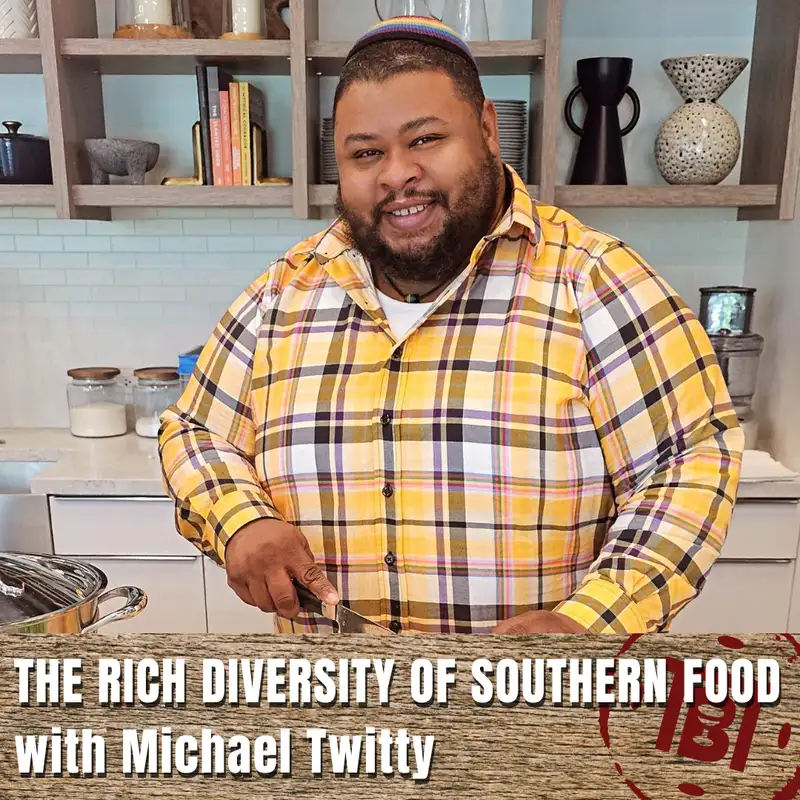
The Rich Diversity of Southern Food with Michael Twitty
Episode 58 (Michael Twitty)
===
Andrew Camp: [00:00:00] Hello, and welcome to another episode of The Biggest Table. I am your host, Andrew Camp, and in this podcast we explore the table, food, eating and hospitality as an arena for experiencing God's love and our love for one another.
And today, I'm thrilled to be joined by Michael Twitty.
Michael is an acclaimed culinary historian and author of the two-time James Beard Award-winning folk, the Cooking Gene, as well as Rice and Kosher Soul. He has written for many publications and been featured throughout print and broadcast media, including The Guardian, the New York Times, the Washington Post, PBS, and NPRs, the Splendid Table. He has given over 500 public talks and appeared in numerous series, including Taste The Nation and High On the Hog.
So thanks for joining me today again, Michael. It's, it's great to have you as a guest again.
Michael Twitty: No problem. Yeah,
Andrew Camp: you're my first returning guest on my podcast, so
Michael Twitty: Oh, wow. Very cool.
Andrew Camp: Yeah. So if listeners, if you, I recorded an earlier episode, it was episode 17 with Michael. Uh, it was released back on June 18th, uh, [00:01:00] 2024.
And so encourage you to check that one out. Um, but a lot of that conversation just sort of centered on your journey, uh, especially your books, the Cooking Gene and Kosher Soul. And so for our listeners who haven't listened or aren't familiar beyond your bio. Who is Michael Twitty? Um, you know, and what's your journey been like?
Michael Twitty: So, um, when I was very young, I told my parents that I wanted to be, they asked me what I wanted to be when I, when I grew up and I said, um, I said I wanted to be a writer and a chef, a preacher and a teacher. I think that probably the answer probably came off of the Bible verse. You know, you know, yeah. The one with the pictures of men and the da da, you know?
Yeah. But I think in some ways it's come true. Mm-hmm. I mean, I do things that are not normal. I'm, um, I'm a former Hebrew school teacher, 15 years in different synagogues. Um, I am [00:02:00] a culinary historian, which means I focus on the food history of not just food, but people's relationship to food. What they turn food into and what that food in turn turns them into.
Andrew Camp: Hmm. I love that.
Michael Twitty: Um, and I'm a food writer. I'm not a, I'm not a, a restaurant chef. A lot of times I get, people will go, so you're a chef, so you're in a restaurant, so you're a food critic. And I'm like, no, that's, those aren't, that's, that's, there's more than just those things in the food world. And by the way, it was a food critic.
I wouldn't tell you. Right. You know, most food critics are anonymous. Um, and a restaurateur. Why would I have time to talk to somebody if I'm running a restaurant? People, you know, they, it's not like Sesame Street. These are the people in your neighborhood and you just meet everybody and smile and have a conversation and move on.
Um, and I say that with as little grit as I can possibly muster, just because [00:03:00] people need to understand that. The food world is very vast, very complicated. And to put it as bluntly as possible, um, people like me, people of African descent, people of color, you know, we may be make our presence known, but there's not that many of us.
Andrew Camp: Hmm.
Michael Twitty: So people think, oh sure. There's gotta be not a proportion to who we are in the population or in, or in the western world in general.
Andrew Camp: Wow.
Michael Twitty: We're just not like, we're not the majority. And that's important because when we publish books and publish work or propose projects, particularly those that come from our cultural lens or our history or whatever, you have to convince people to get behind that and publish it.
Unless you do, you do it yourself. Yeah, and like a lot of people, I started off doing my own [00:04:00] work. And then I got, you know, you know, what do I say? I got, um, tagged. I got that went viral. And the bottom line is because of that, I was able to have a career of my own. And be able to speak for myself in ways I probably didn't imagine, but you know.
But part of that was because we simply don't have the opportunity just to have our own voices and our own venues. And so we do, we speak on our own terms and our own space. And amazingly there tends to be quite popular. Right.
Andrew Camp: You
Michael Twitty: know, and then, then you find, then you have an editor and people just think, you just whip a book up.
They think that you just. You know, they don't understand like, when's your, then they go, when's your next book? And it's, it's the craziest question. No writer would ever ask another writer, when's your next book? Because these aren't, these aren't, this isn't quick. It doesn't [00:05:00] fast. It's a whole process. And there is a a, there was literally a birthing and a grieving at the two ends of that process.
You know, once it's out in the world, you see all the mistakes. It's like, it's like having children, you know? Yeah. First they're perfectly beautiful and you're like, wow, that's me and that's my spouse, or that's, you know, someone who I've been entrusted with raising their, raising them and giving them a life.
Andrew Camp: Mm-hmm.
Michael Twitty: And then one day you get called into the school because, um, you know, they put, put, used gum into some of the kid's mouth and you're like, damn, this is my kid. Yep. And, and, but you, but you realize as they grow, they reflect you. And it's like you, your work in the world.
Andrew Camp: Yeah.
Michael Twitty: Yes. There's mistakes. Yes, there's typos.
Yes, there's things you wish you would've put in, but at the end of the day, that is still part of you that's out in the world, and it will have its own legacy, just like you've had yours.
Andrew Camp: And so, as a culinary historian, you've, you know, anybody in [00:06:00] the food world or loves the history of food or thinking about this table, like, you know, you're a name that comes up a lot, right?
Like, and mm-hmm. Your work has influenced a lot of us. Um, but you wrote a cookbook, you know, and so why, why, what, why a cook As a culinary historian, you know, what, what led you to wanna write a cookbook versus, you know, sort of a history, um, of southern food?
Michael Twitty: So I've kind of, uh, in some ways the cook, the cooking gene and kosher soul, which get mistaken is cookbooks for some people.
And they're like, well, I'm not a cook, so I don't need a cookbook. I. You know something. Let, let me backtrack. Just I second, I think in light of what I just said about people's background identity and, and their contributions to the food world, I think it's really important people understand this. A lot of the cookbooks that are done by black, all this have little tidbits of their lives, but no real full exploration because that wasn't what.
Was ever [00:07:00] asked of them. I think I, I, I think one of the many groundbreaking pieces that were done was Strawberry and Spoon Bread. Strawberry was a strawberry wine and, and Spoon, bread and hardboard strawberry wine. And, um, two sisters, uh, from North Carolina, well from New York. And, um, the Darden Sisters and then Crystal Wilkinson, who is here present with us her first big, um, food book.
Um. His name I can't think of at the moment. Um, but, but, 'cause it's, 'cause I'm tired. But the bottom line is Crystal Wilkinson did a beautiful book, um, and it really shows her family's life and history in Kentucky and the food that she grew up with and as an Appalachian family. And, but for the most part it's like little tidbits tucked away, but no real black food books in the sense of an integrated life, um, with food.[00:08:00]
Um, I, I food is, you know, it's almost like, and, and there's, in Zaki Shange did a beautiful book many, many years ago, which got updated. She's no longer with us, the poet and playwright. If I can cook, you know, God can, um. Oh K. Crystal Wilkinson and Praise to the Kitchen Ghost. Sorry, crystal, we got it in there.
Yeah. Um, but I mean, the bottom line is that there's not, and there's almost none by black men.
Andrew Camp: Hmm.
Michael Twitty: N almost none. You know, I can think of some beautiful things that Richard Wright and once said, and little here. They of course has, you know, cooks by cookbooks, by black male chefs. Yeah. Like I said, you can glean parts of the story, but it's not really, you know what I'm saying?
Andrew Camp: Yeah. A
Michael Twitty: full integrated text where food, family history, personal history or whatever life experience, there's, there's, there's, there's no, there's not a whole lot of books that would like, say, for example, have the same tone as a Ruth Reichl book.
Andrew Camp: Mm-hmm. [00:09:00]
Michael Twitty: You know what I'm saying about food and life, and so that's what I really want to do because I want to show we have lives and there are people who like looked at Cooking Gene went. Why did you put that personal detail or why'd you put that story in? I'm here for the food and I'm gonna, because you are a religious man, I'm gonna refrain from saying various cuss words. So I'm gonna say gobbly gook, um, raccoon vomit. Um, instead, and therefore just put people on notice that this is my life.
I don't owe you. If you don't want it, you don't have to be here. But I do owe it to myself to tell my food story. Yeah. And the kitchen story and kitchens are social places and for a lot of cultures, but especially black American culture. And because of that, um, I often, I often have a few recipes sprinkled in a lot of personal memoir and food history and family history.
Andrew Camp: Mm-hmm.
Michael Twitty: I did that for both Cooking Gene and Kosher Soul. I was asked to [00:10:00] find people for a southern cookbook, a big bible, southern cookbook. They call them Bibles, not me. And, um, just you were wondering.
Andrew Camp: Yeah.
Michael Twitty: Um, but this, this book was about, was, was supposed to be for somebody else and it ended up being me just because I was just like.
Can't find, and I really couldn't because hey, guys, cookbooks are not that remunerative. Um, some are, but if you're like the most well paid, whatever, a lot of it goes into that production value and research and assistance and it, it's a lot. But I'm, but I'm, I am gonna say that this was something that I felt a certain responsibility to take on.
Yeah. Because there's, okay, going back to what I said again. Black people just haven't had the same space to talk about the south in the same ways. A lot of times southernness, so probably anticipate questions you've, you have [00:11:00] is incorporated or interpreted. The lens of white. Yeah. What does he mean by that?
What does he have to talk about? Race and identity and color. Da, da, da. Because if you ask most people what their definition of the South, the first thing pops in their head is the Confederacy. Yeah. How long was the land in the south settled by human beings? Probably about 11,000 years. Would you take four years of that whole experience defined by white supremacy, enslavement.
Uh, abuse and exploitation of human beings, that it was actually long before and long after. And define a region by a weird border that does not in fact include Maryland, Kentucky, Missouri, um, or, or a West Virginia.
Andrew Camp: Yeah.
Michael Twitty: Now I know we have some people listening who are gonna go, well, first of all, Maryland was the North, sorry, sorry.
Mary Land was the North Merlin was not the North. [00:12:00] We can, that's a whole other podcast. Uh, West Virginia may have split from Virginia, but here's the deal. They split from Virginia. But do you really think the people on the other side of that board had any different culture? No, not the ones living in the Blue Ridge and, and the Appalachian part of Virginia.
Nope. Um, Kentucky was kind of like half-ish, Missouri was half-ish. So people go, Missouri, Missouri wasn't, I said a lot of it was, yeah, I just, just, just those kind arguments, um, get really in the way, but again. Black people in particular. We, you know, ever since we came up with soul, it was really, really that way.
We never really been allowed to be southerners.
Andrew Camp: Hmm.
Michael Twitty: Not in the same terms. White people have been. Right.
Andrew Camp: Like,
Michael Twitty: like that's the thing. And then when we introduced Soul into the mix, we were soul and they were Southern.
Andrew Camp: Hmm.
Michael Twitty: So I am, I have a cookbook in front of me that [00:13:00] is, that is, that is. White, Appalachian and Appalachian.
That is, you know, Creole and Cajun. That is Mississippi, Chinese, Turkish, uh, sorry, Kurdish from Tennessee. That is Latino from all over. Recent and past that is, that is all the different groups, not just salt and pepper, you know, southernness and you know, giving, wanting to talk about diversity, migration, immigration, and all the different pieces.
Up being Southern people and as a culinary historian, I was given, you know wide birth to really inject that part of my passion into this cookbook. So every recipe has context, has history, has a story because it's part of our family.
Andrew Camp: No, it is, and that's what I love. Even, you know, just the introduction alone to your cookbook.
Um, which, you know, for listeners is recipes from the American South, um, is just [00:14:00] worth the price just because it does at least open the gates to say, okay, Southern food is way more than what we eat. Typically define it as, um, you know, and you even just go into the fact that Southern Food is, you know, you have this great quote that Southern food is a product of fortunate collisions, cooperation, and sometimes chaos or confusion.
Um, you know mm-hmm. There's a lot that went into Southern food. And so like, can, can you even describe, like if you had to encapsulate what Southern Food is, can you encapsulate it into a brief sentence, or is it just too broad that it belies definition.
Michael Twitty: I think that it's broad and, but I, but I also think that if you could just kinda like focus on certain things.
For example, the cookbook cover back and forth is really a thesis and of itself. Hmm. There's black eyed peas, corn and collard greens. The representational on the back, [00:15:00] there's okra. So we have Indigenous America. We have, um, for lack of a better term, Eurasia in the old world.
Andrew Camp: Mm-hmm.
Michael Twitty: And we also have Africa.
And the, the synthesis of all those different pieces is really what makes Southernness unique. I mean, yes, there were black people, white people, and indigenous people in. New England, but it wasn't the same recipe. Mm-hmm. There were lots of different kinds of people in the middle colonies, not the same recipe from MER South.
There was a whole different dynamic that morphed into different dynamic. And while time moved on in other regions, people moved across the southern landscape. They took the Chesapeake Bay into the bluegrass and then [00:16:00] took that. Into the southern Midlands and then took that into, um, the southern plains.
See what I'm saying?
Andrew Camp: Yeah.
Michael Twitty: Well, they took the low country into the deep south, took it all the way to, um, the Southern Midlands and took that to the southern coastline. People just kept, and of course there are people, uh, the same story could be said for people who landed in Biloxi or, um, mobile or Galveston or New Orleans.
Going, pushing out from the coast upward. Mm-hmm. And the constant dialogue between the south and the Caribbean.
Andrew Camp: Right.
Michael Twitty: All those things made the south and the unique, it's corn and rice and wheat. Those are the staple grains. And then if we talked about vegetables that are unique and important, the okra, the collard greens, the eye peas, that, you know, elements of an enslaved person's garden.
Andrew Camp: Hmm.
Michael Twitty: The corn, the beans, and the squash, the maque choux the succotash. You could, if I, if I really [00:17:00] wanted to push this book over the top and I have the time and the money and the, and the effort, I would've created a family tree.
Andrew Camp: Hmm.
Michael Twitty: So people could go, oh, I get it now. Yeah. And of course, you know, it's pork, chicken, fish, seafood, and game.
Those are the majority of the, the proteins right, we're talking about. And so all those different elements kind of push together. And what's really powerful is that you might have succotash in the southeastern seaboard, but maque choux in Louisiana and okra, corn and tomatoes in the middle.
Andrew Camp: Hmm.
Michael Twitty: And you know, Berg or Berg or Brunswick, stew.
I mean all these things. Um, jambalaya. etouffee, but also smothered this and red rice and a lot of the dishes, whether regardless of the culture, have parallels or cousin dishes. Right,
Andrew Camp: right.
Michael Twitty: And most of the time it's not because [00:18:00] they're not derivative, it's because they come from the same kinds of mixtures of peoples, but the same kind of ecosystems, climate, et cetera.
And of course, the other part that it's so problematic, powerful, and unavoidable. Is the fact that the American obsession with power dynamics based on race, exploitation and extraction. Yeah. Kids are saying extraction these days and I'm actually kind of glad of it and hierarchies are involved because we often think, as I wrote, I wrote in the introduction, we often think about the south through.
Two or three different lens lenses of one is the, you know, Patricia Plantation table.
Andrew Camp: Mm-hmm.
Michael Twitty: And another one is the poor folks table. [00:19:00] And I don't really, I don't really know of another region of North America, let alone the United States where there are these very sharp and very powerful. Stereotypes and tropes.
Andrew Camp: Yeah,
Michael Twitty: I mean, I've never heard of someone say Minnesota Land of the Patricia whatever, and the poor guy and, you know, uh uh No, I never heard that. Mm-hmm. So, and, and I mean the number of books and novels and poetry and movies and short films and artistic creations. That depict the south, either on the terms of southerners or on the terms of those on looking with fascination in southernness.
Andrew Camp: Right.
Michael Twitty: I've also added to this, you can't, the pop culture part is unavoidable.
Andrew Camp: Yeah.
Michael Twitty: And so is high culture too.
Andrew Camp: Yeah. Because you write that the politics of southern food are omnipresent. That like these, this is the reality we have to confront when we talk about the [00:20:00] southern table, the southern recipes.
The Southern Gardens, like this is the reality we're facing and it's all intertwined, you know, and what I love about you is, you know, your, your storytelling tells the story of the beauty and the hardship of what this food is and, and the origins and, and the stories that go with it. Um, so yeah, like that's, and so I think too, you, you invite us to be curious what, what is southern food and how do we get past it?
You know, our preconceptions and ideas of southern food as fried chicken, biscuits and gravy, or, you know, we all have ideas even if we've, I've never been to the south much, like maybe once or twice, but I have ideas and deep beliefs about what Southern Food is. And yet, like again, your book is this love letter to Southern Food and the Southern Table.
And so it's like, how do we be curious as we think about all this intertwining of cultures that has happened? To give us the southern table. Where [00:21:00] have you been in the cell? You know, I don't even, that's where I'm like, maybe. That's fine. Yeah, no. Like, you know, Texas, you know, if you consider Texas, you know, part of the south, um, depends on what part
Michael Twitty: of Texas.
Andrew Camp: Yeah, right. Like gal, I, you know, I've been out of cruises in Galveston, you know, or like, been to San Antonio briefly, which
Michael Twitty: Galveston would count San Antonio as in suspect.
Andrew Camp: Yeah. Um,
Michael Twitty: I never that, that again, that's, that's part of the deal.
Andrew Camp: Yeah. Right. Yeah. Never been to Louisiana. Never been to Alabama or Mississippi, you know?
Um. And yet I have deep ideas of what Southern food should be or is. And
Michael Twitty: of course it, it, it's, you know, there's this really interesting line, I forget who, forget what's attributable to, uh, it was, I dunno, if wasn't MK Fisher, who was this? I think it was, um, I can see her, see her books and face in my, in my head.
And there was this, she's just well known I'm having in one of those days.[00:22:00]
Extremely important food writer. I have my phone turned off. I can't look it up.
Andrew Camp: Yeah.
Michael Twitty: But she talked about how she was like, they went to Williamsburg in search of like this wonderful old school southern food and apart from a few places within Colonial Williamsburg, which at her at that time, it really was like a kind of like a local, not local, that's another way to say it.
The Virginia Cuisine Haven.
Andrew Camp: Mm-hmm.
Michael Twitty: I mean, this is different times. I mean, this is when you could get, like, those are the days when you can get like a full like whole whole s lobster on the plane kind of deal. And you know, there's extravagant, the taverns, like, you know, King's Arms just always well known.
The restaurant system that's separate from the actual historical part. Mm-hmm. And they said outside of that, there was like, there was like, they wanted these little like country dives and other places and, [00:23:00] and you know, diners and, and little cabins and they couldn't find them or it was like re auto automobile, tourist food.
It's still, it's still a big part of the, the food culture of, of Williamsburg the town are the pancake houses.
Andrew Camp: Okay.
Michael Twitty: It's where mostly Greek owned. And run. Um, but again, that's part of the southern history until the, the, until the arrival of Italians, Greeks, and Jews and predominantly Greeks. There weren't a whole lot of actual restaurants, a lot of times, hotels, taverns ins.
Doubled, but sometimes they weren't great or you went somebody's house. That's why the, the whole hospitality thing was such a big deal. Like people who have the money and the time and the ability, you know, and also remember the, the South had poor infrastructure, especially prior to the Civil War. So having somebody at your spot and inviting your neighbors and friends to meet so and so, [00:24:00] and putting, you know, having your workforce, uh, predominantly black, then immigrant.
Make a meal was a big deal.
Andrew Camp: Mm-hmm.
Michael Twitty: Um, so those pancake houses owned by Greek folks, you know, that was, that was, that was how it went, right? Yeah. But also the idea that people would go to this, people would, people think they're always gonna go to the south and see these doners, uh, truck stops and dives kind of deal version.
Andrew Camp: Yeah.
Michael Twitty: Or, you know, these elegant, hyper contemporary southern restaurants that elevate southern food as if it had to be elevated. All that's really important to the, to the narrative and even that conflict, uh, it's not gonna be, like you said, it's not gonna be cut and dry. It's not gonna be clean and easy.
It's gonna be what it is.
Andrew Camp: Right. You know? And so you've already hidden on it a little bit, but, you know, as you've thought about this book, like what, what common misconceptions about Southern Food and even the South in general, are you, you hope in your book maybe corrects [00:25:00] or just sheds light on in different ways that need, you know.
People to see in new ways.
Michael Twitty: Every, it's all salt and pepper people, you know? No, it's, um, Chinese, Japanese, Vietnamese folks, especially now Vietnamese folks. Right. Um, Mississippi, uh, Louisiana, particular Texas. Coastal Texas in particular. Houston, yeah.
Andrew Camp: Yeah.
Michael Twitty: Alabama. Other places who cock with a country twang.
It is Latino kids who are second, third generation, um, even within my lifetime. And yours whose favorite thing is Zaxby's and Bojangles and Spanish is not great. Mm-hmm. The same English that other Southern people speak. Right. It's um, you know, masjids in the south, it's synagogues that have had a very long history that I described in kosher soul, the food [00:26:00] ways.
Yeah. It's, um, it's the fact that even the salt and pepper people have, you know, a rich diversity of, of cultures and languages and food histories. Everything in the south is not fried.
Andrew Camp: No.
Michael Twitty: We're boiled to death.
Andrew Camp: Right.
Michael Twitty: Um, everything in the south is not spicy.
Andrew Camp: Hmm.
Michael Twitty: Everything in the, every, all the food in the south is not necessarily.
On some continual between poor and rich. Yeah. And what is very powerful is that unlike other places you see there, that African influence is not just big in terms of the ingredients and the cooking, but in terms of the hospitality and the style and the mood of vibe. Mm-hmm. So, you know, in, in, in Africa, and somebody's gonna, inevitably will say, well, Africa's a big place.
I know that baby. I've been to eight different countries. Try me, try me.
Andrew Camp: Yeah.
Michael Twitty: [00:27:00] Africa, Sub-Saharan Africa, black Africa. I hate those terms, but I have to use the peoples, um, mindset, their vision. It's very, it's, it's a common thing that the ruler, the royalty, the nobility crave the same kind of like foods that are stable to the culture.
It's because there's no, um, apart from foreign ingredients and animal pro, certain kinds of animal protein. There really isn't a, a, um, hierarchy in terms of food.
Andrew Camp: Hmm.
Michael Twitty: You know, it's, uh, it's replete within African folklore and songs and poetry and, and music. And also just the, the king wants a sing fufu as the peasant.
Andrew Camp: Right.
Michael Twitty: You know, I've been to many Southern Foods Alliance gatherings where the biscuit or the cornbread was, you know. By an esteemed cook or chef [00:28:00] was, I'm like, wait a minute. If somebody else would come from outside of our culture and be like, well Ks is biscuit and cornbread. Like, yes, well-made is is a thing.
Yeah, that's a car. That's a carryover where people realize it or not from that African heritage.
Andrew Camp: Hmm.
Michael Twitty: And why wouldn't it be? Because we are the ones who cooked a lot of the food now. All of it. I'm very keen on that. I don't wanna, I don't wanna overstate it. 'cause there were vast areas where there were none of us.
Andrew Camp: Right.
Michael Twitty: But what's so powerful is that it didn't matter that there were, that were, there were no longer poets in mass numbers or in Antiochs. The food and the words and the, and some of the traditions came down to people who never, who never met a Native American. Mm-hmm. And some of those African food ways came down to people who, who didn't have a black population around them.
And I think that's an important thing people need to understand is that, you know, there's that, but also southern [00:29:00] food should be known for its ability to be passed down to the generations.
Andrew Camp: Yeah.
Michael Twitty: Southern food, as I say in the cookbook, and I write in the cookbook often. I talk about the life cycle. I talk about herbalism and healing traditions.
I talk about all these things with essays. Um, and of course, sprinkled throughout the book of references to music and to dance. I mean, there's a chitlin dance. I've never done it. I don't know what it looks like and I would never do it, but there's a Chitlin dance, the Chitlin Festival in, um, South Carolina called the Chitlin Strut.
And we all know of, uh, country hip hop blues, um, you know, which it goes without saying, um, blues. Jazz country, um, a lot of r and b born in the south.
Andrew Camp: Yeah. Mm-hmm.
Michael Twitty: And so therefore, the music makes reference to food, and [00:30:00] food is a part of life. And food as expression of sensuality and food is an expression of, of nostalgia and memory.
And so it gets incorporated with these music forms that began in the cell. And of course like there, and I say people, there's no sweet tea line, there's no grits line. That's so dumb because there, there millions of southerners have moved out and some of those descendants have moved back. Mm-hmm. So there's sweet tea all over the country now.
Andrew Camp: Right.
Michael Twitty: Somebody may say, well now that's not where I'm from. Uh, come on now. You know this place called, this place called McDonald's.
Andrew Camp: Yeah.
Michael Twitty: You know what I'm saying? Even that shows you. Shows you, I mean, that's within our lifetimes, but it just shows you that there been enough pe Southern people who have made that migratory push and have influenced other people.
People know we can cook,
Andrew Camp: right?
Michael Twitty: They know our food is the best food.
Andrew Camp: Mm-hmm.
Michael Twitty: And so therefore, why, why, why else? I mean, you don't, [00:31:00] okay, lemme give you, lemme give you this just joke. I used to say my own presentations. And please show me. Please show me. Um, a clam bake restaurant in Chicago. You get me? Mm-hmm.
Please show me like, I don't know, a Pacific Northwest Dungeons Crab Feast in, in Iowa, right? Yeah. But you can buy fried chicken almost anywhere,
Andrew Camp: right? Mm-hmm.
Michael Twitty: You can buy, you know, sweet tea and you can get. Biscuits and gravy. And a lot of these are things that are obviously Southern. You can get dirty rice and red.
I mean, this is just like, please, we've already made our, you know, whether people consider fast food, um, a sign of impact. I definitely do.
Andrew Camp: Mm-hmm.
Michael Twitty: And it shows you that our region has made [00:32:00] an impact, not always for the better and not always the greatest. But then again, that's why people like me would go, man, I can't eat that unless I'm really hard up because I have to make it at my house.
I know what I want to, to taste like. Right. It look like.
Andrew Camp: Mm-hmm.
Michael Twitty: I don't, I'm not one of the people that goes, people ask me all the time, so where do I get great fried chicken? My house?
Andrew Camp: Right. Yeah.
Michael Twitty: I get great barbecue, my house.
Andrew Camp: Mm-hmm.
Michael Twitty: Point being is that no place honestly. Can satisfy those cravings for what I grew up with and how my mother and grandmother and father and and uncles cooked.
Andrew Camp: Yeah.
Michael Twitty: Like where I'm from. And also I would eat, of course I'm gonna eat at somebody's house who is also southern. I'll tell you a quick example. I met a lady in New Orleans and she was driving the shuttle. It was just me and her and I said, you know, Orleans, people talk a good game about food and the, you know what a restaurant, but y'all like don't even like the restaurants.
You say it's always grandma's house, always your house. So she said, Uhhuh, [00:33:00] you'll be at my house on Friday at three o'clock. And I said, all right. And I showed up a little bit early and she had, she was making gumbo there, which is gumbo with, um, vegetables, greens.
Andrew Camp: Yeah.
Michael Twitty: She made gumbo with chicken and she made gumbo with, with crab and shrimp, and she did it from scratch and showing me how to do it.
And I was just like, okay, this is wild. She made her own french bread of the Loa. I mean the dough, the start of LO's, everything, everything, everything. The salad, the Creole tomatoes. Oh my God. And then it was like neighbors came over and it was a, a community event, a family event. And I'm sure there's a lot of people who were Southern like, yeah, that's how we do it.
We do lifecycle events. We do. Um, haw killing time. We do bo seafood boils. We do, you know, uh, what do you call it, um, when you, um, tailgating?
Andrew Camp: Yeah.
Michael Twitty: We do all those things. We do it as a community and create family. [00:34:00] And that's exactly what I mean. It's just like, that's part of us too.
Andrew Camp: No, it is. And that nostalgia, those memories, you know, people will go, people will go to arms to defend, you know, their grandma's recipe versus your grandma's recipe and, you know.
Um, you know, and that's, that's the joy of food, of saying, Hey, you know, let me show you how it's done. Um, you know, come to my house, you know, where Yeah. You know, um, it's beautiful. It's fun and like you said, southern food is ubiquitous around the nation. Like I grew up in Southern California, but.
Like we, I grew up having hopin John's every New Year's day for, for good luck and mm-hmm. My dad would order sorghum syrup, um, you know, by the gallons because you know, some, you know, he has some southern roots and so like, it got passed down, you know, and so to this day, I have a little sorghum in my house and it's delicious.
I love sorghum. Uh, you know, and so, yeah, like that's, it is an interesting [00:35:00] thing of how ubiquitous southern food is throughout. You know, all cities, all states. Yeah. Because
Michael Twitty: we've gone everywhere. We've moved everywhere. And also we tend to maintain ties.
Andrew Camp: Yeah.
Michael Twitty: With the homeland. I mean, a lot of Southern people said, okay, I gotta go to this place for opportunity.
And then within a generation or two, some pe some of the kids or people moved back and they're the, and of course the home, we use terms like home and home place. Mm-hmm. There is no, there is no such thing as we leave and we never go back in any kind of way. We maintain a connection and that sorghum part is very, very, very deep.
I just want you to know that because, um, my grandfather used to give me cert from the country when I would head back home. And then a lady, a white lady from, from, um, Texas who lives, who has heritage in Tennessee. She was actually, um. Living in, um, Seattle. [00:36:00] And she says to me, older lady, she says to me, I remember you saying this cooking gene.
Well, I wanted you to have this. And so she, like I said, Texas, Tennessee lives in Seattle. She brought me a little thing of sorghum.
Andrew Camp: Oh, wow.
Michael Twitty: And it's, it's one of those things where it's, it's a taste of home, but it's also, it's also a taste of our history. But it's also like. A connection thing, and I was very moved by that.
Andrew Camp: Mm-hmm.
Michael Twitty: When you said your father had the, you know, the sorghum and you have the sorghum, that's a, that's, you know, it's one of those things that Yes. Does, you know, make a thread or root a connection between us and them and, and all the generations.
Andrew Camp: My wife to this day was like, I don't even understand what sorghum is, you know?
And she's like, it's not molasses and it's not maple syrup. And it's not sweet, but it is sweet. It's. Like to her, it's just this foreign concept, you know, where to me, like slather that on some cornbread, [00:37:00] pancakes, waffles, French dough. Mm-hmm. Biscuit. Mm-hmm. Yeah. Like it's good on everything, you know? Yep. Um, so yeah, it's an interesting, I never thought of it as, you know, a connection to the south of like, yeah.
Like there is deep threads of sorghum, um, throughout Southern people. Um, so as you wrote this book, what surprised you putting together a cookbook? Like what? Did anything cut you off guard, you know, surprise you in a good way, bad way? Like what?
Michael Twitty: No, but after I was done, I started noticing the parallels, like I mentioned earlier, maque choux, succotash.
Mm-hmm. Crab chop, crab cake.
Andrew Camp: Hmm.
Michael Twitty: And so on and so on. All these foods have these like parallel traditions within one region because it's a big ass region. I mean, it's like, it's the largest cultural and and population region in the country.
Andrew Camp: Right.
Michael Twitty: And so, I mean, Georgia is the largest state east of the Mississippi.
Texas is number two in terms of population. [00:38:00] Um, Atlanta, Charlotte, mid-level cities like Richmond Mobile, um, cities with huge cultural impact no matter what. New Orleans, Charleston, um, Louisville. I'm gonna hurt some people's feelings and I really don't care. Um, old, the old, old school cities like Baltimore, Annapolis, um, and if anyone says that's not the South, where did, where did Kente get sold?
Annapolis. Where was Frederick Douglas from the eastern shore in Baltimore? Where'd Harriet Tubman come from? The state of.
Andrew Camp: Yeah,
Michael Twitty: get outta my face with that just because, just because you don't see Confederate flags flying everywhere, which once upon a time, actually during the Civil War, to be honest with you, a lot of, um, Marylanders were pro confederate and made that known very publicly.
[00:39:00] And part of the reason why I'm even here talking to you on this, on this podcast is because for all his benefits and faults, Abraham Lincoln had the good sense. To basically shut the Maryland legislature down so they couldn't secede because they were gonna
Andrew Camp: Hmm.
Michael Twitty: If we hadn't done that, I wouldn't be free.
Andrew Camp: Right.
Michael Twitty: Wow. So there's that. But also the other parts of the south that tend to get marginalized. Missouri, parts of Missouri. Not all of Missouri.
Andrew Camp: No,
Michael Twitty: but, um, Oklahoma, West Virginia. I'm sorry, I didn't put a pepperoni roll recipe in the cookbook.
Andrew Camp: Okay.
Michael Twitty: Very West Virginia. Okay. And a coach, me Italian immigrants who went to the coal mines.
Andrew Camp: Yeah.
Michael Twitty: Right. Um, Oklahoma did get in there with the chicken fried steak. 'cause the whole, you know, Oklahoma State meal, rice, okra, a chicken fried steak. Okay. And corn bread. Right.
Andrew Camp: Yeah.
Michael Twitty: I mean all the different parts of the story that are in there. And, um, yeah, I mean I was, I [00:40:00] was kind of surprised that, first of all, that I was able to edit my brain.
Andrew Camp: Right.
Michael Twitty: I'm obsessed with this, uh, since I was six, seven years old. Hmm. You know, so for me, this isn't like for other people, it's just like, this is my version of sports.
Andrew Camp: Yeah.
Michael Twitty: This is my version of pop culture.
Andrew Camp: Mm-hmm.
Michael Twitty: Southern food and its history and its culture. Um, so like, yeah. And one of the, one of the cool things that I think I, I remember I did was.
When I started writing about barbecue sauce, which is really fun.
Andrew Camp: Oh yeah.
Michael Twitty: Um, and rubs and things. The North Carolina barbecue sauce, I suggested a variation. When you throw in a little bit of ginger oil
Andrew Camp: Hmm.
Michael Twitty: People be like, most North Carolina barbecue sauce is actually just watered down hot sauce. I'm not lying.
Andrew Camp: Okay.
Michael Twitty: In the east and the east, not in the west and the east. And, but this one mop recipe, which I remember, I mean, I saved the article. I don't know where the article is now. It might be here, it might be Thrown Away, [00:41:00] was from Southern Living. And they talked about the difference in barbecue, which I wasn't really privy to, but I was a little boy.
I was like, I was like seven, eight years old, no joke. And so this article, because my grandmother used to get Southern living, of course, like most, uh, Southern grandmas did. And I was like, whoa, ginger ale and a sauce. Wow. Um, and, you know, and that, so I remembered that and I put that in a variation for the recipe because that's one of my earliest memories of now some shockers for the audience.
Pimento cheese, hummingbird cake, key lime pie, not originating in the south, in their origin, in their form. So, no. And I had a, I had a guy from North Carolina argue with me. He's like, well, no, the Civil War at Pimento Cheese. Nope. No, nope, nope, nope, nope. It wasn't there.
Andrew Camp: Hmm.
Michael Twitty: Um, 'cause I argued my family didn't have it, didn't enjoy it because a lot of my family was part [00:42:00] of the great migration generation.
Not all, but many.
Andrew Camp: Mm-hmm.
Michael Twitty: And cheese also wasn't like a big thing. Rust. I mean a few things, but not really. I mean, this kind of like American equals processed cheese thing was not our, our story.
Andrew Camp: No.
Michael Twitty: Um, and also we had left, a lot of us had left before that became very popular. It was industrial food, right?
Andrew Camp: Yeah. So
Michael Twitty: I mean, those are some of the. Aha moments, but not, but not too deep. Yeah. But for me, the biggest challenge was editing my brain and kind of getting everything I could in there. Although I, I messed up. 'cause I didn't include fried okra.
Andrew Camp: Oh, okay.
Michael Twitty: But I never made fried okra.
Andrew Camp: Yeah.
Michael Twitty: You know, and most people don't make it.
They buy it frozen and they fry it. It's like saying french fries. Okay, great.
Andrew Camp: Yeah. Right. So if there is, you know, are there recipes you're most proud of? Or if people were like, you know, 'cause this is a, a thick book, you know, lots of recipes, beautiful recipes, but like, is there one recipe or two [00:43:00] recipes you're most proud of that you're like, Hey, if you're gonna cook one recipe, which recipe should, should I cook?
Michael Twitty: I don't know how to answer that. Um, I would say that I'm really proud of, for example, the grape dumplings. I'm proud of the recipes or the, um, pig's, ears, pig's, ears. We're not talking about the actual pig's ear. We're talking about about, or de Kon, which is like the, uh, it's a Cajun sweet made with a fried pastry, a cane syrup, and pecans.
Andrew Camp: Mm-hmm.
Michael Twitty: I'm proud of recipes that are kind of, you know, I've bumped up back in, into the list of things, people to try and make Okay. The recipes. Recipes can go extinct too. Yeah, for sure. That's what I'm most proud of.
Andrew Camp: Yeah. No, that's cool. Um, yeah, I saw that grape dumplings recipe and never heard of grape dumplings.
Um, where, can you give us a brief hit? Like what, what's the history? Native American and Sean
Michael Twitty: Sherman and his beautiful new cookbook, turtle Island also has a recipe. However, our difference is that [00:44:00] Southerners and Native Americans in the South would eventually make them cornmeal and and white flour. He uses cassava, flour and cornmeal.
Andrew Camp: Okay. Although
Michael Twitty: his is a contemporary version minus two. And just goes to show you this was a big part of, you know, indigenous life. Particularly in the fall when the fox grapes and musca down scogs were wild, would, would be harvestable and very sweet. Yeah. And they would take the little balls of cornmeal, throw them in there and um, you know, they'd absorb that, the juice.
And um, yeah. These are things that are really old school. That have an antiquity to them. I mean, these, a version of this recipe was probably made long before a single European even thought about America.
Andrew Camp: I appreciate that. Um, and I'm curious, you know, you're, I follow you on Instagram and you're not shy, you know about posting, about the moment we're living in.
Um, and so like as you think [00:45:00] about culinary history, the table, hospitality, like what do you hope in this moment, maybe food. Whether it's southern, whatever food you're, you know, veered, what could the table provide for humanity?
Michael Twitty: A lesson on empathy, sharing compassion, um, how not to be selfish, how to appreciate, um, gifts of the creator to know that we have to nourish the earth.
I think a lot of people mistake. Peop Uh, I have to say this, people sometimes have an attitude towards earth reverence that smacks of, they know that in their bones and in their body is this reverence for nature in the earth. But I think some believers mistake that reverence for blasphemy.
Andrew Camp: Mm-hmm.
Michael Twitty: But you cannot possibly.[00:46:00]
Read into the depths of, of ethics in the Hebrew Bible or in the Christian Bible without understanding the agrarian Yeah. Natural. Mm-hmm. Um, and from, I mean, I just happen to have this, this is from the farming area at Princeton, which is led by, uh, you know, um, a person grew up Mennonite.
Andrew Camp: Yep.
Michael Twitty: And it says, let creation preach.
Andrew Camp: Mm-hmm.
Michael Twitty: And one thing Eric said to me. Was talked about like the, the compost pile. Giving a sermon
Andrew Camp: Hmm.
Michael Twitty: About resurrection and life and what we need to, what we, what community comes out of our life as opposed to what we put into it.
Andrew Camp: Yeah.
Michael Twitty: And I think the table does a saying does a very similar work, but not so, maybe not as profound.
Um, in Jewish tradition, we call the table, um, the miss the altar because the house is the mik mount. It's a little temple. There's this, [00:47:00] the synagogue where there's the, how your house functions in similar ways. And I mean, in most traditions the table is a place of, of nourishment gathering. We take these things for granted.
You know, just 'cause we have a Thanksgiving doesn't mean we really understand all the values around that.
Andrew Camp: Yeah.
Michael Twitty: For me personally, um, I, I ask people to think about. The person who isn't at the table this year.
Andrew Camp: Hmm.
Michael Twitty: Who has been kidnapped, who has been deported, who has been assaulted, who has been harmed. I asked him to think about the labor of the food labor that led to the food that's on the table, rather, I asked him to think about the resources that were extracted and exploited to get that food to the table.
I actually think about the lives of the animals and. The perpetuation of the plants and the species that feed us [00:48:00] think about everything. It's not enough to, to make a confession of faith. If you really have, have live a life of faith, then there is absolutely nothing that, that your spirituality, religious tradition doesn't touch on.
Andrew Camp: Yeah.
Michael Twitty: Okay. And the food and the table is a gateway. To understanding that, and I ask people to do that because I think there's a tendency now, especially that cultural issues are exploited for shock value and for anger and emotions, but that's that dopamine religion, that dopamine spirituality is just not the equal of having a consistent sense of amazement.
Virtue sacrifice and joy in [00:49:00] living life for God on the terms of a, a blessed humanity.
Andrew Camp: Yeah.
Michael Twitty: Yeah. Amen.
Andrew Camp: Don't think anything more needs to be said,
Michael Twitty: you know? Hopefully the next generations that are here with us now and will continue on, we'll have more to say. Yeah. 'cause this is, this is, this is for them. It's always for them. I think that one thing I wanna kind of like put on the table, as it were, is something that I was taught a long time ago, and it still remains to be true.
Everything that happens to us occurs for the sake of someone else. And everything that happens to others occurs for our sake.
Andrew Camp: Mm.
Michael Twitty: Yeah. We are meant to be interdependent and we're meant to feed each other.
Andrew Camp: Yeah, yeah. Yep. My flourishing should result in the flourishing of everybody else, and that's it.
Other people's [00:50:00] flourishing should result in my flourishing.
Michael Twitty: That's right.
Andrew Camp: Yep. And if my flourishing leads to the violence of others, whether it be living, non-living, then we need to rethink what that actually looks like.
Michael Twitty: That's right.
Andrew Camp: I love it. I love your wisdom, Michael. Um, it's always such a gift.
Thank you to talk with you. Um, yeah, your heart, your passion, um, your non BS way of, you know, and in a good way, right? Like yes. And I appreciate that. Yeah. We need truth tellers. And you're a truthteller. Thank you. And you're a storyteller. Thank you. And so obviously people pick up recipes from the American South, but are there other places where can people find you if they wanna follow you, learn more about your work?
Michael Twitty: Instagram is great. Mm-hmm. Uh, the cooking gene, I'm also cooking gene on threads and kosher soul on blue sky.
Andrew Camp: Okay. Yeah. Okay. So follow Michael. Um, again, thank you, Michael, for the time. Uh, no problem. And if you've enjoyed this episode, please consider subscribing, leaving a [00:51:00] review or sharing it with others.
Thanks for joining us on this episode of the biggest Table, where we explore what it means to be transformed by God's love around the table and through food. Until next time, bye.