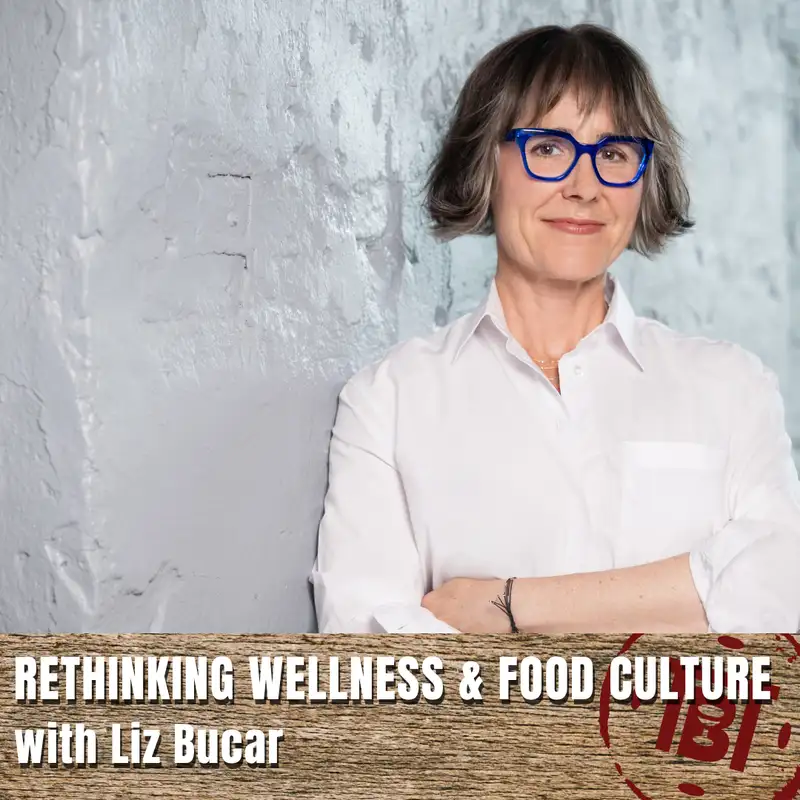
Rethinking Wellness & Food Culture with Liz Bucar
Episode 65 (Liz Bucar)
===
Andrew Camp: [00:00:00] Hello, and welcome to another episode of The Biggest Table. I am your host, Andrew Camp. In this podcast, we explore the table food, eating, and hospitality as an arena for experiencing God's love and our love for one another.
And today I'm joined by Liz Bucar.
Liz is the religious ethicist and professor of religion at Northeastern University, as well as a certified inin and Kripalu yoga instructor. Her popular writing has appeared in the Atlantic, the Los Angeles Times Teen Vogue and the Wall Street Journal. She's the author of four books, including the award-winning, stealing My Religion, and Pious Fashion. She lives in Brookline, Massachusetts.
So thanks for joining me today, Liz. It's it's great to connect.
Liz Bucar: Thanks for having me on, Andrew. I'm excited to talk about food. I love eating and food, so
Andrew Camp: Awesome.
Liz Bucar: It'll be fun.
Andrew Camp: It will be. Um, and so you have a new book coming out called, um, Beyond Wellness: How Restoring the Religious Roots of Spiritual Practices Can Heal Us. Yeah. So before we sort of really dive into this book, [00:01:00] I'm sort of curious a little bit more about your story, your religious ethicist, and so what's, yeah.
What's your love of religion and you know, like why, why exploring religion and, you know,
Liz Bucar: wow. Okay. This is gonna take us way back into the, yeah. This a little bit of a long story, but, um, so, uh, I study, I'm a religious studies scholar, kind of by mistake. Okay. Um, uh, which is how all the great stuff happens in my career.
I think, um, uh, every book I've ever written is kind of a mistake too, like, oh, my writing. Um, so I come to it, you know, I, I, I'm baptized Catholic, but I was raised congregationalist, Protestant, sort of, I like left. You know, I wasn't really active in the church after middle school. Have a pretty religious mother, non-religious father.
Um, you know, my partner now, he's Jewish. I like, sort of consider myself non-religious affiliated. Okay. So I'm a nun. N-O-N-E-S, I guess. Okay. Yep. Yep. Um, but so that's sort of like my personal like sort of relationship to religion. Uh, but my. Intellectual. Well, so that's the beginning of my story of religion.
I'm gonna tell you kind of a beyond law [00:02:00] school. I'm changing my relationship to religion, but why am I Professor of religion is, that's a sort of by mistake thing. So when I left college, I was doing nonprofit work in DC and I was working on issues of reproductive health and public health and Latin America.
And I was like, whoa, like. Religion is like a, a big factor in this. Like, I need to understand, like I just know what the hell is going on, right? I need a lot higher level of religious literacy, particularly Catholicism than I had at the time. Um, like just because, you know, it's, it's not as easy as like, oh, the Catholic church church is against abortion or contraception.
Right. It's a much more complicated picture. So I, and I was working for a group at that point called Catholics for Choice. She's a pro-choice, um, pro access reproductive health organization. It works, you know, globally, but especially in Latin America at the time. Um, and I applied to graduate school in public health, law and religion.
I was like all over the place and I started a religion program, not planning to do a PhD. I don't come from a family of academics. Like being a [00:03:00] professor was like not on my bingo card. Right. Um, and I started at the University of Chicago and deferred law school and I just was like. No, I love this. Like, these systems are so complicated and interesting and when I realized that, that they were fine with me not being a Catholic moral theologian without having to like step into a tradition, they were like, you could be a comparativist.
So that's, that's what I was, I like studied my traditions and that's sort of like, it brought me was like pragmatic reasons, right? Like, I wanna fight social injustice. Religion is a factor both positive and negative. Yeah. I got like, so that's at the beginning of my career and I, you know, I did. I did a lot of work, um, in the Catholic Church, but also in Shia Islam, and I'm, I'm kind of like a big comparativist, but I think my career, my, my interest in religion, that intellectual interest and that personal interest have sort of shifted.
I don't know, maybe this is like a midlife thing. I'm like 52 or whatever, like, or maybe it's like what the world is demanding me right now. But I think my new book Beyond Wellness, I'm being much [00:04:00] more into, I mean, it's very personal for me. It's, hmm. Thinking about studying religion all these decades, studying religion that's not my own all these decades has really taught me something about, um, what I think human flourishing is.
Like my own sort of helped me get a sense of my own core values, my own sense of right, wrong, um. What I can imagine for like a better life or world, I'm really informed by religious communities and traditions I'm not part of. Right?
Andrew Camp: Yeah.
Liz Bucar: And this new book is me being like, okay, if you're non-religious affiliated or if you're outside some of these traditions, but you kind of like wanna engage some of their wisdom, what does that look like in an ethical way?
Right? So my book before this one was a book about cultural appropriation of religion. So like, kind of like, uh, maybe don't do that. Like, or if you do that, just know there are consequences, there's harms. This new book is like, okay, fine, I made you feel guilty now. Like, where do we go from now? Go from here.
Right, right. Like how, what do I do if I'm like, I just think there's so much I'm missing as a non-religious [00:05:00] affiliated person. Um, how can I use these religions as conversation partners?
Andrew Camp: Hmm.
Liz Bucar: And today I assume we'll talk about food, but my book has seven different studies, right? Yeah. One is food.
Andrew Camp: Yep.
Liz Bucar: And food is a great example because religious communities.
Think about not just what to eat, but like how to eat right. And the wellness culture that I've been studying just is not thinking about that. Right. Um, so here, let's have this conversation about, with these different religious traditions, let's both see like how has religion done us a little dirty in terms of food and diet culture in the us?
'cause there is, there's a story there, right? Let's be honest. It's not all roses. No. And then also, right, but then also like what's the counter, what's the counter Christian conversation, but what's also the, um, you know, some of the resources from other religious traditions that could help us really, like you said, like eat well and have that be part of human flourishing in a deeper way.
Andrew Camp: Wow.
Liz Bucar: Yeah.
Andrew Camp: Uhhuh,
Liz Bucar: it's a
Andrew Camp: long, yeah, no, and I appreciate it. Just 'cause it does, like, you know, I, [00:06:00] the theoretical aspect is important, but I love hearing the story of what. What's drawing people into why they are doing what they're doing. Right. Yeah. Like there's a deeper story and, and no, I appreciate what you said and you really hit on some key aspects.
'cause I think we are all in this moment. You know, even before we started recording, we all, you know, we were joking that everything's a hot mess right now.
Liz Bucar: A mess. Yes.
Andrew Camp: Yeah. Uh. And the world is demanding something of us in this moment. Yeah, and I think one of the questions and the wisdom that religion can bring is, okay, what does it mean to flourish and what does it mean to not just flourish individually, but flourish communally?
Like what does it mean to live a. A good life for the sake of others. Um,
Liz Bucar: yeah, I think that's a really important, I mean, I think that's one of the big takeaways of my book is that like, if you try to think about wellness as this individual pursuit of like optimizing yourself or a. Bodily perfection or Im, or longevity you are missing a big part.
Um, you know, [00:07:00] we're a collective, we're communal and religions have really always centered that. So that's like a nice little, uh, pushback. Yeah, absolutely.
Andrew Camp: Yeah. Yeah. And so your introduction, you begin your book with the introduction of, you know, why this spiritual salad bar Yeah. Isn't actually helping us, you know?
Yeah. Um, and even, you know, in sort of the, um. Promotional blurbs, you know, you're, you're, you know, it talks about that it may be satisfying our hunger, but it's actually not nourishing us. And I think that's, yeah, there's an important delineation between the two. And so help us like understand, 'cause there is this idea and we've been told, you know, I can be spiritual but not religious.
Liz Bucar: Yeah.
Andrew Camp: Um, you know, and I think, you know, there's some wisdom in that, but there's also some harm. And I think, again, you're wanting to nuance to help us understand the good and the bad. And so help, help the listeners, our listeners sort of. What do you mean by that? Like, and help. Yeah.
Liz Bucar: Oh, so much there. I forgot.
There's so many food metaphors throughout the book. You know, book talked right, right to the salad bar. Not, and then what you sort of said, it's like maybe like, um, it's sort of [00:08:00] like, uh, empty calories, right? Like, it's like not really satisfying us really. It's not really nourish, nourishing us. Um, it's like, you know, the bag of junk food.
Um, so yeah, I, so. I have in mind when I'm writing this book, not only like spiritual, not religious folks, but I think also those of us or those of, or maybe perhaps like a lot of your listeners who are, see themselves as part of a Christian community, but are kind of still like dabbling in the religion of others.
Right? And you know, this, this has a long history. This has nothing new, but I think we're in a particularly interesting moment, um, because. If I think about my students, my, my, my Zoomers, my Gen Zers, they are really, really interested in, um, spiritual techniques and practices from other communities. Uh, a lot of 'em are pretty resistant, so when I say salad bar, like they wanna pick and choose.
Yeah. What they like, like I don't like cottage cheese. I don't want cottage cheese on my salad. You know, I don't eat like spinach. I want, I want remain lettuce and I want chickpeas. Or they want what they want. Yeah. Um, they want what they've [00:09:00] like been told will work for them mm-hmm. Often by an algorithm.
Right. Um, and they wanna personalize it. They don't wanna order off the menu. That's a salad bar. Right. They don't wanna be a Presbyterian or they don't wanna be a reformed Jew or whatever. So, um, that's what the salad bar sort of fits in. And they also don't really want religion, allow them. Yeah, so they would say that, that's not religion.
They're like, no, no, no. It's spirituality. No, no. It's, it's harmless. It's, it's, it's, it's the good stuff, not the religion. The religion is institutions and, um, clergy abuse, scandals and power and all the stuff that we don't like. We're all those stuff that we're, many people are deconstructing, right? I say s and communities, and that's like all fair and all accurate.
Like I say, religion has a PR problem. But it, it deserves that PR problem, quite frankly. Right. Um, but I'm interested in like, well, what did we leave behind when we just said, no, I just want some things from the spiritual salad bar. Um, and, you know, I, I think that in [00:10:00] that nourishing sort of like not really nourishing, not really getting us to flourishing as part of what.
I personally feel mm-hmm. When I engage these practices and what I sort of try to trace out through the book that like, yeah, you can do a technique, um, it's like, it's taken another technique in the book, like mindfulness meditation, right. If it's like. If it's removed from the, some of the religious content of it and context, a couple things can happen.
One is you may be doing something that you don't know what it's, how it's remaking you. And that might be a problem. Like you may be doing something, a meditation and mindfulness is a good example with a conception of the self. There is no self and you're like, oh, but I'm trying to optimize myself by being mindful.
And suddenly you're like, in this existential crisis 'cause you've been like disrespecting yourself and you're like. Now what? Right. Yeah. But you didn't know that 'cause you just went to the salad bar and put the cottage cheese on your plate, right? Mm-hmm. So I think that we just, that not having religious literacy when we engage in these techniques that really have their origins and religious traditions and communities means we don't, we don't know what we're getting [00:11:00] ourselves into.
Yeah. Um, and if this stuff is like, powerful enough to heal us and change us, which I think it is, it's also powerful enough. To hurt us. So I like want people to like go in with their eyes open, I guess. Yeah, that, that's part of it. I just think that like sticking, knowing more about the religion, I mean, I'm, I'm a professor so I'm always about more education is better, but the more you know, I think the more you can figure out how these practices can add more purpose and meaning to your life, be more socially engaged, work better for you.
Like that's really what I'm interested in. Like if you're interested in mindfulness, would an understanding of the lineage your practice comes from. Make it work better for you. Hmm. Yeah. Um, so that's sort of where I, you know, that's sort of where I think that we're, we're, we've left, we left too much on the table by just Yeah.
So there's another metaphor, too many food metaphors. We left too much on the table. We
Andrew Camp: walked
Liz Bucar: away at the end
Andrew Camp: of the Yeah. Well, and you, and you touch on it that, you know, it's giving us these dopamine hits. Yeah. Like, [00:12:00] sort of like our technology does, but without actually a deep seated community. Um,
Liz Bucar: yeah, and you know, it's interesting, some, um, a quote I like by Houston Smith is that he's talking about psychedelics in this context.
He's like, they're really good at creating mystical experience or religious experiences, but not a religious life. Hmm. So it's like maybe they're like giving you like a little bit of like a taste of like wellness and flourishing, but not like, what, how does it. How does this, what, how does it change your life, right?
Like, like for the 360, how does it actually, um, lead to something? I mean, the book is called Beyond Wellness 'cause I think wellness is too low of a bar. I want real flourishing, which I don't say flourishing 'cause that sounds like a religious word to people. I say wellbeing. I want real wellbeing. I want something bigger and deeper.
And so not always. Um, easy and, um, perfect and optimized and, you know, it's not all good vibes. Sometimes there are bad vibes, right? Human flourishing involves bad vibes. Yeah. Um, too. So yeah, I think we [00:13:00] just have, it's like we've, um, made our, instead of thinking about human flourishing robustly, we are sort of like, we're like living here, right?
Yeah. I'm sorry. This the podcast. We're living low, we're living at this level. And I wanna like, think about what would it live be to live a little higher in terms of. That complexity and yeah.
Andrew Camp: I also thought of it in terms of like the idea of aspect of control, of like, you know, when we're picking and choosing, we want something controllable.
Liz Bucar: Yes.
Andrew Camp: Or, you know, where we can manage the results. Mm-hmm. But really like the world demands and we experience that higher level or, you know, resonance or, you know, flourishing in terms of uncontrollability, which. You know, I think in, in a Christian worldview, I've, I've experienced Jesus in moments where there's where I release control, you know, and just.
Allow something to come in.
Liz Bucar: Yeah, I think you're right. I think we are chasing, and hey, fair enough. We're chasing things that are predictable and controllable, given what we said about the world Right? Now, I, I get that right. And if I think about my students [00:14:00] and my own teenager, I see that, especially for young people, right?
That like, ah, I just need something that I can control. And food as a way to control our lives as well. But that I, you know, in a different chapter, chapter I write about aa, I really. Focus on the idea about that. One thing I really have learned from religion is the, like decentering of our, our own sort of like agency, but also power like that.
So the AA lesson that we are not God is a great lesson. Mm-hmm. Like who had to learn it again, that we're just not in control. We're not God. We cannot, no matter what you do, you cannot life hack your way to what you think. You know. You cannot, you cannot control things because you can do everything perfectly and still have.
You know, uh, a di a health diagnosis, for example, or something happened as a member of your family or lose your job or your country goes to war, you know, all kinds what could happen. You're not in control.
Andrew Camp: No.
Liz Bucar: Yeah. Yeah.
Andrew Camp: And I, and you know, do want to talk about your, well, the chapter on food, you know, eating well, um, how religious [00:15:00] food ways can heal toxic diet culture.
Liz Bucar: Mm-hmm.
Andrew Camp: Um, so toxic diet culture, you know, like you, you have these phrases that you're just like, they're jarring and they make you like. You know, defensive, but in a good way of like, hey, wait, what? You know, and so what, what do you mean by toxic diet culture?
Liz Bucar: Yeah, so I think, I think that in, um, first sake of like America right now, I think we think about food really problematically.
Um, and I think that's one of the discourse you see about, um. G uh, sorry. GLP one. I make sure I that right. Not that those don't work and aren't great for people, but I think it's building on this idea too. So I think that, um, in the wellness industry, for example, there's an obsession on eating what, what we eat and that the perfect, the perfect, there is a perfect diet and that perfect diet, um, again about what you eat, what you put on your plate, and how when you eat it, and, um, we'll.
[00:16:00] Again, is the ultimate life hack. It'll lead to bodily perfection. If you think about, I think about this in gender terms, for women, it's often about beauty and longevity, not about beauty and, um, thinness. Yep. And the masculine, not that masculine isn't also affecting women, but also this idea for, I think the masculine side of that is like.
Peak performance, right? Like I peak performance in the gym. Like, so I'm someone who lifts heavy weights, right? So I gotta have my like carby snack before I go to the gym and I gotta eat 40 grams of protein by the time I get back. And if I do that, the muscles will work. You know? Yeah. So this idea like, um, so there's that, this idea that the diet, there's like a perfect diet for us and if we do it and we're never ever doing it perfectly.
So there's all the shame if we do it. We like optimize ourselves. But I think that the way we talk about food. Is is really problematic. And I think I start with the example of like eating disorders, which have touched so many women in my own lives, but I, in my own life. But I also say that disordered eating, I don't really know hardly any [00:17:00] women actually who haven't been affected a little bit with disordered eating thoughts.
Um, a lot of that, and it's not, and actually eating disorders are becoming more and more common. Um, among young men and my friends who are in the clinical space are saying particularly, um, food aversions is becoming really, really, um, very, very common in young men. And I, and I, I see that like, so I see this like, I sort of trace to try to trace it less historically.
So I think there's this like, um. Uh, like, um, moralizing a food is part of it. Yep. So like, some food is good, some food is bad. I can't eat bread and I can't eat bread and pasta. Bread and pasta is bad for me. Versus like, so like moral and that and that. We can talk about that has some like religious roots.
So there's that piece of it. There's a aestheticism piece of it, like mm-hmm. The more I have what self-control or the. The less amount, the less amount I eat the food restriction. Right. Like the Brian Johnson who's biohacking his life by not eating anything after 11:00 AM [00:18:00] every day, every single day of his life.
That is his life.
Andrew Camp: Well, thank you. No,
Liz Bucar: um, right, so there's that, so there's like, for izing food, this like. Aestheticism, right. Like that I can restrict. And then the, the third piece of it is the, like valorizing thinness. Mm-hmm. And that thinness is healthy and that, and to the boly profe, um, particularly for women that boly perfection looks a certain way.
And I think that that leads us to like being scared of eating some foods. Um, it certainly leads to anxiety. I mean, I think it leads to eating disorders, but even without an eating disorder, it just leads to like. Disordered eating where we can't enjoy breaking bread with each other because we're not to eat bread.
'cause we've been told bread is bad for us. Right, right. You know, all these things and creating all this like noise about food and all this shame about food. Mm-hmm. Um, instead of thinking about what would it be like to eat well together to savor, to sacrifice, but sacrifice fine, but also savor, um. Mm-hmm.
So I think that [00:19:00] we're in a period where like there's always a new diet, right? Like right now, again, I told you I'm 52 right now. I'm being told eat as much protein as possible. You have to eat a hundred and whatever, 50 grams of protein every day, or you're gonna wither and die and your hips, you're gonna fall and break your bones and you know, um.
You know, this cyclical too, right? Like, so my mother-in-law is still based, is still living in the world where you eat skim milk and margarine, right? Right. So like, you know, whatever that, whatever that was, right? Um, and I still have friends who eat sort of like, you know, paleo or keto or something. So it's cycles.
But right now we're in this like, and it's, it, um, it sort of overlaps with the Maha movement too, right? Mm-hmm. Uh, purity pollution stuff, right? Natural food detox. Your body, your body is a problem to be solved. It's like full of toxins from the environment. Yeah. Or it's full of like bad hormones or bad cortisone things, and the food will fix that.
Um, if you can just do, you could just fine.
Andrew Camp: Yeah.
Liz Bucar: The perfect diet right. Yeah.
Andrew Camp: Yeah. [00:20:00] No, I'm glad you touched on that diet. 'cause it's like every week, month the diet restrictions change or I'm told to do certain things or the food pyramid, you know, is just inverted. And so now we're like red,
Liz Bucar: like whole
Andrew Camp: milk.
Yeah. Um, you know, and so we're, we're constantly bombarded and we're constantly told this or that. And then, like you mentioned, we have celebrity influencers, you know, that live a very privileged life who have access to certain. Things that, you know, I may not have access to that, you know, and they're doing this and telling us this is the way that we can optimize our health.
And so it's just, it's always led to this idea, this, you know, we as America have always feel it. It feels like we've always struggled with how do we eat well? Like, and we've never answered that question because of the beauty of our culture being intermixed and mingled and we're, you know, come from multiple places and you know.
Dietary rules didn't come over or the, you know, eating habits and [00:21:00] culture didn't come. Carried over. And so we're always cur like we never know what to do.
Liz Bucar: Yeah, I think that's right. I also think I kind of blame it a little bit in, in the, um, there's like a historical piece of the chapter Yeah. Where I said, if you wanna think about how we got here in America, it was a particular.
Problematic combination of three different sort of forms of like Christian theology. Yeah, and I wanna say that I don't think that Christianity is a problem 'cause I actually think there are terrific resources for stewardship and like thinking about food and communal. Like there's actually, you know, some organizations that sort of, um, uh, I think I probably foot on the book, but, so, but I, but I do think there can be bad Christian theology, right?
Yes. Yes. Right. And so if you take like, and again, I sort of focus on the aestheticism thing. So if you think of someone like. You know, medieval female saints who restricted so much that they got starved at the age of 30 and they were like praised as being pious and you know, overcoming their body. 'cause the body is a problem that we need to solve and it's, you know, our spirit is how [00:22:00] we could.
Our spirit is how we're like angels. Our body is like, how we're like animals.
Andrew Camp: Yeah.
Liz Bucar: That idea. Right? So we, it's not like we have, there was actually a diagnosis, like Right. It was miraculous in anorexia. So what is that an Italian, I mean a Latin, yeah. Um, Mary Alice or my Italian, my Latin's terrible. Um, it's not the same thing as an anorexia nervosa that we have now, but it's based on this same sort of like pressure on particularly, it was gendered, right.
Of like mm-hmm. Women's bodies being controlled or women controlling their own bodies to push back on the control from the outside. Right? Like, well, I, um, you know, I know this from talking to people, young, young women with, with eating disorders. Like, this is something I can control as like mm-hmm. Or school is stressful.
Applying to college is stressful. My sport is stressful socially, it's stressful. I can control what I put in my body as I'm trying to be this perfect, you know, young woman. So there's that. And if you take that and you combine it, so that's not necessarily about thinness. It is about restriction. Right?
Andrew Camp: Right. And it's based in a misconception of [00:23:00] body and so like it's, it's dualistic and separating our physicality. Which Jesus declared good from, you know, our spiritual. So
Liz Bucar: yeah. Right, right. The only Christian way of thinking about the body, but it's like a strand. And if you combine that, then with the moralizing of food, and I do wanna blame some, like in terms of making that go mainstream in the us, you know, moralizing of some food as good and bad, it has.
That is itself like a religious move, right? Mm-hmm. It's like, it's like pure. This thing is pure, pure. This thing is polluting, this thing is natural, this thing is toxins. So that Mary Douglas I talk about in the book has a great, um, way to think about that. Like, you know, there's no reason why this food is bad unless it breaks some like.
You know, rule that you've made. And there's, you know, there's, then there are examples of like, protestant minister, so Sylvester Graham's a great example, right? Who like promotes like Graham cracker, but also promotes this vegetarian, um, non-alcoholic, uh, non meat, whole grain sort of diet, which is [00:24:00] all great, um, during, you know, cholera outbreak.
But in a way that's like, because that thing is sinful if you eat that thing, right? And that thing is. Pious, right? So suddenly you have categories of food as like, you know? Mm-hmm. Now we're kind of flipped it right now. Meat is the pious thing. The more meat you can eat. So that more so if you combine that like, hmm, bad body dualism.
Now we're gonna layer on some of this moralizing of food. And then you get to people like Gwen Shamblin who are like the thinness Christian diet culture who are industry who are like, you don't get to go to heaven unless you're thin.
Andrew Camp: Right.
Liz Bucar: Which it totally knew, right? So Dr. Grant wasn't about people being thin, he just want, he just wanted people to be like pious.
He didn't want them to like be sexually promiscuous either, right? He was just like, I'm a moralist. But, but Gwen Chamblin was very clear. She's like, you gotta be skinny. You wanna get through those gates. You gotta be skinny. And if you're not, you know, if you're hung, if you, if you're, uh, gluttony is a sin.
And if you're overeating, if you're not eating the right thing, if you're not thin, it's because you are a sinner. [00:25:00] Right. So, so now you have, if you put those three things together, that's part of why we don't eat well. Yeah. And those things, I say that those are, those are, those are problematic forms.
Problematic Christian interpretations of Christian theology, I would say. Yeah. But they all go mainstream. They don't even look Christian anymore. Yeah, right. Like put moralizing food. You think about the Maha movement, when we talk about pasta being bad for you, which is something that like. People say, um, my, my father-in-law will not eat carbs right now.
He says he won't eat carbs. And for him a carb is, uh, is a grain, is any kind of grain. Yeah. So when you say that a grain is bad for you, that doesn't sound to him like a Christian thing, but like it feels to like Christian thing. Right. So it's these things mainstream and they become sort of normalized that we don't even realize there's some theology behind it.
Mm-hmm. The thinness too. The thinness thing is like, who decided that like my BMI. Was good was, was or not. I was a good or bad person. That was a reflection of my character. My grandma used to say [00:26:00] things like, she used to say things like that would make you think that if you were 10 pounds overweight. It was a reflection of your character.
Right. Right. 10 pounds, you
Andrew Camp: know? Yeah, right.
Liz Bucar: If grandpa just get back down 10 pounds to his, like same weight. He was in college, I was like, I was like, grandpa, he's 95. Let eat what he wants. You know? So, so that, I think that's, there's a reason we're bad eaters. Um, and partly it's this like, um, way in which.
Versions of sort of Protestant theology. I think mostly Protestant theology. Yeah. Kind of go mainstream. They just kinda get hidden away and they get accepted as like, oh, that's, of course there's good food and bad food. Of course, like thinner is, is a thin person is more in control of their like desires and their
Andrew Camp: Yeah,
Liz Bucar: yeah.
Their impulses. Of course that's better. Of course. You know.
Andrew Camp: Yeah.
Liz Bucar: Yeah.
Andrew Camp: I came across your work through your highlighting of Anna Rollin's work famished, and, you know, she's been a guest and so, you know, she really does tell the great story of, you know, what role her fundamentalist [00:27:00] upbringing played.
And um,
Liz Bucar: yeah, I want to read her book. It's great. 'cause it's also from her, her first person point of view of like, this is how, this is what it did to me and I could, yeah,
Andrew Camp: yeah. Um, you know, and that's.
Liz Bucar: But what, so what's interesting about that though, Andrew, when I read that and I read her and I think about my own daughter who is not Christian, did not grow up in a Christian household.
Right. And is still affected by all this stuff,
Andrew Camp: right? Yeah.
Liz Bucar: You don't have to be part of the church. To have this affect you and have this make your eating disordered in some way. Um, or, or just, even if not disordered, prevent you from eating well.
Andrew Camp: And it has impacted us all and I think, you know, the stats are overwhelming of how many people are affected by disordered eating.
Yeah. I think you, you mentioned it's one in nine females. Um, which that's way, that's, that's a lot.
Liz Bucar: That's a lot. That's a lot. I mean, it's funny, when I was writing this chapter, I found out more people, like in my immediate family had, who hadn't told me before [00:28:00] that they had been diagnosed. Um, yeah. It's a lot.
It's a lot.
Andrew Camp: Yeah. And, and it is easy to shame them, you know? It is easy. Like, you know, we're all have these biases, you know, and like I've been always blessed with a really great metabolism. You know, I haven't always worked out. You know, like it impacts how I view people, right? Like I have to admit like, you know, it does, right?
Like I, and I need to own that, but also realize like, hey, no, like thinness doesn't always. Equal health.
Liz Bucar: Yeah.
Andrew Camp: Um,
Liz Bucar: so my partner's like you, Andrew, he's like a runner. He like, whatever. He sleeps like he's in college. Yeah. Um, I think like maybe five pounds more than he was when he was in college. Now I, so I'm not, I'm like a big bone, you know, like, and so I think maybe partly that's, um.
And I have these women in my life this affected and there was actually just a great episode. I don't know if you watched The Pit. My family is obsessed with the TV show, the Pit, which is about no, um, setting. And they just did a great episode where someone really large, [00:29:00] like two, uh, I forget how large, how what the weight was.
Um, really, really large shows up in the er and the way that one of the, like, residents is sort of like, why are you so, like, you know, have you tried, like, he's like, yeah, I've had this, I had this accident and I had these medical problems and like, you know, but there was that immediate sort of judgment from this resident.
I like, like, what? Why are you like taking care of yourself? So, I think that's right. I think we still valorize, thinness. I thought I, you know, I'm so, I'm so naive. I thought we were moving away from it a little bit, particularly since there was so much. Talk about women lifting weights and becoming stronger.
And I thought, oh, we've like turned a quarter. Finally my lifetime is here. Like, I'm so weight. But then I see like, you know, if you've been watching their red carpet and the just the thinnest thing is, is back around. Um mm-hmm. Uh, and it's once, once you have people on your lives who've been, um. Like chronically underweight or have a medicalized condition that have puts you under weight.
It's hard to see, um, celebrities, uh, [00:30:00] so who are so frail being celebrated as like
Andrew Camp: Right. Or even
Liz Bucar: perfect, beautiful. Healthy
Andrew Camp: even. Yeah. And I think you've, you highlighted it and my wife pointed out to me that, you know, Serena Williams, who we applaud as just a beautiful woman who has conquered so much.
Right. But like she's using who is
Liz Bucar: the best female athlete ever. She's literally the, the best. Yes. Ever,
Andrew Camp: but like it recently came out of her use. I, I don't even know all the details and so I don't, but
Liz Bucar: yeah, her husband owns a GLP Co. It was on the board of a GLP company and she's, I don't know if that's why, but she's started taking, um, A GLP and they, she's, I mean, I know her of it through, um, she did a episode with Oprah Winfrey and she talks about, yeah, when I was training, you know, eight hours a day, I couldn't take the weight off and I was thinking.
But you are so, like Serena Williams is who I like, held up to my daughter as like, look at this strong, beautiful woman. Right, right. Like, you don't need to like be skinny and small to be beautiful, but she never felt that way, um, apparently. Right. And so now [00:31:00] she's, you know, I don't know how much weight she dropped on this.
Um, but the idea that like now we're celebrating like that, that body that was so strong could do something that no other body could really ever do is now the before picture. Yeah. Um, like, oh. And now we're celebrating like, oh, that had to be fixed. It was a problem. Had to be fixed. So the food and like sort of, um, yeah, tied up with the body image stuff.
Um, which is not really, I mean, we should talk about eating as well, but like, it is all like, uh, it's all like mixed up with the, with the theology, I think for folks. But that means it hard to get outside of too, right. We like internalize the theology. Yeah,
Andrew Camp: no, it does. And so I think. You know, so there's lots of problems, but there's also wisdom you, you mentioned, right?
Yeah, yeah. Of wisdom in the food, in the religious world that can actually help us think more holistically.
Liz Bucar: Yeah.
Andrew Camp: Um, and so how, for you, like where has that come into play and what does that look like?
Liz Bucar: Yeah, so let's start with Ramadan. 'cause we're in the middle of Ramadan. We're taping during [00:32:00] Ramadan still.
We're still like on the week of Ramadan. Um, because if you think about. So part of, um, toxic diet culture right now is I think, pushing a lot of like fasting, right? Mm-hmm. So fa like real calorie deficits. So fasting is good for you, or if it's intermittent fasting, or if it's just like, you know, just drinking or whatever, not having food for a couple days, it's a reset for your body.
That's fasting aimed at thinness and this idea of detoxing. So what would food restriction look like in a ritual? Really does container instead because there are lots of religions that do fast for different reasons. Yeah. Um, and you know, 'cause we're the middle of Ramadan. That's, that's one. Um, so, you know, fasting during Ramadan, so it's not that No, no.
Muslims in the US for example, who are fasting during Ramadan aren't also hoping they're gonna like drop a couple pounds because they're also part of American diet culture, right? Yeah. But it's not, the goal of Ram would say, like, the goal is to like lose that extra five. Right? It's about. You know, it's [00:33:00] about being really, um, really aware.
I mean, um, TWA is what says in the Quran being really aware of God really, and like, sort of like a way to like kind of a little bit of like a reset, but in terms of like, not like your weight, right? Like your orient your orientation, um, to your faith and to God. Um, and you know, if we think about. So Ramadan's also interesting, like it's just as much about eating as not eating right?
So like, you know, the, the breaking of the fast is like a big party. It's like a, it's like a supper club every night kind of thing, right? Yeah. It's like really communal. Um. Uh, you know, everyone's like favorite comfort foods. Um, a time of gathering with family and friends. So like there's a way in which it's emphasizing those sort of, you know, really, um, building connections in a way versus, I think about like food restriction and toxic diet culture.
Something that's kind of like you're doing yourself and I'm like on my phone tracking my macros, you know, on my, my FitnessPal app or [00:34:00] whatever, versus this being very communal. Also, the way in which the fasting. If it's not aimed at like, thinness and weight loss can be remaking you in different ways.
Mm-hmm. And so during Ramadan, a lot of it is about trying to make you more generous. So like you're physically feeling hunger during the, you're going through your day without water or food, but you're still going through your workday. You don't like hang out at home and take a nap. Right. That's hardship.
And so a way for you to be more empathetic of people who have hardship and be more generous and more altruistic in the world. So it's kind of like. Um, training that virtue
Andrew Camp: for sure.
Liz Bucar: Um, yeah, or I talk about patience, how it trains the virtue of patients. So I think there's a way of thinking about fasting in that ritual setting, in that communal setting as a way to, uh.
Work on ourselves. Right. And remake ourselves, which is, is very different than one, you know, aimed at thinness, but also the tradition, like it has space for ease. Like I, I love this about the [00:35:00] way Quran talks about Ramadan, which is like, yeah, everyone has to fast except like exemptions. Like, no, not if you're pregnant.
No. Not if you're sick. Like, no, not if you're like a child. No, not if you're like traveling. Right. Like. There are other things you can do instead. In those cases, like right, you could serve food for others, you could read some extra chronic passages. You could like, you know, um, pray more, you know, whatever.
It's anymore. But like it's an obligation except it shouldn't be a hardship, right? Like, just 'cause is harder. This idea that like the body is again, back to that leg. Catherine of Sienna that like, kind of like body duals and we were talking about the body is bad. No, that's not like what it's like. Right.
And we thinking about it in terms of Ramadan, the body's not a problem to be overcome being hungry and like it's not the virtue. The virtue is thing you're, that you're using the hunger to train. Right. Right. Um, and so I love that about it and I love the, the exemptions, um, because it, it creates, um. You know, ease and [00:36:00] space.
And, and then another thing I talk about in the book that I also really like is this Hadith that a friend of mine, a colleague of mine who teaches at Vassar, um, Christian w Woff, um, helped me find this haddi. It's such a great one where someone like comes, so Hadith are the saint things of the prophet said, okay.
Or did, and then we have like firsthand accounts in 'em, right? Yeah. So it's kind of very section way, the way the Bible works. Right. But we have this whole collection. We have the Koran, which is like the word of God in Islam, like directly. Yep. Um, and then we have the Hadith, which are the things that, um, the prophet Mohammad said or did that It's also like, okay, that's helpful for us understanding what to do is good Muslims, right?
Yeah. And so there's this. There's this believer who's like really like leaning into fasting. He's like, if you need me to fast for 30 days, I'm gonna keep fasting. I'm gonna fast more hours, or I'm gonna fast past 30 days. And instead of being like, it's not the prophet being like, that's amazing. He's like, no, stop it.
Like, no, no, no, no, no. Like sometimes fast and sometimes eat. Like that's the point. Sometimes pray, but don't pray all the time. And he has this line where it's like your body [00:37:00] has a right over you. Mm-hmm. Like you need to also respect that. That hunger or the fact, or if I think about like my body doesn't wanna be 90 pounds, like that's like not where, you know, my hunger, whatever it is or whatever.
I need to eat pasta. Like for a happiness and flourishing maybe. Right? So to really respect the body and not see it as, um, a. This thing that has to be disciplined so much that you like, think of it as a negative, an impediment. Mm-hmm. So all those kind of things about the communal thing, the importance of eating, like thinking about fasting in a much different way are some of the lessons that I, I kind of like learned from seeing communities engaged in, in Ramadan and the, so the real centrality of food, which is so, so central in so many religious traditions and Koreans.
Andrew Camp: Yeah,
Liz Bucar: yeah,
Andrew Camp: yeah. 'cause that the breaking, I interviewed, um, Naim Al, who grew up Muslim, but he talked about the hospitality and the party and the communal aspect of Ramadan that it, it was about being together and it was the celebration, the joy, you [00:38:00] know, and not just. This, you know, it is the discipline of fasting, but then also the joy of communal eating and being together.
And, um,
Liz Bucar: yeah, it's interesting. So this colleague, I mentioned that, um, Vassar's doing a research project about Ramadan among New York based Muslims who are, who are like not particularly religious. So young Muslims are like, eh, like don't go to mosque. I don't, yeah. But they still practice. They still celebrate Ramadan and they love Ramadan.
And she's like, yeah. Partly that it's like hard and they like that it's a challenge. And then she's like, it's so, and also it's partly that it's social. Yeah. They know it'll show up any night in like a Muslim space. There's like a dinner party. Yeah. And like it's just so like, she's just like, it's so, it's just like people like look forward to that for that reason as well.
Mm-hmm. And I, I don't know, I just sort of, I I love that, you know, that I think that we think of, if we think about that bad diet culture as like eating well is like. Maybe you're eating in your car or over the kitchen sink, but you're, or you're eating by yourself while you're watching Netflix, whatever.
But versus like, how different is that than the sort of communal [00:39:00] meal or so much of Ramadan is also about feeding others. Yeah. So people volunteer to like put together, um, you know. Uh, like it's the big like sort of food pantry sort of like drive, um, sort of moment too, so. Mm-hmm. Yeah. I think that that really helps to recalibrate and sort of push back against some of those things we thought were like, oh yeah, just, we just assumed that that was natural to molar.
Um, molar, sorry, my word. Um. Morality. So more, and I can't say moralize. Um, anyway, so to think of certain foods as good and bad, we just got used to thinking that that was okay to do. Mm-hmm. Um, versus like, how can food really remake us?
Andrew Camp: Yeah.
Liz Bucar: You know, we consume it, it comes like, literally goes under our skin, right?
Yeah. Like, it
Andrew Camp: becomes us,
Liz Bucar: it becomes less, right? So there's that savoring part of it. There's the communal part of it, there's a sacrifice. There's all these different dimensions and ways in which food can like, you know, um. Change us. So that's a much more fun way to think about food, I [00:40:00] think. Um, yeah.
Andrew Camp: Mm-hmm.
Because you asked the question is like, what forms of social and environmental responsibility do I want my diet to reflect? Yeah. And like even if, you know, my listeners aren't Muslim, you know, it's like how is my eating habits helping me engage further with others and with my environment, you know, ecological issues, social issues, hunger issues.
As we think about moralizing food, like, this is good, this is bad. Like, you know, okay, that's fine for us white folks living in suburban where we have access to clean vegetables. Yeah. Whereas, you know, I live in Flagstaff, Arizona, we're right near the Navajo reservation. Yeah. And you talk about food deserts and the, as you know, do they have a, you know, access to, to good food, you know, or, and it's not just in Flagstaff, this is, you know, across the country.
You know, food deserts, you know, and so like even just thinking about like moralizing food of like, eat this, not that. [00:41:00] Like does that take into account, you know. People of, so different socioeconomic standards are in people who are working multiple jobs just to make ends meet and just trying to get a food dinner on the table for their family.
Um, you know.
Liz Bucar: Yeah, yeah. Right. Instead of thinking about food being like categories of food or food op or food items being good or bad. Yeah. Let's think about morality and ethics and food in different ways. So like, again, it could, if it's doesn't have to be Ramadan, it could just be something as simple as like, okay, I really care about, you know.
Um, environmental or good food production, or I really wanna support local farmers through a CSA or I really wanna like, think about how to volunteer on the reservation nearby in terms of like helping or come with a project that will help them, you know, get more fresh fruits or vegetables into that.
Like I have, I sort of have a social justice interest that can combine with my interest in food, in the way that I consume food or I help other people consume food. Like, all these things can be ve vehicles of like. Operationalizing our core [00:42:00] values if we know what they are. Um, mm-hmm. And I think that's what's so great about the way religions think about eating, right?
Like, they're like, okay, religions are trying to make us into certain people, and then the traditions of cooking or the foods we eat on holidays or the, the communal parts of it or whatever. Yeah. Um, and you could combine it with something like a Christian idea of stewardship, so like eating well and stewardship of the earth.
Like what does that look like? Right. Does it mean growing your own food? Does it mean supporting. Local, um, do you feel, um, uh, are part of your core values about, you know, um, animals? So you don't wanna become, you don't want to eat ma animal protein based protein, uh, and that's like not what one size fits all, which is I also what I like about it.
So what is important to you? Use food for that, right?
Andrew Camp: Yeah. Yeah. Like what works for my family may not work.
Liz Bucar: Yeah.
Andrew Camp: For you. You know, and to, you know, and where I live, like, you know, yeah. I, I live in the mountains where we have growing seasons that, you know, aren't always long and, you know, and so it's, [00:43:00] you know, whereas if you live in Los Angeles and you know, you have farmer's Market 24 7, you know, it, it's just different, you know?
And I think, yeah, again, that one size fits all doesn't. Help me. Yeah. Make sense of my current standard, my current way of being.
Liz Bucar: Yeah, and I think there's a lot of talk, I hear a lot of talk right now about sort of the loneliness epidemic. Mm-hmm. That we're all living through and so everyone feeling isolated.
So again, thinking about how food can be like we sort, I'm not being that good about this right now 'cause I'm so busy. But my sort of resolution this year was like, I need to have more dinner parties again. Yeah. My, my, my daughter's going after college next year. We have time, we'll have time for, I need us to start gathering people and giving them food because that's how we made friends and how we create a community after college.
And now, you know, I need to start doing that again. 'cause I think that that, mm-hmm. It's really, it's, it's, it's how I wanna be social and it's, I think it's like just an easy way to like. Um, yeah. To form, to form community,
Andrew Camp: and especially across different lines [00:44:00] where we wouldn't normally associate. 'cause I, I think there is power in a shared humanity across the table that doesn't happen in other places.
Mm-hmm. Like when we eat together, you know, across religious lines, across political divides like. Something slowly melts away. Yeah. So that we see each other as more human, um, versus as our enemies that need to be destroyed.
Liz Bucar: Yeah. And I think it's the way we can share part of ourselves too, right? Yeah. I think this great tradition we had, my um, partner's, roommates had in college, they called them Friday night Feasts because they have to have access to a kitchen.
So they'd host it and someone would cook some food from. You know, that was important to, to them. Like, maybe it was, you know, it was a, we had, you know, the first time I had Ethiopian food was that at a Friday night feed. Right, right. So maybe it was some cultural, um, food or maybe it was some special meal that they really missed from home.
And then, you know, we'd shared on paper plates and it was just like sort of this, like this lovely way to like learn about [00:45:00] people and how food was part of. You know, part of home for them that they weren't getting there. Yeah.
Andrew Camp: Yeah. Because food tells a deep story. You know, like the recipe is more than just a recipe, like there's a story behind it.
Liz Bucar: Yeah.
Andrew Camp: Um, that helps us understand each other and. Um, you know, and even, yeah, and as you were talking, I was thinking, you know, one of my favorite biblical passages is like 24, where Jesus is walking along the road to Emmaus with the two disciples, and they don't recognize Jesus until he enters their home and breaks bread.
Um, you know, and then, and they're like in the breaking of bread. Jesus is recognized. Um, you know, and this is post resurrection. Um, and so, you know, Jesus still eats post-resurrection, which I think a lot of Christians need to think through what that means. But I think what, you know in recognizing, you know.
For me, I may see Jesus in another person when we break bread. Like I'm not Jesus. To them. They may actually be Jesus to me in ways I never imagined because we took the time to break bread. Uh,
Liz Bucar: yeah. [00:46:00] That's interesting. Interesting thinking about how then food and communal eating and breaking bread together is a way to do the thing that we talked about early on, which is like to decenter ourselves.
Yeah. And realize that we're not. We're not God or we're not
Andrew Camp: no.
Liz Bucar: The only character in this story and that we're not isolated. And that the more we try to like, um, pursue our own quote, happiness and whatever, longevity or optimization or peak performance, whatever in isolation, the more we're likely to do.
Right. Because it's just that's not the way humans work.
Andrew Camp: No.
Liz Bucar: So, yeah.
Andrew Camp: No, yeah. The decentering of ourselves are, you know, I say this on the podcast. I feel like almost every episode of Henri Nouwen is my favorite hospitality definition. Definer. 'cause he says hospitality is the creating of a free space for another person to become who they were meant to be.
Liz Bucar: Oh
Andrew Camp: yeah. And so I think that's what it is of like, it's a decentering of myself and not focusing on my optimization, but how do I approach the table? Like if you and I were sharing what does Liz need this evening?
Liz Bucar: Yeah. To
Andrew Camp: become more fully Liz. Um, and [00:47:00] if we share that attitude, we, we actually. Find out we actually become better ourselves.
Like, you know, like we optimize ourselves versus, you know, by Deming and decentering ourselves, I think in hospitality.
Liz Bucar: Yeah, that's, you know, so I'm doing this, um, hospice volunteer training right now, and we were talking about some ethical issues. One of them is like, oh, if you go somewhere and you're, you're, you're a visitor and you're visiting the hospice patient, and the family offers you food, you're supposed to say no.
And we had this whole conversation about like, I mean, I will say no, but then if they insist and it's an important part of the way that they. The, not so much they wanna show appreci, maybe that they wanna show appreciation, but it's just how they want to interact with you. Right? They wanna, they wanna have a meal with you, they want you to share the meal.
It's, you know, some cases that might be appropriate and, and not, you know, I don't want you to think you have to like, serve me a four course meal, but like, yeah, I'll sit here and have a cup of coffee and like, you know, a cookie with you and like, or, or break, you know, [00:48:00] have a snack with you because that's partly how.
Partly how you want me to connect with you or how you feel comfortable connecting with you. Mm-hmm. It's interesting to think about like food in that, in that setting as well.
Andrew Camp: Hmm.
Liz Bucar: Um, yeah. Hopefully.
Andrew Camp: No, there's so much to unpack with food I think in, you know, various religious traditions and I focus obviously on the Christian tradition.
But, um, I really appreciate what you were saying about Ramadan and just giving us a fuller picture. 'cause it is, it is the season of Ramadan, it's the season of Lent. Um, you know, and what is Lent, how is Lent helping us? Engage at the table, but engage with others. You know, I think again, len's never about just me and Jesus, it's about, okay, how do I engage others, um, as I think about Easter?
Liz Bucar: And then I wonder, I mean, I don't know if, I don't know if we have time to talk about it, but it'd be nice other counter examples to talk about the, um, Ayurvedic example in the chapter. Only because it helps do some. Some pushing back against the food categories that we're so used to. Hmm. So partly what [00:49:00] I realized when I was writing this book was I was like, I gotta go find some examples of food that are so really far away from the Christian examples.
So part I wanted, I wanted to do is find some, like. Explicitly in like non-Christian traditions to look at and see how do they talk about food. Um, beyond that sort of more, more, I'm like blank. So I wanted to find some Christian traditions that would like think about food beyond categories of good and bad and beyond sort of, and also think about ways to think about food that are beyond sort of like.
Nutrition as macros and stuff, right? Like real nourishing, not just nutrition, but real nourishing. So I looked at Ayurvedic because it's sort of, it's very non-Western. It's, um, doesn't have any, you know, so basis in Christianity or Abraham or religions. It's based in Vedic religions, so like traditions that like.
Predate, even Hinduism. And they think about food in a really sort of complex, complicated way. And the one thing that's really helpful for me is thinking about doshas that we all have, there's three doshas, there's Pitta, vta, and Hapa, and we all have all three. But some of us were [00:50:00] born with more than one of the, we have a particular constitution.
So I'm a PTA constitution, which just means I, um, I digest really well, but I also tend to be, um, it affects like your personality tend to be like kind of aggressive and all, you know, um, it affects like sort of. Like what, um, ailments you have as well. So you, you're kind of born a certain way, but everyone has all three.
And the way the tradition thinks about food is that, you know, as you go through life, they want your dohas balance, but they, they come unbalanced because of stress, because of, um, the season, whatever it is. And food is the medicine to help that balance. Right. And it's not that like pale is always good medicine for everyone.
Um. Kale might be good medicine for me now, cooked a certain way with certain spices, and then in two months it may not be kale anymore. Right, right. So I love that about it. Right? So there's not good and bad food. There's thinking about balance and how to create balance. Um, and that, you know, it's not a one size fits all and it's just a, a bigger way of thinking about [00:51:00] food, um, beyond these categories of good and bad.
And also just that, just the idea of like, how is food really nourishing and really healing beyond. Thinness peak performance. Yeah. You know, uh, and so that tradition is really, h and I talk about that in the book as well, sort of like going in mm-hmm. More into more detail, like what would that look like to think about Yeah.
Um, food that way. So yeah, I enjoyed that sort of deep dive as well.
Andrew Camp: I lived in China for three years and the Chinese have the way of, you know, balancing a meal, like the right ordering of dishes to balance hot, cold, and not just temperature. It's, you know.
Liz Bucar: Yeah.
Andrew Camp: Dispositions, like you said. And so, yeah.
Liz Bucar: Right. Hot cold isn't just about temperature or like a stringent isn't, you know, it's a taste, but it's not, it's also like a quality of the food. Right? Right. Like so an egg, we always talk about the eggs and ayurvedics, so like a hard boiled egg is different than a, um, scrambled egg, they say.
And so sometimes you're like, you should not eat hard boiled eggs right now, Liz. 'cause of your imbalances. You can only eat scrambled eggs. To me, I'm like, it's dang. But no. It's not an egg. [00:52:00] So thinking about that. Yeah, I love that as a way of thinking about food a little differently too.
Andrew Camp: Yeah. 'cause it takes it out of the nutrition aspect of, in terms of balance and, okay, how do I bring harmony?
Liz Bucar: Yeah.
Andrew Camp: Um, you know, and what's needed for my soul right now.
Liz Bucar: Yeah. And how that changes, it changes seasonally, it changes what's going on other parts of your life. Like maybe you just need to be eating more chocolate right now because that is like, it's like Harry Potter and the Dementors. We need the. Thing that's like, you know, there's nothing, you know, you, maybe you're, you're craving sugar for a reason.
There's a reason that your body needs sugar. What is, what is, you know, what is the imbalance right now that's like, oh, I just want a bag of Oreos. Right. Um, and so also thinking about it that way too, and then again, like I. What foods do I eat right now to help me with the balance? And there's no perfect diet.
No. Um, and you don't, you know, and it changes and it's not the same for everybody. It's also thinking about food as like that kind of like, you know, partner and sort of flourishing.
Andrew Camp: Yeah. No, and, and the aspects of disgust that are all wrapped up in food [00:53:00] and diet. You know, like it's all, there's so much to unpack and that's where I love.
The table is there, you know, we're talking about food, but we're also talking about more than food and mm-hmm What does it mean to be human? And who are we in this moment of life and how do we grab, how do we use the wisdom from years and centuries ago to help us? Makes
Liz Bucar: sense. Exactly. Yeah. I mean, I, I wanna go back to Brian Johnson again because I think about him as a particular tastic, you know, celebrity.
Yeah. Like, so like I have the best biomarkers of anybody and I think about what his day looks like. And again, I think about the idea that he doesn't eat after 11 and he rarely eats with other people 'cause he eats this very sort of controlled diet. And I think, so if Brian Johnson gets an extra 10 years or five years.
Did he live a better life? Right. Because for me, food, I, I, I talk to my trainer about this all the time. I'm like, I'm happy. Lift more weights. I'm not going to eat less food. Right? I just, I just like love food. I love cooking for people. I enjoy food. I just, I think so much of [00:54:00] it is like, I, I don't, I don't want the five years.
So, you know, Brian Johnson spends the next 40 years eating by himself, stopping at 11, always feeling. Hunger, and I don't just mean like hunger, I mean like hunger for something. Hunger, yeah. Yeah. A bigger hunger. That's, that's not wellbeing to me. No. That's not the life I am like looking for. So yeah, I think you're right.
I think it's like, it's, it's every, it's a lot more than, it's more than nutrition. It's really nourishing us and a much bigger. On a much bigger scale also.
Andrew Camp: It is,
Liz Bucar: yeah. Yeah.
Andrew Camp: Again, I, you know, our conversation keeps bringing up things. I think about long ago, if MFK Fisher, who was a writer in the 20th, a famous food writer in the 20th century wrote, you know, right after World War ii, and people would always ask her like, Hey, why are you writing about food
Liz Bucar: Uhhuh
Andrew Camp: when we've just come through such horrific experiences?
And she's like, she ties it beautifully, and it's a great quote. She's like in writing about food, I'm writing about love and, [00:55:00] you know, all these other aspects because, you know, and then she ends this passage with, you know, in the breaking of bread, there's communion of more than just bodies. Um, you know, and so like she saw in the midst of all the upheaval of World War ii, that what might be needed is us to think about food.
Yeah. And to gather around a table. Um, and I don't think it's a cure all right there, you know, we need good policy, but. If we can slow down enough just to eat well together.
Liz Bucar: Yeah.
Andrew Camp: Um, and sometimes that might mean macaroni and cheese and dino nuggets with our kids.
Liz Bucar: Right.
Andrew Camp: Right. You know? Right. And that's okay.
You know?
Liz Bucar: Yeah.
Andrew Camp: Um,
Liz Bucar: right. I, I think the, the concern, I think, especially around kids nutrition, right. The like pressure people, parents feel like to do it right and that you're somehow like failing your kids if you get them a frozen pizza, you know? Because it's like a Thursday night and like everyone will survive that.
I survive frozen pizzas. That's the kid I, with my vegetables now. It's okay.
Andrew Camp: Right. It's
Liz Bucar: um. I love those frozen pizzas. Yeah. This, I did not try to be, not have it be perfection all the time either. [00:56:00] Um, being so, yeah. I love that. And I think too, it's interesting we were sort of a little bit, um, dumping on Americans not knowing how to eat well.
But then I think about Thanksgiving and I think about how that, as my kids hands down, that is her favorite holiday, right? Like, that's. That's the thing we never miss with a family and we have to eat the same things and it's like, um, and so there, you know, we do, we do know that like eating together and breaking bread together, um, is important.
We just haven't figured out how to, like, you know, having families actually sit down and can figure out how to like eat dinner every night together. We do that as a family, I think, and it involves us. It's a big lift. It means we have to have dinner on the table exactly at six o'clock when the super hangry like high school athlete comes home.
And it means I have to stop working 30 minutes earlier than I normally would, you know, and it's, it's, it's a lift. And I have friends I know who don't get home until eight or eight o'clock and they can't eat altogether. So how hard I, we created an entire like. This is all capitalism's fault now too, right?
Yes. We created an entire like life work imbalance. Yep. That makes part of [00:57:00] this really hard for families.
Andrew Camp: It does.
Liz Bucar: Um, and so put, that would also be radical. Like would it mean that we just, we have, we have one meal together. Every day with someone in our family like that is itself radical. Mm-hmm. It would involve really reorganizing a lot of our lives.
Andrew Camp: Yep.
Liz Bucar: Yeah.
Andrew Camp: Uh, so much more we could probably talk about
Liz Bucar: probably, but it's lunchtime, so we're hungry.
Andrew Camp: It's a, it's, yeah. It's, it's, uh, and so some fun questions to end. Uh, yeah. That love asking my guests. What's one food you refuse to eat?
Oh,
Liz Bucar: I don't like tripe.
Andrew Camp: Okay, that's fair.
Liz Bucar: But I had a, I had a people over for dinner a couple weeks ago and she's like, I eat everything but tripe. And I was like, I wasn't, oh, and oysters, I was like, I was not serving tripe like stuffed oysters to you. But I don't like raw oysters either. I'm a weird, I don't like, yeah.
So those are two things. I don't like raw oysters and tro. [00:58:00]
Andrew Camp: Alright, well,
Liz Bucar: but I eat most things. I thought we could be friends. Do you not eat Andrew? What is, what is your, no,
Andrew Camp: it used to be. Chicken kidneys. I got served in China, like in a village, chicken kidneys, and they were just the texture. Um, but then I learned like the honor we were served by chicken kid and so like, it's that, you know, again, like yeah.
Oh, no. Like, yeah, eat it. A lot of chickens had to die for us to eat. Yeah. A plate of chicken kidneys.
Liz Bucar: Yeah. Right.
Andrew Camp: You know? And so it's an expensive Yeah. It's a show of honor. Yeah. Um, but it was still a hard,
Liz Bucar: hard to do. Yeah.
Andrew Camp: To do.
Liz Bucar: Yeah.
Andrew Camp: So, um, on the other end, what's one of the best things you've ever eaten?
Liz Bucar: One of the best things I've ever eaten.
Andrew Camp: Yeah. Oh.
Liz Bucar: I, I'm gonna, so Iran is in the news right now and I did field work in Iran. Mm-hmm. Um, and I love Iranian food. It's a really great com. It's like comfort food. It's a really great combination of like meat, but also fruits. And they have something called gourmet sub Z, which is [00:59:00] like, um.
Uh, subsea is like greens and vegetables. It's like a stew.
Andrew Camp: Yeah.
Liz Bucar: Um, and I think that's like one of my favorite like sort of dishes. Mm-hmm. If I can get like someone who like really knows how to make Persian food to make, but I lo, I mean like I love everything. Gimme something sweet and I'm happy. Yeah.
Andrew Camp: For sure.
I understand.
Liz Bucar: But me Subie, there you go. That's probably different than you've gotten before.
Andrew Camp: Yeah, no, I love it. I, yeah.
Liz Bucar: Yeah,
Andrew Camp: it's usually involves some travel. You know, I found that my guest, it's, it's something. And finally, there's a conversation among chefs about last meals, as in, if you knew you only had one more meal left to enjoy, what would it be?
So if Liz had one last meal, what might be on her table?
Liz Bucar: So I don't know. What I eat is important as who I eat it with.
Andrew Camp: Yep.
Liz Bucar: So I don't know that I know what would be on the plate, but I can start to name off people I'd love to have in the room. Hmm. Yep. Um, yeah. So, yeah, I, I, I'm thinking too, like, you know, sort of as I'm thinking, working more end of life stuff.
Not a lot of hunger then [01:00:00] sometimes, right?
Andrew Camp: Yeah.
Liz Bucar: But like, who do you, who do you want in the room, I think, to be breaking the bread with you for sure. I think that, so like, you know, thinking about like my immediate family and my, you know, sisters and which friends I'd wanna have there, um, or ideally who I'd wanna have there, who's maybe passed on or something.
Yeah. Um, so yeah, that's how I would answer that question.
Andrew Camp: No, I love it. I ties brings us back full circle of, you know, how how we eat is more important than, than what we eat.
Liz Bucar: Yeah, I think that's right. I think that's right. Yeah.
Andrew Camp: Well, Liz, I've really enjoyed this. I appreciate the opportunity. Um, if people are interested in your work.
Where can they find you?
Liz Bucar: Yeah. So the best, the best thing to do is to, um, order my book Beyond Wellness. Yeah. Best place to find that. It's just on my website. Um, so I'm at Liz Buchar. My name LIZ. Mm-hmm. BUCA r.com. Um, my book Beyond Wellness, it's out April 28th. Um. So that's like where my like deepest, best thinking is.
Yeah. And then if you're someone who likes to read Substack, I'm write a [01:01:00] substack called Religion Reimagined. Um, so you can find me there. And I'm on Instagram and a little bit on TikTok at Liz Kar. I.
Andrew Camp: Awesome.
Liz Bucar: Yeah.
Andrew Camp: Yeah. Do order the book, um, pre-order the book, uh, beyond Wellness. It's gonna be available wherever you find your books, but buy it from an indie bookstore if possible.
Liz Bucar: Yeah. I've got links to everything on my website. Yeah. You can pick your, pick your, pick your poison there.
Andrew Camp: Awesome.
Liz Bucar: Pick your favorite.
Andrew Camp: Um, and if you've enjoyed this episode, please consider subscribing, leaving a review or sharing it with others. Thanks for joining us on this episode of the Biggest Table, where we explore what it means to be transformed by God's love around the table and through food.
Until next time. Bye.