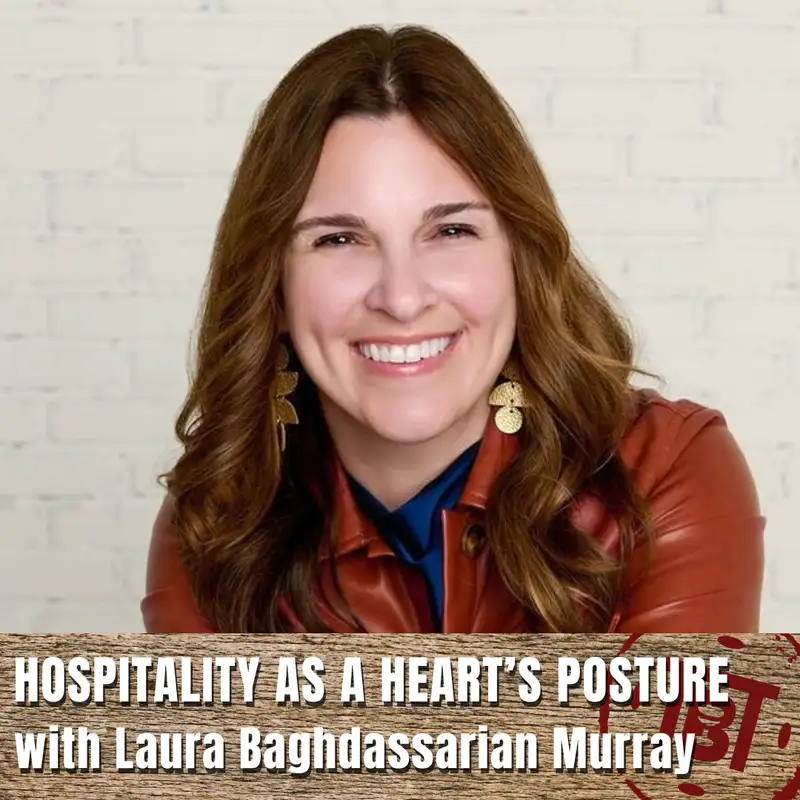
Hospitality as a Heart's Posture with Laura Baghdassarian Murray
Episode 54 (Laura Murray)
===
Andrew Camp: [00:00:00] Hello, and welcome to another episode of The Biggest Table. I'm your host, Andrew Camp, and in this podcast we explore the table, food, eating and hospitality as an arena for experiencing God's love and our love for one another.
And today I'm joined by Laura Baghdassarian Murray.
Laura is the Director of Spiritual Engagement and Innovation at Fuller Seminary Center for Spiritual Formation.
She is the author of Pray As You Are, serves on the Ministry Collaborative Advisory Board, and previously served at Highland Park Presbyterian Church as the pastor of Spiritual formation. Laura is also the founder of the Digital Silent Retreat Ministry, which is rooted in the practice of hospitality to provide brave and courageous space for people to connect with God and others.
Her newest book is Becoming a Person of Welcome, which was just published by InterVarsity. She lives in the Dallas area with her husband and two children.
So thanks for joining me today, Laura. It's great to connect and excited to talk about hospitality.
Laura Murray: So glad to be here, Andrew.
Andrew Camp: Yeah. So we'll just start here 'cause [00:01:00] what, what is your story of hospitality and, and how has it formed you both like good and bad as you think about your life?
Laura Murray: Yeah, it's interesting. When somebody asked me why I chose to write on hospitality, I said, I really think it found me. Hmm. Like I wasn't searching for it. Uh, and it, it did find me. And so hospitality has been a part of my life. But I didn't really recognize it. Right? And so it kind of emerged a few years ago and it emerged during the pandemic, interestingly enough, when we couldn't be physically hospitable as much to people.
And so it emerged because I noticed I was having a hard time connecting with God. Others were having a hard time connecting with God, and I thought, what if I created. A space on Zoom where they could connect with God and with one another on retreat. So a few hours of a silent retreat. And so I just experimented with it [00:02:00] and people would come and meet with God and then they actually would spend time in the last hour of the retreat e encouraging one another.
Being courageous with one another, being vulnerable with one another. Hmm. And we continued doing these retreats monthly. And what I found is that that last hour of the community and connection was really powerful. Right? And so as I continued to experiment with the retreats, I realized that hospitality was a major component, and that hospitality could be taken to the digital space.
And then I started researching hospitality. I looked at scripture about hospitality. My doctoral project was on hospitality and taking connection and the sense of belonging into the digital space. And so that's kind of where it emerged. And then it just started rolling from there.
Andrew Camp: For sure. That's really interesting.
'cause you know, like you said, we weren't, we don't think of hospitality in the [00:03:00] digital space. And so like what? How did you have to wrestle with hospitality in different ways than if it was a like physical in-person gathering? Because I think, you know, creating a space online is very different than creating a space mm-hmm.
In a home. And so like what, right. How did that then challenge or maybe help you nuance hospitality in different ways?
Laura Murray: I, I think for me, since I wasn't looking to solve the problem of hospitality, I was simply offering something that I thought people needed. Hmm. So I was simply offering it. Yeah. And then it emerged, if that makes sense.
All of a sudden I found myself needing to dive deeper into it. Okay. Uh, and so, and then, so that's how it emerged actually, which is interesting because I think sometimes we pursue things or explore things and it's good to research, it's good to, you know, explore and things. But I also think it's great to experiment, right?
'cause when we experiment or try [00:04:00] things, when we see a problem, or we want to see if there's a possible solution, what emerges is maybe the thing we should be digging into, uh, if that makes sense. Like the experiment comes first and then you dig into it rather than digging into it first and then doing the experiment.
Andrew Camp: Yeah. Um,
Laura Murray: and it can go both ways.
Andrew Camp: My personality is I want to know all the information before I experiment. Mm-hmm. 'cause I want it to be safe, whereas, mm-hmm. You know, like. Your posture might be a little more, you know, for me it sounds riskier. Like, oh, well what if I don't know what I'm doing?
What if I fail? What if I, what if, what if, what if? Yeah. And that sounds really interesting. And so like then as you began to dig in, like who, who in what books maybe, or authors. Mm-hmm. Or people like Influence, like what streams of hospitality did you draw on?
Laura Murray: Yeah, those are, those are, that's a great question because there were a lot.
Yeah. And, uh, I, and first of all, I went back to scripture, like right, biblical scripture and just saying, okay, what, how is hospitality extended and how have we gotten away from it? Mm-hmm. And so kind of [00:05:00] looking at that, um. Jude Tiersma Watson, who is a professor at Fuller Seminary, she had a brief video on hospitality and how she talked about hospitality as a posture of a heart.
Hmm. And I loved that language and I really held onto that language and started to flesh that out. Right? That it's a posture that we carry with. Uh, Christine Pohl, A-P-O-H-L. She was great on that. Um, Amy Oden as well. Mm-hmm. And, uh, and then a non-Christian, I mean, she has a faith background, but a non-Christian voice, uh, was Priya Parker, and she wrote a book called The Art of Gathering.
I mean, just if you, you know, you're a hospitality person. She's like the guru, right? Yeah. And just her work is gold on that. And so those different voices, and there were other voices as well that came in. Uh, that really helped to establish kind of the, the foundation, if you will, right? Like I was experimenting with it, but then I needed to deepen that foundation [00:06:00] and make it stronger.
And so those are some of the voices that did that.
Andrew Camp: And so then as you think, you know, writing a book on hospitality with all these giants, you know, that have gone before you, like, where, where, where do you hope like your book taps into something then that, that is needed in the Christian hospitality, understanding that.
You know, other people may, may not have not missed, but maybe did. Sure. Didn't emphasize like you emphasized.
Laura Murray: Or just maybe adding to the, to conversation. To the conversation, right. Yeah. Yeah. I, I, my hope really is, is that it opens up people imagination, people's imagination of what welcome can be and where it can happen.
And so I think if we open ourselves up to that imagination and of what it can look like, then it opens up the possibility of. What God is doing in and through us, to our neighbor, to the world, to the stranger, uh, to the friend. And so my hope is actually, I was telling somebody this the other day, [00:07:00] I don't want really people to remember the words that I wrote, but I hope that it opens up in them the sense of imagination and the sense of lingering that they, then it has turned into a posture that they're carrying with them wherever they go.
So I think imagination is, is the big piece.
Andrew Camp: That's cool. Yeah. 'cause what is possible? Uh, 'cause I think we're all wrestling in this moment. You know what, whatever side we're on. Yes. Like, we're all imagining and trying to think through like, okay, what does it actually mean? Yes. To be hospitable, to be kind, to maybe just be a human.
Um, yeah. Right. You know? And so like that's where I love your idea that, you know, this is a posture we carry. Mm-hmm. You know, and to quote, you know, Priya Parker, her whose book has influenced, you know, many of us. Um, if you're, if you're in the church world and you're thinking about what it means to gather, like Priya Parker's book is mm-hmm.
Absolutely. Gold. Um mm-hmm. But she talks about the Martha Stewart principle that we've [00:08:00] sort of reduced hospitality to this, um, reading of things over reading of people, whereas you're asking us to carry this posture of welcome. Mm-hmm. And so what, mm-hmm. Why is posture so important as we think about hospitality in this moment?
Laura Murray: Yeah, that's a, that's a great question. I think about posture, like I even think about it in the physical sense that it's something internal to us. It's discipline, it's practice that we've done internally that we carry with this. Like if you think about your physical PO posture, right? If you're gonna work on it, if you wanna stand up straight or for some reason, or you don't wanna have a hunch back later on in life there, there are things that you're doing, disciplines that you're doing in order to be able to have that posture.
And so for me, posture is. Who we are on the inside, because it doesn't matter what we do on the outside, if the inside doesn't have that posture, people can tell. Yeah, it'll come back around. The inauthenticity is there as well. And [00:09:00] I think in our culture, and we've always needed this, but especially now, we need authentic people.
Yeah. We need people that truly do love others, truly do, truly are curious about others. Not because we're trying to get something from them, not because we're trying to get them to calm something within us, like we're not trying to use them, but we're truly being welcoming. And I think until we cultivate that posture, that includes freedom and curiosity, we won't really be able to extend hospitality without a string attached.
Andrew Camp: Hmm. No, I love that. But you know, as we think about it as a posture, what I was, when I was getting ready for this podcast, like it's not a comforting po posture. Like it's not a natural posture of us. Like I believe we're we, our heart is capable of so much good, but also, you know, so much division and so like, it's not something maybe that comes naturally or we think, hey, I'm not good at it, therefore I don't [00:10:00] need to practice it.
So like, how do we begin then to like get past the discomfort, you know, and, and really sort of at least, like you said, experiment. Like maybe we don't have all the information, but how do, like, we need to take a first step. And so like what, how do we get past that fear or maybe that insecurity we may feel as we think about being, becoming a person of welcome.
Laura Murray: Those are real things. And I also want to say, this isn't just for extroverts, you know? No, this is for, you know, this is not just for those who wanna say hi to everybody on the street. I mean, this is really having this posture to do what we can. As God calls us to do it. You know, so this, it's, it's this readiness and I would say experiments can be really small and the experiments are really a way of practicing.
And so I [00:11:00] think even experimenting with slowing down. Asking questions of somebody in your family. Right. Um, when, so somebody near you. So it's a safe experiment. You can ask curious questions or ask them to, to develop a thought further, you know, not shifting the conversation or something like that. So there are small experiments and.
As I think about experiments, another way to say is it is the small practices. So when you think, again, that physical description, if you're working on your posture, there are physical exercises that you're gonna do in the gym. There are things that you might need, some physical therapy. There are, there are small practices that you're gonna do.
Now you may not get them. Your form might be off at first, you know, your trainer or somebody might be able to help you. And so I would say that truly it is practicing it until it becomes a posture and it's less and less [00:12:00] uncomfortable. There might still be some courage, boldness, and it might still be uncomfortable at times, but if you've practiced it enough to know that there's something good on the other side, there's more of an incentive to do it.
And the other thing I would say too is practice it like with other people. Yeah. Like it's far more easier to work on these things with others than by yourself. Yeah. And so I would say try it with other people and see how it goes and talk about it. And so I, I don't wanna paint the picture that it's everybody.
Having to say hi to everybody.
Andrew Camp: No,
Laura Murray: but it's just this open posture to be aware of what's going on in the world, what's going on, even if it's the person right in front of you for two minutes.
Andrew Camp: Right. Because you know, this podcast is gonna come out in November, which leads us right into the holidays. And so there's going to be like the opportunity, you know, which may some people may cringe at because they know what the Thanksgiving or Christmas table may look like.
Yeah. [00:13:00] So like. You, you mentioned, you said this phrase that there's good on the other side, but I think a lot of us, because of the divisions in our society right now, we don't see that good on the other side. Like what? Like why pursue this? Because like, it, it feels at times that like if I ask my family member a question and to be curious when we disagree vehemently.
Like, there's no good on the other side it feels like, but I wanna believe there's good and I think people want to believe, but we don't see it yet. So like mm-hmm. When you say that there's good on the other side, like what are you imagining?
Laura Murray: Yeah. Yeah. So I'm gonna ask the question in regards to what do we define as good?
Hmm. Right. If, if there so. The good on the other side could be relational connection. The good on the other [00:14:00] side could be a meaningful moment. The good on the other side could be a laugh. The good on the other side, is it agreement? Not necessarily. No. You know, is good on the other side that you never have an argument again.
I mean, you hope for that, but not necessarily. So I, I think, and this goes back to kind of thinking about.
What is, what is it that we desire, but also can we imagine what the other person needs? Hmm. And we can't always know that. But if I desire for amending mending of a relationship, what can I do then to offer that or cultivate that, and then I gotta let go of the results. Yeah. Um, but I think we have to decide.
What that desire of good is on the other side. Hmm. And we have to talk to God about, okay, God, if the good comes amazing. [00:15:00] And if the good doesn't come, then we grieve that. Yeah. And I think that's also where the courage comes in because hospitality is courageous. Yeah. You know, and it's uncomfortable. Right.
Um, so I think for us to imagine. What is the good we hope for? What is the good we long for? And to be able to sit with ourselves long enough to say, this is actually what I long for. I haven't had it with this person, but this is what I long for and I'm gonna try for it. And then, yeah, just see what happens.
Andrew Camp: And I love that because you talk about, you know, coercive hospitality or counterfeit hospitality where, you know, sometimes hospitality is used where we have to limit ourselves. But you're asking us to step into this fullness of hospitality. And, and for me, I always come back to Henri Nouwen, and his ideas of hospitality, of the creation of a free space where the other can be who God has truly desired them to be.
Mm-hmm. Um, which is a very non-coercive
Laura Murray: mm-hmm.
Andrew Camp: Posture [00:16:00] where it's like, okay, what, who is this person that God has placed in front of me versus who do I want this person to be? Exactly.
Laura Murray: Exactly. And I think, I think that one of the ways we do that is we grieve what we can't have, what hasn't been right, but we also hope for what might be and hold it loosely and trust God that he's gonna provide good or he's gonna meet us in our grief again.
Andrew Camp: Yeah. And there may come a point, you know, and um, Caleb Campbell, he's a pastor in Phoenix and we've connected, but he talks a lot about Christian nationalism and the posture of hospitality. Um, of where if we can be a welcoming presence to, you know, a relative, a friend who, who may hold opposing views when their world comes crashing down, maybe that grief will drive them back towards us because we were loving.
And so whether, you know, it may not be a Christian nationalist friend or neighbor or relative, but like if I can provide a welcoming presence for the [00:17:00] other mm-hmm. When their world comes crashing down. They may see me as a safe person. Mm-hmm. Mm-hmm. Um, that they can then process everything going on with them.
So the rewards may not, the good that you're talking about may not come right away, but down the line, if I continue to be this welcoming presence where they can flourish, then they may come to me with other questions.
Laura Murray: Right, right. You're, and, and that really is a lot of hospitality, is that we're creating an environment.
Right of welcome. We can't make people receive our welcome. We can't make people receive hostile. We can't, and I think letting that go of just going, all we can do is, you know, figuratively or literally set the table. Yep. Set the table how God is calling us to set the table that we believe will serve another person.
And then whether they eat from it or take from it or receive it, then that's on them. And I, I think that's [00:18:00] the inner freedom that is needed in the posture. Hmm. Uh, to not expect that that person's response is gonna affect my sense of loving them or my sense of freedom.
Andrew Camp: Yeah. Because when we're a host, we want that praise that, oh, you're such a great host.
Like you're such a good, you know, and the host has a lot of power and it's good to be a host. But I think you mentioned like become taking on hospitality also involves really welcoming this posture of being a guest. And so how can being a guest help us practice sort of a non-coercive or maybe counterfeit hospitality?
Laura Murray: Yeah. Yeah. I, I love it. You know, it's, it's, uh, interesting. It's, it's great that Christians want to do good or provide spaces of good, yet we often forget the good that it was provided for us, the good that God gave to us. Mm-hmm. And [00:19:00] so when we practice being the guest with God, yeah. Because he's the first host.
Right. When we practice that we realized, oh. Here's where my need is. This is what I need, or this is what it's like to feel alone and need somebody. This is what it like. It's like to be broken and need the care of someone else. This is what it's like. A scripture says, remember what it was like to be the stranger.
You're able to go back to your own humanity and your own need, and so being the guest actually allows us to be. Empathic and aware of others. Uh, it makes us realize how much power we actually don't have. Yeah. Uh, and it also helps us to clarify what is it that we actually need? What is it actually, um, that we're looking for?
And so being a guest really brings in the opportunity for humility, which I think then goes into being humble as a host.
Andrew Camp: Right. Yeah. 'cause, and again, I think too, remembering and [00:20:00] you talk about it, the hospitality of creation, that God created this beautiful, abundant, hospitable world for, you know, for our enjoyment and like, we don't live in a scarcity mind.
You know, we don't live in a scarcity world, but you know, this abundant God who, who created a world for all of humanity to flourish? Like, okay, I think that. That's a different understanding than, well, you know, there's limited resources. I gotta mm-hmm. I got a hoard, I gotta, you know mm-hmm. Draw in on myself or collapse in on myself.
Mm-hmm. Uh, or, you know, the heart turned in on itself.
Laura Murray: Mm. Mm-hmm. Um, mm-hmm. You
Andrew Camp: know, and so, yeah. This, again, remembering this God who, who is hospitable is, is so foundational.
Laura Murray: Mm-hmm.
Andrew Camp: Uh, and so then like, you know, so yeah, that foundation that this God is ever welcoming us and yet we live in this world that wants to war against these ideas.
And so like yeah. As you've wrestled with [00:21:00] this, like how, how does hospitality become a tool of aversive Yeah. A, a subversive tool to counteract. Maybe like what the world, you know, whether it's economic realities, whether it's principalities, powers, government, you know, whatever it is. Like yeah. There's so much that might wanna tear.
Like how does hospitality become this tool of, of subversiveness for us today? Mm.
Laura Murray: Yeah. It hospitality, especially when we imagine that it can happen with one person or a hundred people. It can happen in a home, in a church, or out. Uh, with others, wherever it becomes something that helps us to look out for people as they're lonely, as they're wounded, um, the places that they're broken.
And in this posture of slowing down and of [00:22:00] seeing there is the opportunity to be a part of mending wounds, to be a part of helping. Uh, if it, if it's a small wound or even maybe a larger wound, uh, it takes a lot to, to mend a large wound. So I'm not saying one person can do that.
Andrew Camp: No.
Laura Murray: But it does contribute or it does maybe provide some medicine.
Yeah. And if it's a small paper cut, which. I think for many people we have a lot of paper cuts Yeah. That we're bleeding out of rather than one big wound. Mm-hmm. It helps heal. Even those smaller paper cuts, just those moments where you have in conversation with somebody who really sees you and listens to you, even it's for a few minutes that lingers.
Yeah. And I would even say that's contagious. Hmm. Because what that person then carries what they just sensed. And then it, it's contagious in that it extent. It goes out to other people. And so I would say that what [00:23:00] hospitality does is it creates this ripple effect and this contagion even in little moments.
Andrew Camp: I love that 'cause yeah. 'cause so often we're like, okay, there's these huge problems we gotta solve and if we can just help people see the error of their ways, like, you know, the world will be made. Right. And it's easy to think that way. It's easy to get trapped in that and I wanna get trapped in that 'cause I want an easy solution.
But I think your invitation to hospitality is, okay, how can I, that ripple effect, you know, how can I just show kindness that can carry forward?
Laura Murray: Mm-hmm. You know, and I
Andrew Camp: just was even like you were speaking and you know, like you that small moment. Um, and it made me have this memory of, of like, during my master's degree, I had to take a three week solitude retreat.
Um Oh wow. And I came back, um, and I was working at a Christian camp and my first day on the job as I had to work like a high school winter camp to provide pizza for like 300 high schoolers, you know, and so coming from pure solitude and very deep connection to like this chaotic [00:24:00] world,
Laura Murray: yeah.
Andrew Camp: But in that moment, like there was a friend who had done the same program, Jamin Goggin.
He was up there with his youth group and he just, he saw me and he's like, how are you doing, Andrew? And I said, I just got back from my three week retreat and he just put his hand on my shoulder and took a breath with me
Laura Murray: and like,
Andrew Camp: that's all I needed in this hospitality. Welcome. Mm-hmm. To be like, okay, somebody sees me like I just needed somebody to see me.
In that moment. Mm-hmm. Uh,
Laura Murray: and that, that story has stayed with you. Yeah. Right. That moment has stayed with you. Those moments stay,
Andrew Camp: yeah. Yeah. And so I would just encourage listeners, like, what is that moment that where you have received that welcome mm-hmm. Where you can then mm-hmm. Hold it So it can be a, a reminder, a grounding experience, um mm-hmm.
For others.
Laura Murray: Yeah, absolutely. And it, [00:25:00] and, and it probably required that friend to slow down. Yeah. To be able to kind of have the noise quiet, even though it wasn't quiet. No. But to internally get quiet so that he could see you.
Andrew Camp: And maybe that's the heart of hospitality, is who sees me and who can I see in this world today?
Laura Murray: Mm-hmm.
Andrew Camp: Um,
Laura Murray: that's a great, that that's a great picture. Yeah.
Andrew Camp: Yeah. Um, and so what I loved about your book is, you know, like your book isn't just theoretical, like you're asking us to actually practice it, which is awesome because I sometimes think, you know. You know, I just need my spiritual disciplines of prayer, reading, you know, scripture or solitude, you know, whereas, okay, what are the postures and the practices to take to others?
Mm-hmm. And so like how. How are those practices formed for you and like what, how did you go about choosing each discipline or like what, how, you know, like what was your thought process as you, as you put this book [00:26:00] together?
Laura Murray: Oh, that, that you were making my brain go back like a year, I'm sure. Yes, yes, that's right.
Yes. The book like, oh my gosh, what was my thought process of, I don't, um, most of them were practices I had done or been a part of, so they were not. Unfamiliar, uh, to me. And then here's the other part, I think because I'm more experimental and intuitive. I think I just played with them. Yeah. Like, because if you look at the practices, they're, they're not, you know, what cultivating vision, like how is that a practice or Right.
Yeah. You know, they're kind of not these traditional practices and so, uh, I honestly, it was just kind of an intuitive, what I had practiced before, what I had seen before, and also what I knew. Uh, connected with the scripture story and the stories that were told in them. Hmm. And so, um, I knew, and I knew I wanted the practices, uh, [00:27:00] to be in addition to what a lot of Christians normally practice, which is intercessory prayer, which corporate worship mm-hmm.
And Bible study, and sometimes, you know,
Andrew Camp: yeah.
Laura Murray: Solitude, but not most people. Yeah.
Andrew Camp: No, right. And so then how can we use these practices in community? Because, you know, hospitality, it's a, you know, it's not just a me and God moment. You know, it starts there like you talked about, but. Truly hot. You know, we're taking this posture to others.
And so how do you see your book working in community? So where we can, you know, create communities even of welcome Yes. Um, to help, you know, others feel welcome or just ourselves feel welcome. Like what, what's the role of community in hospitality? Mm-hmm.
Laura Murray: I'm so glad that you asked this question because it made me actually go back to the roots of how it all started and it all started in community.
Yeah. Like I, I, the book has many individual practice, but it [00:28:00] really started in community and it started on those digital silent retreats, and it actually expanded then into me working with, uh, churches. To help them clarify things and as well as their welcome, whether it was their welcome on their website, that it would put out or their welcome as people would come in the door.
And so I actually had a cohort that I ran, it was called Digital Hospitality Cohort. Wow. You know? Yeah. And we, you know, so we did these in these different ways. And so it was actually birthed in community and, uh, and the one of the. Main places that I would point people to is in the chapter on cultivating vision, because at the end it really walks through how do, how does somebody create a vision of welcome and hospitality and how do you do that?
You can do that communally. Yeah. You know, to be able to look and say, what, who are we like realistically? Mm-hmm. Um, discerning what God is [00:29:00] calling us to provide. I mean, what are the needs around us? Yeah. What is our work of welcome? You know, what is our work of hospitality? And so whether it's in your city, um, whether it's internally, uh, at your, at your church for your group, but really hospitality, how it looks outward.
And so you cultivate this vision. You do that with one another, and it's through discernment. It's through asking about your values. It's asking about what's the purpose. That God is calling us to. And then the thing about developing, cultivating that in community is that you can hold one another accountable to say, Hey, like we're getting out of our vision, or we're getting out of our values.
Like, let's bring this back. And you're able to say, is that really ministering to people? Is that really, um, serving them? And something that I've learned just throughout my is. It's just a lot more fun to do it with people. It's a lot messier too, but it is just a lot more fun to be able to serve with people and to be able to do that with one another.
[00:30:00] And scripturally when you look back. Hospitality was practiced in a community. Right. And I think sometimes we take it as the individual host or the individual at the house or the individual as your, and you can do it individually. Right. But it's meant to be carried communally.
Andrew Camp: I love that.
Yeah. 'cause scripture was written to a much more communal culture than our individualistic. Um, and you come from an Armenian background, like how did that play into your understanding of hospitality? I'm, I'm, because I would assume that yes, arminians are much more cultural. Communal, yes. Yes. In who, who they are.
And so like, how, how has that shaped you?
Laura Murray: You know, it it, yes. So there was, I mean, the communal gatherings were, were large. Um, they were fun. They, you know, they, anybody could come. I mean, it was like, really? Yeah. There wasn't really a guest list. It's like anybody could come to them. And so that was one piece.
Another part of the [00:31:00] Armenian culture is that, uh, the, the guest is who is central. Hmm, uh, that everything is dropped for the sake of the guest. Everything is, is it's just for the sake of the guest. You, you, you know, if somebody comes over, you eat less because your guest has to eat. I mean, it really is about the guest.
And the other thing, uh, that it's, uh. That they don't have to have agreement. I mean, the banter and the arguing and all that. Like there's like, you can still argue and be friends like it, it just is, yeah. That way. And my husband would say, and y'all are pretty loud too. I'm like, we are, we can be really loud.
Um, but we also come, I think I was thinking about this. The Armenian culture is also a storytelling culture. Hmm. And I think that's different than a, than a logic, um, you know, culture, right? And so conversation is storytelling and conversation is exchanging back [00:32:00] and forth rather than a rational argument with information, which not every conversation is that.
No, I think in other cultures, but it tends to be logical. When you're talking with and Yeah. Whereas Armenian culture, you know, again, I, my husband jokes, he goes, you know. When y'all argue or when y'all have a conversation, y'all get louder and louder, but y'all are saying the same thing, but it sounds like you're arguing.
I was like, oh, we're just, we're just, you know, like it's just part of the culture. And so, so I think it's also different too that, that the Armenian culture is a storytelling culture. And so in hospitality, storytelling is huge. Uh, Eugene Peterson said that stories are verbal acts of hospitality. Hmm. And so when we talk with one another that we ask for stories and you can ask for information.
Yeah. But that you're, you're listening for the story.
Andrew Camp: Yeah. I, I keyed in on that 'cause I was like, oh, storytelling. 'cause when we hear a person's story, we actually become more [00:33:00] empathic towards them because they're no longer a set of arguments to be broken down. But, you know, the story gives us an understanding of why or how.
You know, they got to a place that they are today. Uh mm-hmm. And so I wonder, it made me just think of like, okay, where as I listen for stories and ask people to tell their stories, what role does that play in cultivating a an imagination of hospitality, especially with people we disagree with. 'cause then it's no longer an argument to be won, but they're, they're a person in front of us.
Laura Murray: Uh,
Andrew Camp: so no, I, I love that idea of that storytelling. 'cause I think that's. And, and I think when we sit at the table, we, we hear the stories. I think, you know, that's the power of the table for me is, is people become less of a, a set of ideas, you know, and you, you hear the story
Laura Murray: and I, I think it, it's probably important to you to, to say a word about, about [00:34:00] boundaries.
Yeah. And listening. Um, that. That there may be times where you invite somebody or you want to know and offer them hospitality and they, and. It's unhelpful, not unhelpful. It's harmful. Yeah. You know, and that it's, it's harming you and you are unable to sit with that person. And, and I think there is a place to talk about boundaries not as walls.
Mm-hmm. That never, you know, allow anybody in, but as wisdom. Mm-hmm. Um, as knowing oneself and to be able to, you know, if something, you know. Again, at the, at a table and we're, you know, the holidays coming up, like you said, you know, at the table something happens and there is the boundaries of, of being able to listening how somebody is treated or what is said.
I think there is absolutely a place for that. Hmm. And so I think it takes some. Um, discernment and also maybe just some tools to kind of be ready for [00:35:00] those things, uh, as you, because your desire is to hear, your desire is to listen. Your desire is to cultivate this environment, but if somebody is impacting the environment in a negative way, then as the person who is hospitable, that is our responsibility to be able to go, okay, this is impacting the environment and, yeah.
Or what, what is happening here and, mm-hmm. That person doesn't need to take over what is happening in this space.
Andrew Camp: No, no. I love that word about boundaries. 'cause they are important because I think, you know, we want to be people of welcome and you know, this unconditional positive regard that God shows us.
We, you know, I think there's something in us that we who love Jesus want to emulate, but there's also that place of boundaries and needing to keep, you know. Mm-hmm. Myself safe. But also like if you have a family, you know? Yeah, my wife, my girls, my kids like. Um, but sometimes we, and I'm curious, you know, and sometimes we find ourselves where we're not, we don't know who's going to be there and, you know, we find our, like we [00:36:00] can't create the boundary and the, but our boundaries were, um, violated maybe, you know?
Mm-hmm. Mm-hmm. So what can we do? Like if we find ourselves in a situation that maybe we're not in control of, like is there a place of how do we cultivate still hospitality without. Letting somebody harm us, you know, when we're not. Mm-hmm. In control of who we invite.
Laura Murray: Mm-hmm. That's a great question because we all get kind of blindsided or something comes up, I think.
First of all, I would say the preparation you do before you show up to a place. Mm-hmm. And I, I think even your relationship with God, no matter whether you're showing up somewhere or not, like, yeah, for, for our, not just identity, but our security, our sense of God's love for us, for that to be as rooted and grounded as possible.
And that's what the practice, the spiritual practices really are. It's for our relationship with God. Yeah. And so to be able to have that, to [00:37:00] be as strong as possible, uh, so that when we get to those places where the unexpected happens, that it brushes us rather than bulldozes us. You know? If that makes sense.
And so it's not as strong. So I would say that just in general, our relationship with God allows us to. Stand firm and also allows us not to be bulldozed, you know? Yeah. And, and, and only be brushed. Um, so I would, I would say that that is a first thing, and I think so much of welcome and hospitality in general is preparation.
So Yeah. But whether it's hospitality or not, that's just a good like Right. To know our identity in Christ. Yeah. And know our belovedness. And the, uh, the other thing I would say is that, um. That we just have natural responses to that. Right. You know, some of us are gonna get quiet and shy. Some of us are gonna wanna attack.
Some of us are, I mean, we're just, we have all sorts of [00:38:00] responses to something that's sudden. Yeah. And, and so just to know that about yourself, be like, okay, this is just how our, and then to kind of say, okay, what should I do in that? Yeah. So for, you know, for one person I might be, Hey, I just need to. Step away.
Like, I need to go to the restroom, excuse me for a second. Or, um, or you, you know, if it's in a place where you can, if you've got cool air, you can go out into the cool air, you can share it with somebody, right? Um, you can talk to them about that. I would also say that to not let it have more power than that moment and to be able to go, okay, I'm gonna go back in.
What do I want and, and what do I want other people to have and what do I want? You know what? I really wanted to connect with my niece, you know? Yeah. And she, I haven't been able to do that. I'm gonna go focus on serving her. I'm gonna go focus on being hospital towards her and kind of get out of yourself.
Right. If that makes sense. Yeah. It's [00:39:00] almost, I don't know, you have kids, it's almost like, you know, when you would, um, the redirection? Yes. Yeah. Like, and sometimes it works, but it's almost like, okay. Like you're redirecting yourself. Yep. Um, but knowing yourself enough to go, okay, I'm gonna redirect and I'm gonna redirect and focus on somebody else.
Andrew Camp: I love that redirect. I love what you said about, you know, hopefully there's a person in your life where you can almost debrief with, or like, you know, even if you're single, maybe it's a friend afterwards. Like, Hey, I'm stepping into this space that I know may not be. A hundred percent safe for me.
Like, can I talk to you afterwards? Like, can we
Laura Murray: mm-hmm.
Andrew Camp: Talk on the phone, talk on Zoom. Yes. Go out for a coffee, a drink. Like, yeah. You know, it may, you may need a stiff one after that family gathering, but like, you know, hopefully it's just with a safe person that you can really just Yeah. Debrief with. Yes.
Laura Murray: Yes. Yeah. That the, the connection with another. Safe human being when we've received that or encountered [00:40:00] that is really, really critical.
Andrew Camp: No, it is. Um, you know, and an important aspect of hospitality that I think goes unnoticed, and you touched on it and Priya Parker brings it up, is what's the importance of a good ending for hospitality?
Like, yeah, because I think we think about the space we prepare, you know, especially if it's in our home, right? Like we create the space, we have everything ready. But then sometimes we don't think about an ending, but like, I think there's something super vital
Laura Murray: mm-hmm.
Andrew Camp: For a, a good ending. So like where, how is concluding hospitality just as important as beginning hospitality?
Laura Murray: Yeah, I think it's, I think it is key actually, and I, okay. I think it, what it does is it allows for future possibility. Hmm. Um, and so, uh, and it can be a simple word of gratitude, right. Um, you know, even things like, you know. People, you know, walking you to the door goodbye or walking you to your car. I mean, [00:41:00] those little things really mattered.
And I even remembered, uh, back before my husband and I were dating, we were all at a social thing and his younger sister was there and he walked her to the car afterwards, you know, just of, and it just said something to me about their relationship. Right. You know, so, so there is something about gratitude and about goodbyes.
Hmm. Uh, and they're really, they can be really powerful. It's the hope of a continued relationship. Like it's, I don't even know how to explain it, but what it does is it says, Hey, I hope this happens again. Right? Hey, I'm so glad you're here. And so it does that, and I, I think, I don't know, this is just me thinking about our sense of, in our culture, how quick people are to abandon or ghost or leave and.
I just, I, I just think it honors somebody and it helps. Uh, and maybe in some of those wounds as well.
Andrew Camp: Just that simple. Goodbye. Yeah. [00:42:00] Making sure the, however, whatever the situation is, ends well. Um, mm-hmm. I love it. About the future possibilities, um, um, and continued, hopefully, mm-hmm. Developing of the relationship.
Um. Mm-hmm. You know, but it's something we have to work on. 'cause even like, as I think of my young girls, sometimes I have to tell them, Hey, no, go say goodbye to your friends. Like, you know? Yes. Like, it's not something we all do naturally. It's something we have to, again, train ourselves for. Just like we help our, our kids, Hey, no, go.
Say goodbye. Say thank you. Uh, yes. You know? Yeah. It, it's so easy. I really learned
Laura Murray: a lot about that. Sorry, it was for my, no,
Andrew Camp: no, go ahead. Yeah, you said, yeah. I really
Laura Murray: learned a lot about that from my, from my husband's side of the family. And I, you know, they're celebrators, they are, they show up for things and, and they, uh.
You know, when they, usually, when I'm saying goodbye at a family gathering, because I'll probably see them, we live around each other, we'll probably see them, you know, in another month or something. Yeah. So it's not that. [00:43:00] And so I just, I'm like, I'm usually like, all right, see ya. Like, I'm ready to get out the door.
I got places to go, things to do what? Or kids to get ready for school and, uh. But they all like, they go around and they say, by, I mean they're, when they gather it's about 25 people that all like live around and they go around and they'll like say behind everybody. And so I watch it and I go, they really love being together.
Hmm. And they, uh. Look forward to the next time that they're together, you know? And so it's been a really a contrasting image, uh, for me of a family and of saying goodbye and how much they really do delight and enjoy, and they have a really just close relationship with one another.
Andrew Camp: That's cool. Yeah, because I know for myself, sometimes after a gathering I'm like, I'm exhausted.
I need to, like, I, I want a whole lot. And so like, yeah. Yeah. The, like you said, what your husband's family does to be intentional about saying goodbye to everybody mm-hmm. Even though you're in close proximity. Mm-hmm. [00:44:00] Yeah. Like we need those reminders and that stretching, um, as we continue to develop what this posture of welcome looks like.
Laura Murray: Mm-hmm. And I just wanna say to you for the things that we've been talking about, and I, I really hope that. You don't, you know, that the listener's not like, okay, I've gotta apply all these things, or I've gotta do all these things. I mean, these are just ideas and low Yeah. I mean, just doesn't have to take over your life.
And so hopefully they're hearing just, just of any of the things that we've talked about, whatever has piqued their interest or kind of caught their attention in their context that they would try out. Yeah. Um, yeah. And they would explore and see what might be possible.
Andrew Camp: Right. Because again, you're not gonna, wherever you are on the journey.
Um, you're not gonna just magically be infinitely better, you know, by reading one book or just doing something like, like, I think it's that what you invited us to earlier in the podcast of [00:45:00] what's that one small step to begin to do? Like, you know, this is a training, this is a practice that, you know, you're not, it doesn't happen overnight.
And so to think that you can be a completely different person with your family at the holidays is. It's just ludicrous. Um, we fall into that trap. We all do it right? Like, you know, oh, I'm gonna be better. I'm gonna bring my whole self to, to the holidays this year. Whether it's a social gathering, whether it's a work gathering, whether it's family, whatever it is.
Mm-hmm. Like, oh no, I'm just gonna step in and bring my whole self, but that may not be possible. And so, okay. What's, yeah, where are, where is that one step? Maybe you can take, um, throughout November and December.
Laura Murray: Yeah. Yeah, absolutely.
Andrew Camp: So. Um, it's a question I ask all of my guests, what's the story you want the church to tell?
Laura Murray: Hmm.
[00:46:00] That we have a God that always welcomes you to come and we'll always move towards you like that God comes looking for us. God welcomes us and wherever we are. Yeah. I love it. And
Andrew Camp: even if you're the, you know, to bring it to the prodigal son parable, like whether you're the prodigal son or the elder son who's always stayed close, like
Laura Murray: Yeah,
Andrew Camp: the father comes looking.
Um
Laura Murray: mm-hmm. Mm-hmm. Yeah, I think that's the, the, the great spur of the gospel is that God, you know, came looking. Yeah. God came looking and that he always, that he always will. Yeah. No, I love it.
Andrew Camp: Um, and so a few fun food questions to end with. Yeah. What's one food you refuse to eat? [00:47:00] Oh gosh, sushi. Okay. And there's a lot of
Laura Murray: foods I refuse to eat, but sushi especially.
Andrew Camp: Okay. Any particular reason?
Laura Murray: I Texture.
Andrew Camp: Okay.
Laura Murray: I mean, flavor too, but texture especially. I just can't, can't do it.
Andrew Camp: Okay. That's fair.
Laura Murray: Some people love it. I mean, they're like, how can you not love sushi? I'm like, I can't. I can't do it.
Andrew Camp: Yeah. Yeah. Fair. Then on the other end of the spectrum, what's one of the best things you've ever eaten?
Laura Murray: Oh my gosh.
Gosh, it's, it is pretty much like any good, like breakfast food. Okay. I'm trying to think. Um, okay. There's a lot of things, but I'll just say there's one place here locally that actually the owner grew up down the street from us, and I didn't know that, but in Houston, so, I mean, we found out he's up here, but he makes these, uh.
[00:48:00] The cinnamon waffle, he makes waffles, then he fries them and he puts cinnamon sugar on them, and then you have a drizzle on. It's so good. So good. Gotcha. Wow. So cinnamon and sugar is like high on the list. Okay. That's fair.
Andrew Camp: Awesome. And finally, there's a conversation amongst chefs about last meals, as in, if you knew you only had one more meal left to enjoy, what would it be?
And so if Laura had one last meal to enjoy what might be on her table.
Laura Murray: Mm-hmm.
That waffle. Okay. Yeah, just carbs. Carbs. Just carbs and sugar. Yeah. No need for protein? No. Okay. No need to make it healthy. Put eggs in there. Yeah, just, yeah, I think that waffle. Okay. No, I'm thinking about it. Uhoh. Yeah.
Andrew Camp: Awesome. Well, Laura, I've really enjoyed this conversation and if, if people are interested and.
Learning more about your work or even with your digital silent retreats, what, where can they find you? Where can they connect or, and learn [00:49:00] more about your work?
Laura Murray: Yeah, so my website is laura b murray.com, so you can go there and find out more. There's information there for you.
Andrew Camp: Awesome. And do pick up, um, her newest book, becoming a Person of Welcome.
It's, I think it's a delightful read. It's a book that I think will challenge you. Um, just to think through what it means to actually practice hospitality and to grow in that practice. Uh, so thank you Laura, for joining me on this episode. Yeah, thanks
Laura Murray: for having me, Andrew.
Andrew Camp: Yeah, and if you've enjoyed this episode, please consider subscribing, leaving a review or sharing it with others.
Thanks for joining us on this episode of the biggest Table, where we explore what it means to be transformed by God's love around the table and through food. Until next time, bye.