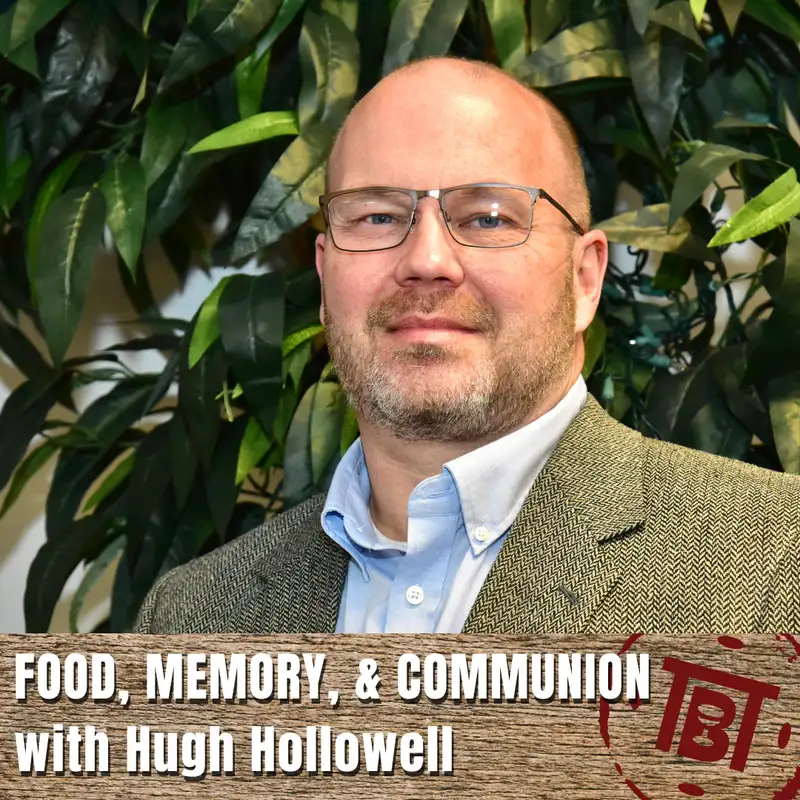
Food, Memory, & Communion with Hugh Hollowell
Episode 70 (Hugh Hollowell)
===
[00:00:00]
Sponsor and Guest Intro
---
Andrew Camp: Hello, and welcome to another episode of The Biggest Table.
I am your host, Andrew Camp, and in this podcast, we explore the table, food, eating, and hospitality as an arena for experiencing God's love and our love for one another.
And today, I'm thrilled to be joined by Hugh Hollowell.
Hugh is a sixth generation Mississippian and is the pastor of Open Door Mennonite Church in Jackson, Mississippi, a multiracial peace church formed in the aftermath of the Civil Rights Movement. He is a writer and [00:01:00] storyteller and has been the publisher of a weekly newsletter called "Life Is So Beautiful" for more than a decade. Before becoming pastor at Open Door, Hugh spent 12 years working as a pastor among unhoused and those struggling with addictions. This taught him much of what he knows about both second chances and grace, but not much that is useful at denominational meetings. He and his spouse Renee live in the Foundren neighborhood of Jackson, where they run a small-scale kitten rescue and co-parent five house cats and seven chickens.
So thanks for joining me today, Hugh. We're- Really glad
Hugh Hollowell: to be here.
Andrew Camp: Yeah, looking forward to this conversation.
Food Memory and Communion
---
Andrew Camp: Um, just even as I was reading my introduction again, you know, I really wanna explore how food connects us to God's love and our love for one another, and you have published a book of memoir essays, remembrances called "Food Is Love."
Hugh Hollowell: Yes.
Andrew Camp: And so as a pastor, what prompted you to write sort of this collection of essays about, about food?
Hugh Hollowell: You know, you're honestly the first [00:02:00] person who's asked about the connection, uh, between my being a pastor and-- I mean, because it's, it's an ostensibly secular book, right? Right. I mean, um, I mean, I write it from my perspective, so, and I'm in the South, where even the atheists are Christians.
So, uh, I, I, I quote, you know, like, uh, one of my epigraphs is from Ecclesiastes. But, you know, as a Christian, the thing, and this gets me in trouble in some Christian spaces, is that as a Christian pastor, to me, the most compelling
story in, in the Christian tradition for me, you know, most people will say the resurrection or the virgin birth, and for me, honestly, it's the Last Supper.
Andrew Camp: Hmm.
Hugh Hollowell: It's this idea that on this night when Jesus is afraid, when Jesus is, feels very lonely, when Jesus [00:03:00] feels isolated, and later that night he's gonna beg God for this to happen any other way.
On that night, Jesus says, "I'm gonna have supper with my friends." Hmm. Right? Yeah. This idea that, um, that food is what we, where we reach for solace, it's where we reach for connection.
Andrew Camp: Yeah.
Hugh Hollowell: Um, no one on a first date says, "Let's cut the grass together," right? Like- Right.
Andrew Camp: Yeah,
Hugh Hollowell: yeah ... yeah, I mean, I mean, we, uh, eating, someone told me one time that eating was the most intimate thing we could do with another person while keeping all our clothes on.
Um, the-
Andrew Camp: Yeah ...
Hugh Hollowell: it's, it's this very human connective experience. And, and that Jesus on that night chose the meal as the place where he's gonna share his last, uh, goodbyes, his charge to his, uh, uh, disciples, and [00:04:00] is gonna ask them not only to eat this meal and to share this meal with him, but in the future to remember this meal.
Andrew Camp: Yeah.
Hugh Hollowell: Um, I love that. And so, and I see that playing out in the way most of us engage in food. So I'm, I'm from the Deep South. Um, and, uh, in the '20s, for reasons that are obvious, a lot of Black Southerners moved.
Andrew Camp: Mm-hmm.
Hugh Hollowell: Uh, they, they call it the Great Migration. And, uh, the, the northern cities, New York, Pennsylva- in, and in Pennsylvania, uh, Chicago, LA, there was this ma- Detroit, there was this massive migration northward And, and these people got there, and they only had what they could carry.
And they got there, and yes, living [00:05:00] conditions were better, but the people there didn't look like them, and they didn't sound like them, and they didn't eat food like they did. Um, uh, a friend of mine who moved from Mississippi to Kansas said that up there you have to bring your own bottle of hot sauce because, uh, they think mayonnaise is spicy.
Um, the the point is, is that they got there, and, and nothing was there that connected them to home.
Andrew Camp: Hmm.
Hugh Hollowell: And so, uh, but they could cook a fr- they could fry a chicken. And when they ate that fried chicken, it wasn't just, "Oh, this is good." This reminds us of the chicken we ate back home. This reminds us of the chicken that my grandmother fixed when I was sick.
This reminds me of the chicken that we ate when I graduated high school and, and Grandpa threw a party.
Andrew Camp: Mm-hmm.
Hugh Hollowell: Um, and [00:06:00] so food is so connected to memory that even Jesus mentions it and brings it into the story. Uh, and in many churches around the world every day, every Sunday, we reenact this meal. It was so foundational to our faith.
So yeah, that was a lot. Sorry.
Andrew Camp: Don't be sorry 'cause, you know, you're talking to a pas- a former pastor who loves food and thinks that maybe- Yeah ... a table might be more formative than a sermon. Um-
Hugh Hollowell: Absolutely ...
Andrew Camp: you know? And, and what's also important, you know, is that when Jesus shared that meal is he's sharing it with his friends, but friends who are about to desert him and leave him hanging, literally, like-
Hugh Hollowell: Right
Andrew Camp: y-
Hugh Hollowell: You know, I mean, sometimes our friends don't live up to our expectations of them.
Andrew Camp: Right.
Hugh Hollowell: And, and, and sometimes we believe in their capacity far more than they w- believe in their ability to live up to the expectations that we have for them. [00:07:00] Sometimes our friends let us down. Sarah Miles, I don't know if you know her work.
Uh,
Andrew Camp: she- I, I know her name. I'm not familiar with her work ...
Hugh Hollowell: so, um, she, uh- Eat This Bread- Yeah ... I think is, is the name of her best-known book. Uh, but she talks a lot about communion as a meal, and she says, uh, based on the la- if we use the Last Supper as the prototype for communion, it's not a valid communion unless someone scandalous is at the table.
Andrew Camp: Mm-hmm. Right.
Hugh Hollowell: Um, a- and I, I just love that.
Andrew Camp: Yeah, absolutely. 'Cause, you know, we too often, you know, I was raised in the evangelical white church, you know, where- Mm-hmm ... maybe we celebrated communion once a month. Um, Right ... but it was always this very- Whether you needed
Hugh Hollowell: it or not.
Andrew Camp: Yeah. But it, it was a somber thing of, you know, of, you know, we took Paul's words from 1 Corinthians 11 and misapplied them, I believe now looking back at it, where, you know, where you have to examine yourself and make sure you are worthy to [00:08:00] participate, you know?
Right. And so it's this somber thing of like, oh, can I, can I go if I'm not, you know, haven't confessed all my sins and find myself needy at the table? I gotta come cleaned up, ready to, you know, perform for Jesus. Yeah. Where, you know, Jesus, like you s- you know, quoted from Sarah, like it's a scandalous table.
It's a table for the down and out. It's the table for the people who are literally gonna sell Jesus for 30 shekels of silver.
Hugh Hollowell: Yeah. Yeah. Exactly. No, I love that story. And, and it's my, it's my foundational Christian story, right? Yeah. You could take away everything else, but I'm gonna hold onto that one.
Andrew Camp: Well, and it's also fascinating, you know, is that, you know, when Jesus or even God asks his people, starting with Israelites, to remember him and remember salvation, it's always with a meal. Like he-
Hugh Hollowell: Absolutely. Well, I mean, you know, e- even the manna in the desert, right?
Andrew Camp: Right.
Hugh Hollowell: Uh, well, and, and again, I think [00:09:00] that- That speaks to the humanity of it all.
There are people I deeply loved that are gone now.
Andrew Camp: Mm-hmm.
Hugh Hollowell: And every memory I have of them involves food in some way.
Andrew Camp: Yeah.
Hugh Hollowell: Um, food and memory are just so severely intertwined that one of the things I love is that Christianity and, and, and Judaism before that attach so much importance to food as a almost a, a mnemonic device, right?
Mm.
Andrew Camp: Yeah.
Hugh Hollowell: So that we remember who we are and we remember these stories.
Andrew Camp: Yeah.
Hugh Hollowell: Uh, in the, in the Seder, you know, how is tonight unlike every other night? Um, you know, uh, I mean, the Seder is a meal. Yeah. It, it's, it's all intertwined. I love it.
Andrew Camp: You know, I was even listening, I've been listening, uh, to David Graeber's book, Debt.
Um- Mm ... a few people have recommended it, but what's fascinating is I was [00:10:00] driving my, back from dropping my kids off at a camp this morning, and he's telling the story of, you know, the intimacy of food- Mm-hmm ... in relation to debt. But he's, you know, telling the story of, and it- it's like an Islamic folklore where this, you know, guy's in this house stealing another man's possessions, and dips his hand in what he thinks is sugar, but it's salt, and he licks it.
And in Islamic culture, if you share salt in somebody else's home, you're now friends and you can't- Mm ... betray that person. So he, this th- thief puts back all of the stuff and leaves because he has now shared salt with this person. I love that. Yeah. Like I'm, you know, and so, you know, it's, Is- Islam has this beautiful hospitality, you know, baked into it as well of like, okay- Right
when we eat with somebody, like you said, it's the most intimate thing we can do with another human being with our clothes on. Yeah. Um, I think it just speaks to what the power of the table, you know, and especially in an age where we are so fractured and want to shun people [00:11:00] left and right-
Hugh Hollowell: Yeah.
Absolutely ...
Andrew Camp: you know, for one word they use, um-
Hugh Hollowell: Right ...
Andrew Camp: the, the table might beckon us into something more beautiful.
Hugh Hollowell: You know, I mean, I really do believe that, uh... I believe in the power of a meal to heal what is broken in us. Uh-
So last, about 10 days ago, I was, uh, I actually had a book signing for the book that I wrote. And, um, uh, it was held, uh, in a town, in the next town over. And so I am a Mennonite pastor. Uh, Mennonites are known for our historic peace witness. Mm-hmm. We, um, believe, uh, in a non-coercive, non-violent God, and we are to be like...[00:12:00]
We are to emulate God, so we seek to be non-violent and non-coercive as well. And so, um, and at the meet- I mean, at the book signing, uh, also in attendance, just like in the audience, was, uh, uh, one of our senators, our US senators. Mm. Um, and, uh, Roger Wicker. And Roger Wicker is, uh, he's the Mississippi US senator, but he's also the chairman of the Armed Forces Committee.
Andrew Camp: Wow.
Hugh Hollowell: Right? For the whole US. And so, like, basically he protects and funds, or is in charge of protecting and funding our entire war machine.
Andrew Camp: Yeah.
Hugh Hollowell: Right? And, um, I'm sure he's a, a, an... Everyone I know that knows him personally says he's, one-on-one, a really nice person, but he and I have very different views about the world and, and, and he too claims to be Christian.[00:13:00]
I don't mean that pejoratively. Like, I mean, he, he's, he says he's Christian, I believe him. Right. And so, uh, so he too is a Christian and, um, and yet we have these very opposing views- Mm-hmm ... on this very iss- on this very central issue. And we talked for 45 minutes after the thing, but not about war and not about our Christianity and not about our views, but about sweet potatoes and the ways our grandmothers cooked them and the recipe and which variety was the best.
It was the best con- one of the best conversations I've had in ages with someone that on, at least as far as social media is concerned, we're almost enemies.
Andrew Camp: Right.
Hugh Hollowell: Right?
Andrew Camp: Yeah.
Hugh Hollowell: Yeah. I loved it.
Andrew Camp: So sweet potatoes. What, what, what is it about sweet potatoes in the South that is, like,
Hugh Hollowell: unique? Yeah. They're, it's, um, well, they grow easy [00:14:00] here.
Andrew Camp: Okay.
Hugh Hollowell: Right?
Andrew Camp: Yeah.
Hugh Hollowell: Regular potatoes, white potatoes and red potatoes, uh, are cool weather crops. They grew in the moun- They originally are in the mountains of the Andes.
Andrew Camp: Yeah.
Hugh Hollowell: Whereas sweet potatoes came from Africa.
Andrew Camp: Yeah.
Hugh Hollowell: And came over with enslaved people. Um, and, and so they, they thrive on our heat and our humidity and, uh, um, and they grow, and they will keep forever.
White potatoes here, like, melt and become almost mushy quickly. Okay.
Andrew Camp: Yeah.
Hugh Hollowell: Uh, but sweet potatoes, you can keep them all through the winter, and they will keep you from starving.
Andrew Camp: Yeah.
Hugh Hollowell: Um, and so, uh, you know, people will turn them into pies and they turn them into, um, uh, side dishes, and I love just putting one in the microwave for six minutes until it's soft and mushy, and then I'll just eat it like an apple.
Oh, man. Oh, yeah.
Andrew Camp: Yeah.
Hugh Hollowell: Um, I mean, I mean, [00:15:00] uh, they are deep in our culture here, uh, and have been for a couple of hundred years.
Andrew Camp: So with your conversation with the senator, what, what is the best way to prepare a sweet po- sa- safe for the microwave, you know, but, you know.
Hugh Hollowell: Yeah. Yeah. No, I mean, well, we both agreed that we like pumpkin...
I mean, we like sweet potato pie much better than pumpkin pie.
Andrew Camp: Okay.
Hugh Hollowell: Uh, they often are used interchangeably, right? Yeah. Mm-hmm. Uh, 'cause they have similar texture and color, but-
Andrew Camp: Right ...
Hugh Hollowell: um, we are both team pumpkin pie, I mean, uh, uh, sweet potato pie. And we both agree that our favorite variety of, um, a sweet potato is Beauregard.
Andrew Camp: Okay.
Hugh Hollowell: It's the, it's the variety that is grown. Yeah. It grows really well here, and-
Andrew Camp: Okay ...
Hugh Hollowell: almost every garden grows it. They have fancy ones, right? But-
Andrew Camp: Right ...
Hugh Hollowell: but Beauregard's kinda the staple that our grandparents grew.
Andrew Camp: Hmm.
Hugh Hollowell: Um, and we both agree [00:16:00] that salt, pepper, and butter is a great accompaniment.
Andrew Camp: Yeah.
Hugh Hollowell: So yeah, but it was, it was this long, winding conversation, um, where we found out that we have many things in common other than how we feel about a particular issue.
Andrew Camp: Yeah.
Hugh Hollowell: But, but, but the world today wants to compress everything down to individual issues.
Andrew Camp: Yeah. Right?
Hugh Hollowell: And again, I, I don't, I don't think that because he met, uh, a Mennonite pastor, he's changing his views on, on the armed forces. Mm-hmm. And I definitely am not going to suddenly promote warfare. Uh, but, uh, it w- it was pleasant.
It was, it was lovely, in fact- Hmm ... the conversation was.
Andrew Camp: Right. And while neither of you are gonna change your positions, you might be able to then have more [00:17:00] sympathy and love and understanding for that person
Hugh Hollowell: Absolutely. So-
Andrew Camp: Where they're no lo- yeah, they're no longer an abstract. They're, they're- Right
fleshly. They're h- they're human.
Hugh Hollowell: So I've got a cousin, I'm not gonna name him. Um, but I've got a cousin, and he is about a year younger than I am. I'm 54, he's 52, 53, and he has never been on an airplane in his life.
Andrew Camp: Hmm.
Hugh Hollowell: Okay? Uh, he's probably never been more than 300 miles from home-
Andrew Camp: Wow ...
Hugh Hollowell: um, on this very rural part of Mississippi where we grew up.
And, and it occurred to me one day, and he was posting something on social media about Islam that was not kind to- Yeah ... Islam, right? Mm-hmm. And it o- occurred to me that, um, if you asked me, if I were pressed, I could easily name 20 Muslims, [00:18:00] right? Mm-hmm.
Andrew Camp: Yeah.
Hugh Hollowell: That I, that I, I have eaten at their tables. I've, I've played with their children.
I've, you know... And so, th- for me, they're not an abstraction, right? Mm-hmm. They're, they're Savannah and London and Okolo and Abdul. Like, like, they're, they're people.
Andrew Camp: Yeah.
Hugh Hollowell: And for him, they're, they're as strange as, you know, like characters on Avatar. They're-
Andrew Camp: Hmm ...
Hugh Hollowell: they're as abstract as that. Um, and so of course I'm gonna see the world differently than he does.
Yeah. And so when we get to see, when we get opportunities to eat with other people, we can see them as fully formed people instead of as cartoon abstractions.
Andrew Camp: Yeah. I... Was it somebody on the podcast recently said, you know, it, it, it boggles his mind that we can, you know, love the food of immigrants but hate them, um, you know?
And that, you know, we'll, we'll [00:19:00] all search out the best taco stand and then, you know, demonize the immigrants.
Hugh Hollowell: Right. And, and, and put those taco st- you know, and then, uh, open fusion taco stands- Yeah ... in neighborhoods, uh, that the immigrants aren't welcome in or can't afford.
Andrew Camp: Right.
Hugh Hollowell: Um, you know, and we profit and, um, uh, appropriate-
Andrew Camp: Yep
Hugh Hollowell: uh, their culture. Yeah. No, absolutely.
Andrew Camp: Uh, but like you said, your food-- your book is maybe not Christian in a formal sense, but you are... It's a book that, um, you know, calls us to remember though, you know, which is a huge- It does. Yeah. And so it's remembering the food that formed us. And so what... You know, in, in most of the food literature, it is calling us to some- sometimes what feels like to me a very esoteric idea, these utopian ideas that if we can just all eat organic, you know, really well-made food, then we will all be better.
Where- whereas you're not shying away from, [00:20:00] "Hey, no, like, that mac and cheese my, my family made growing up is beautiful. The biscuits, the gravy," you know? While not the healthiest- It is ... it's important. So what-- Yeah, like why?
Hugh Hollowell: Right.
Privilege Shame and Care
---
Hugh Hollowell: Well, I mean, so, you know, a lot of It is unpopular, uh, to say this, uh, but a lot of our conversations around food don't take into account privilege and economics.
Andrew Camp: Yeah.
Hugh Hollowell: Right?
Andrew Camp: Right.
Hugh Hollowell: Um, uh, more than half... So I live in the capital city of Mississippi.
Andrew Camp: Mm-hmm.
Hugh Hollowell: Right? It's the largest city in Mississippi. Granted, it's not a large city, but it's the largest one here, and more than half of my city is a USDA food desert. Wow. And so, uh, the people here have a really hard time getting, uh, conventional [00:21:00] pesticide-laden, uh, you know, three-month-old nasty squash, let alone organic squash that was, like, blessed by Carlos the Virgin.
Andrew Camp: Right.
Hugh Hollowell: Um, you know, uh, that grew on the shady side of the mountain.
Andrew Camp: Yeah.
Hugh Hollowell: Um, and, and definitely they can't afford it.
Andrew Camp: Mm-hmm.
Hugh Hollowell: Right?
Andrew Camp: Yeah.
Hugh Hollowell: Um, and I mean, a third of my city is below the federal poverty level.
Andrew Camp: Wow.
Hugh Hollowell: Um, and, and so, uh, we have a Whole Foods, um, but, like, the McDonald... I mean, not Mc- the Walmart gets much more play, uh, and sells much more food than the Whole Food does here.
Andrew Camp: Mm-hmm.
Hugh Hollowell: Um, so, you know, I am a, a, a tremendous fan of using the best ingredients you can afford.
Andrew Camp: Yeah.
Hugh Hollowell: I, I, I just absolutely think you can. Like, the, the, the tomatoes I grow in my yard objectively [00:22:00] taste better-
Andrew Camp: Mm-hmm ...
Hugh Hollowell: than the tomatoes that I can get at Kroger.
Andrew Camp: Yep.
Hugh Hollowell: Um, but a tomato from Kroger is infinitely better than something out of a ketchup packet from McDonald's.
Andrew Camp: Yeah. Right, right.
Hugh Hollowell: Like, um, so let's use the best that we can possibly get. Uh, but also, you know, the, in the 1800s, um, enslaved people in Mississippi and elsewhere throughout the country, um, were handed leftovers. Uh, they didn't eat, um, pork tenderloin.
Andrew Camp: Right.
Hugh Hollowell: Uh, right? They were handed the head of the hog. Uh, they were handed the tail, the knuckles, the, the jowls, the fatty cheeks.
These were all things that nobody wanted.
Andrew Camp: Mm-hmm.
Hugh Hollowell: Um, and they gave them to the enslaved people, and the enslaved people not only turned [00:23:00] it into something edible, they turned it into something delicious.
Andrew Camp: Yep.
Hugh Hollowell: And they turned it into something that gave them the energy and the motivation to survive another day so that- 160 years later, their, um, uh, their descendants, um, could be amazing politicians and leaders
Andrew Camp: Mm-hmm
Hugh Hollowell: um, academics, uh, authors. Uh, you know, the, it-- So we, we tend to place f- values, um, on food. Uh, as in like this is good food and this is bad food.
Andrew Camp: Right.
Hugh Hollowell: My, my father passed away in 2020, and, um, uh, too young. He, uh... And, uh, [00:24:00] his last 15 years or so of his life, he struggled with Type 2 diabetes. And, um, and yes, he ate foods that he did not make wise food choices given his health-
Andrew Camp: Right
Hugh Hollowell: uh, profile.
Andrew Camp: Yeah.
Hugh Hollowell: But after he died, I got, uh, I inherited his journal- Hmm ... that he, he wrote in every day. And one of the most heartbreaking things was to see him writing about he went to his grandson's birthday party, and he ate a piece of fried chicken, and he ate a piece of birthday cake, and he felt horrible about it.
And he said, "I know I, I was bad today. I, you know, I ate bad food." Uh, it so preoccupied his mind that he wasn't able to be present for his grandchild's birthday.
Andrew Camp: Wow.
Hugh Hollowell: Right? Right. Um, and I [00:25:00] submit that whoever did that to him did him dirty.
Andrew Camp: Yeah.
Hugh Hollowell: Right. Right? Yeah. Um, and, and, and so, uh, yeah. So the other thing is, is that we have...
You know, a lot of times we see this in, in church and in liturgy too, that, um, we have a practice that in, that is divorced from its origins, and now we just do the practice rather than keep in mind the, um, behind the, the origin story. Um, I mean, like the, the dietary codes, right? Right. And in Judaism, when you're wandering around the desert, like how you treat food is probably different than how you should treat it in an air-conditioned kitchen.
Andrew Camp: Yep.
Hugh Hollowell: Um, you know, uh, in terms of health and, and safety. So, uh, the foods that are infamously Southern, and, and I'm [00:26:00] using air quotes here for our listeners, "bad"- Yeah.
Andrew Camp: Right ...
Hugh Hollowell: um, you know, the chicken fried steak or the, the, uh, chicken and, and gravy or whatever, these are not- In the past, these were not foods people ate every day.
Andrew Camp: No.
Hugh Hollowell: Right? These were foods of celebration.
Andrew Camp: Mm-hmm.
Hugh Hollowell: If, if I have a chicken and my people are living right on the edge, if I kill the chicken, I no longer have eggs.
Andrew Camp: Yeah.
Hugh Hollowell: But if I keep the chicken alive, I've got an egg every day.
Andrew Camp: Yep.
Hugh Hollowell: And so killing a chicken was something you did rarely, um, and only in times of great celebration.
Similar to the way that in the story of the prodigal son, you know, the father says, "My son who was lost is now found. Let's bring out the fatted calf." Yeah. But, you know, let's kill the goat that we were saving for this celebration. Um, the chicken was the same way.
Andrew Camp: Right.
Hugh Hollowell: You, uh... When your kid [00:27:00] graduated school, or when your daughter got married, or when the pre- the guest preacher came over, when you wanted to put forward your very best, that was when you killed and fried a chicken.
Andrew Camp: Yep.
Hugh Hollowell: But now, thanks to the Colonel, like, you can get a fried chicken any time you want to.
Andrew Camp: Right. Yep.
Hugh Hollowell: Right?
Andrew Camp: Mm-hmm.
Hugh Hollowell: Um, and if we reserve those things for times of celebration, we would probably all be healthier.
Andrew Camp: Yes.
Hugh Hollowell: Um, you know. Uh, but also the reason that we brought those celebration foods forward is because they were tied to such great memories.
Andrew Camp: Yeah.
Hugh Hollowell: You know? Uh, I don't know if this is true in your house, but I know in my house there are foods that we eat at Thanksgiving and no other time of the year.
Andrew Camp: Yep.
Hugh Hollowell: Right?
Andrew Camp: Absolutely.
Hugh Hollowell: No one, no one has green bean casserole in March.
Andrew Camp: No.
Hugh Hollowell: Right?
Andrew Camp: No. Right.
Hugh Hollowell: Right? Right.
Andrew Camp: Or, or in July or August when it's, you know-
Hugh Hollowell: Right.
Seasonal ... hot and
Andrew Camp: humid.
Hugh Hollowell: Yeah. Yeah, yeah. [00:28:00] Exactly. Uh, and so, uh, those, that's, you know, those foods are tied to, to memory.
Andrew Camp: Yeah.
Hugh Hollowell: Um, and so, but if you were moved 500 miles away from your people and you couldn't talk to them or connect to them and you were feeling incredibly lonely, eating a slice of turkey breast and some cranberry dre- some cranberry sauce and, um, some green bean casserole might put you in a mood to remember all the people that you are missing.
Andrew Camp: Mm-hmm.
Hugh Hollowell: Uh, so these unhealthy foods are often foods of celebration-
Andrew Camp: Yeah ...
Hugh Hollowell: that were so connected to memory that they traveled with, with the people. Um- Right ... and then now their ancestors, I mean, their descendants rather, um, we're d- we're more disconnected from the memories that brought the food forward. Now that's just what we eat.
Andrew Camp: And what, you know, was once considered leftovers or [00:29:00] garbage is now highfalutin- Cuisine ... you know, yeah, cuisine, you know? And pork, you know, pork cheeks are delicious, you know? And-
Hugh Hollowell: They are ...
Andrew Camp: uh.
Hugh Hollowell: They are. I mean, I mean, just the internet jokes about bacon-
Andrew Camp: Right ...
Hugh Hollowell: right? And how revered it is.
Andrew Camp: Yeah.
Hugh Hollowell: And, like, bacon was kind of trash food.
Andrew Camp: It was, yeah.
Hugh Hollowell: Yeah. Yeah. It, it was super fatty. It didn't chew well. No. Right? Uh, you can't braise it. Um, and so, uh, but, but if you slice a, a piece of it off and you cook it in your green beans, you can make something amazing.
Andrew Camp: Right. Yes. Yes. I just was fortunate to talk to, uh, Mark Johnson, who's the author of American Bacon.
Hugh Hollowell: Mm.
Andrew Camp: Um, a new book that traces the American history of bacon, which is super f-- and like you said, it was, you know, bacon was a frontier food, needed cured meat- Yeah ... was needed, you know, as you're traveling and you don't have refrigeration, and it was re- you know, set aside later for the slaves because, you know, you need, they, they needed it for the energy.
It was, you know- Yeah ... it was, [00:30:00] if you were white collar, you know, you were above bacon, you know? And now we have artisan bacon producers, and he even talks about bacon as a minstrel performance because, you know, what we thought, what we once thought, you know, was for the slaves is now befit for, you know- Right
fine dining and $20 bacon plates.
Hugh Hollowell: Well, you know, you see this over and over again. Uh, I belong to a lot of food groups online and, and a lot of them lament that once a poor person's food becomes popular, it gets priced out of their reach, right? Yeah. So for years, chicken wings, they would practically give them away.
Andrew Camp: Hmm.
Hugh Hollowell: Uh, no one wanted chicken wings because there's not much meat on them, right? Right. And now chicken wings are expensive.
Andrew Camp: Yeah.
Hugh Hollowell: I mean, per pound, sometimes they're more than, than breasts or thighs. And, and so, um, you know, or, or for years, flank steak was [00:31:00] the, the, the, the, the secret steak, right? Right. Like, I mean it, 'cause it was amazing and good, but it didn't have the press that ribeyes and T-bones do.
Yeah. And now it's this fancy steak that's very expensive.
Andrew Camp: Right.
Hugh Hollowell: Um, and, and, and that same thing happened with, uh, with bacon.
Andrew Camp: Yeah.
Hugh Hollowell: Yeah.
Andrew Camp: And as we were talking, 'cause, you know, we both love M.F.K. Fisher and the book, and the quote, you know, that- Yeah ... you know, it seemed, you know, she, she writes that, "It seems to me that our three basic needs for food and security and love are so mixed and mingled and entwined that we cannot straightly think of one without the others."
And then she ends- You- ... that quote with saying that, "There is more than, there is communion of more than our bodies when bread is broken and wine drunk."
Hugh Hollowell: Yeah, absolutely. Um, her book, uh, How to Feed a Wolf, um, is, was one of the first times... So, uh, it [00:32:00] was, uh, in the aftermath of World War II, I believe.
Andrew Camp: Mm-hmm.
Hugh Hollowell: Uh, they were faced all the wartime, uh, deprivations and, and good food and healthy food was hard to come by.
And so she wrote a book about basically how to survive.
Andrew Camp: Right.
Hugh Hollowell: Um, how to cook healthy food. We would now say how to cook healthy food on a budget. Uh, but she wrote it in such a, a, a literary and human place. I fell in love with her. Mm. And it was the first time I really saw the way that writing about food could be an act of care.
Andrew Camp: Hmm.
Hugh Hollowell: Um, I, I just absolutely fell in lo- love with her. I have probably, I have a lot, most of what she's published, what she had published.
Andrew Camp: Right.
Hugh Hollowell: Um, uh, I lo- I adore her.
Andrew Camp: See, I'm curious, you made this quote, um, and maybe it was a passing line for you, but you said, "Writing about food is a form of caring." [00:33:00] Um- It's an act of care.
It's an act of care. W- expound on that, 'cause I think, you know, I love to write about food, but, you know, h- I've not thought of it as an act of care.
Hugh Hollowell: Yeah. Well- Hmm. So
So there's several things going on there, right? Like, I mean, for one, I am a writer. Like, it's my primary ... I'm, I'm a pastor, but like, as you know, pastors, we write a lot.
Andrew Camp: Yeah.
Hugh Hollowell: Um, but, but writing is how I think of my, like, primary, uh, interface in the world. And, and I really do believe that good writing begins with the au- from the audience.
It, it's, it ... Uh, I told someone the other day that for me preaching is a form of pastoral care.
Andrew Camp: Mm-hmm.
Hugh Hollowell: Um, because it, it begins with what are the needs of the people who are going to hear this sermon?
Andrew Camp: Yep.
Hugh Hollowell: Um, a- a- and thus, like if I got invited to your church [00:34:00] and I read one of my sermons that I preached back home, it should make no sense to your congregation.
Andrew Camp: Yep.
Hugh Hollowell: Um, and so, uh-
So I start as a writer and I say, "You know, here is this universal thing that we all do. We all eat."
Andrew Camp: Mm-hmm.
Hugh Hollowell: Um, it's unavoidable. Um, and, and, uh, there are forces in the world Such as capitalism, uh, such as misogyny, uh, such as the patriarchy, that seek to tell us that we're doing this thing wrong.
Andrew Camp: Mm-hmm.
Hugh Hollowell: Um, that we don't love our children if they're drinking orange juice.
Instead, you know, um, they should have this other thing that we can buy, um, from them. Um, the, uh... A- and so food [00:35:00] carries with it so much shame and guilt and, and we're all convinced we're doing it wrong, and it-- with inflation, it's become so expensive. Uh, I was telling some... So I don't believe in guilty pleasures.
They're just things I like and things I don't like. And one of the things I adore, and it's so tied into memory, is Chef Boyardee ravioli in a can.
Andrew Camp: Okay.
Hugh Hollowell: Right?
Andrew Camp: Yeah.
Hugh Hollowell: So when I was a kid, I could come home from school, and I was allowed to open a can of Chef Boyardee ravioli and eat it- Sure ... if I got hungry.
Um, and so I have so many memories of being eight years old and sitting on the floor and watching cartoons and eating cold Chef Boyardee raviolis out of a bowl. Uh-
Andrew Camp: Right ...
Hugh Hollowell: I like them better cold than warmed up. Okay. But before the pandemic, they were routinely 50 to [00:36:00] 75 cents a can.
Andrew Camp: Yeah.
Hugh Hollowell: Right? Mm-hmm. And now they're like a dollar 25, a dollar 50 a can.
Andrew Camp: Yeah.
Hugh Hollowell: Um, which is, like, double.
Andrew Camp: Right.
Hugh Hollowell: And so, uh, the-- So our foods have gotten so expensive, and so we feel guilty about c- cutting costs, about, uh... I saw a woman on Threads the other day almost having a breakdown because she was forced to buy generic vegetables rather than the Green Giant vegetables that she normally buys.
Um, I mean, she thought she had failed her family- Mm ... um, and was setting them up for, you know, uh, I guess a life of crime or something because- Right ... she didn't, she didn't give them the- Yeah ... the Green Giant vegetables. And so all-- Food does not arrive to us naked. It brings with it all of these layers. And I just said, I, I recognized that one of the layers that [00:37:00] nobody talks about is how food can be a, a carrier or a talisman, um, for memory.
Mm. And for the, the people who loved us, and that one of the expressions of love... I had, I had ancestors that did not have the emotional intelligence to tell me how much they loved me. But they could make me a biscuit when I was hungry. Right. Um, you know, uh, they could make a caramel cake on my birthday-
Andrew Camp: Mm-hmm
Hugh Hollowell: um, uh, when, when the sugar and the caramel was in short supply.
Andrew Camp: Right.
Hugh Hollowell: Um, a- and so, so I think to bring all of that forward and say that this food that God made and gives us for the nourishment, you know, like what is the, [00:38:00] the, the grace that everyone says? Uh, commit this food to the nourishment of our bodies- Mm-hmm
and our bodies to your service, right? Like, this food is prepared with love, is harvested by people who are trying to feed their own families- Mm-hmm ... is prepared with love for people that they love. Um, and I think that to name that and to put language to that in a way that people can recognize the story and then tell it themselves Is an act of care
Andrew Camp: It is You know, it's an act of love, it's an act of care, and then it's also a very political act and-
Hugh Hollowell: Yes
Andrew Camp: uh, which, which you mentioned, um-
Hugh Hollowell: The senator and I talked a little bit about that too.
Andrew Camp: Right. Yeah.
Hugh Hollowell: Right.
Andrew Camp: You know, and it, it is, you know, it's goes back to communion, it goes back to who we're breaking bread with, it goes back to [00:39:00] who do we consider my neighbor. You know, it cons- it considers, you know, what these immigrant farm workers are worthy of, you know?
And, uh- Well, yeah ... the dignity and respect and, uh-
Hugh Hollowell: Absolutely.
Cooking as Resistance
---
Hugh Hollowell: So I finished writing this book, the last, the closing of the book I was writing in October of last year when, um, the food stamp program- Right ... was being held hostage politically.
Andrew Camp: Mm-hmm.
Hugh Hollowell: Um, and, and I felt that that was somehow fitting because there's never been a time when food has not been politicized.
Andrew Camp: Yeah.
Hugh Hollowell: Uh, the, the powers that be learned early on that hungry people don't resist. Um, and, and there are so many examples throughout [00:40:00] history of people who made choices they knew were bad, but they needed to do this in order to feed their family, right?
Andrew Camp: Mm-hmm.
Hugh Hollowell: In fact, we have used the term feed our family as like shorthand for all of our livelihood, right?
Andrew Camp: Right.
Hugh Hollowell: Yeah. Like, uh, I took this job because I have to feed my family.
Andrew Camp: I gotta put food on the table.
Hugh Hollowell: Gotta put food on the table, right. Exactly. Um, and, and, and so, uh- If you-- I-- My father, um, so my father's father, my grandfather. My father's father died when my father was seven years old.
Andrew Camp: Hmm.
Hugh Hollowell: And, and my father was an only child, and, and his mother was, um, in her 40s at, at this point.
And they lived, uh, 10 miles outside of, of [00:41:00] a town of 500 people. And so, um, uh, so suddenly my father is, I'm again using air quotes, but the man of the house, right? Yeah. Like he has a great deal of responsibility put on his shoulders at seven years old. Um, and so when we were born, he was somehow horrified at the idea that this might replicate itself.
Andrew Camp: Hmm.
Hugh Hollowell: Right?
Andrew Camp: Yeah.
Hugh Hollowell: And so he made sure that all of his children, there are three of us, I'm the oldest, all of his children could cook, that we could prepare breakfast, that we can make biscuits, that-- As he told me one time, "If you know how to cook an egg, you never have to be hungry." Um, uh, and so, uh, I believe that, that the act of being able to cook food is an act of political resistance.
Mm-hmm. Because, uh, hungry [00:42:00] people don't fight back. If you are dependent upon other people to cook your food for you, then that means you have to pay them- Mm-hmm ... to, to cook your food, right? Mm-hmm. Which automatically makes it much more expensive. Yep. Um, they are probably not going to care as much about the people who are, you know, about you as you do, uh, and as much about your family as you do.
Um, and that cooking and, and, and cooking good food can create margin in your life so that you have a little bit of energy, a little bit of hope, a little bit of, of dignity to carry forward to get you through another day.
Andrew Camp: Mm-hmm.
Hugh Hollowell: Um, it, it's- Yeah. It, it's a, it's a way of self-actualization, of self-discovery, and it [00:43:00] gives you an opportunity to express love for the people in your life.
Um-
Andrew Camp: Absolutely.
Hugh Hollowell: Yeah.
Andrew Camp: You know, and, and you know, hunger The lack of food, you know, um, is a huge... Like we've, you mentioned, you know, in Jackson, you're, you see it firsthand, 50%, you said of your city- Mm-hmm ... is a food desert, 30% below the poverty line. Right. Um, I remember Jeremy Everett, I was talking to him. He runs the Baylor Collaborative on Hunger and Poverty, but he-
Hugh Hollowell: Mm
Andrew Camp: he holds that, you know, you can judge the health of a community by the s- you know, the number of people that have adequate food. Like, you know, if- Right ... you know, if, if food is in supply and people don't have to go hungry, you have a healthy community because that means they are not sacrificing food to pay the bills, to, you know, pay rent, to, uh, childcare.
Hugh Hollowell: And... Right. And if you have [00:44:00] access to, and the ability to prepare food, um, you have infinitely more agency.
Andrew Camp: Yeah.
Hugh Hollowell: Right?
Andrew Camp: Mm-hmm.
Hugh Hollowell: Uh, as fellow Mississippian Fannie Lou Hamer said, "If you have 400 quarts of gumbo put up in your pantry, uh, nobody can tell you what to do."
Andrew Camp: Hmm.
Hugh Hollowell: Um, you know, if I, uh, if, if I am not dependent upon you to feed my family-
Andrew Camp: Right
Hugh Hollowell: then you don't get to decide what I do. Yeah. I get to decide what I do.
Andrew Camp: Hmm.
Hugh Hollowell: Um, but hungry people are often forced to, to yield that decision-making to people who will feed them.
Andrew Camp: Absolutely.
Hugh Hollowell: And, and whether that is the boss man or whether that's McDonald's.
Andrew Camp: Yep. Yeah. Yeah.
Hugh Hollowell: Yeah.
Andrew Camp: Right?
Church Around the Table
---
Andrew Camp: And so here you and I are, it's 2026.
You're a pastor. I'm a former pastor. I care deeply about the church. [00:45:00] And so in an era of declining budgets and in declining memberships, when we're fraught with anxiety, like where might the table come in for the church today to say, "Hey, there's a different way"?
Hugh Hollowell: Yeah. You know, there is this church, um, in one of the suburbs here, and, uh-
And every month when they do communion, uh, they scrap their regular program. Hmm. Um, and for that particular Sunday, uh, they have lunch together, right?
Andrew Camp: Yeah.
Hugh Hollowell: Um, they, they combine basically the communion and the regular service and their monthly potluck all as one big party-
Andrew Camp: Yeah ...
Hugh Hollowell: if you will. By far it's their most attended [00:46:00] service.
Andrew Camp: Right.
Hugh Hollowell: Okay?
Andrew Camp: Mm-hmm.
Hugh Hollowell: There are people who only come to that service and don't come to any of the other services. Um, and, uh, and it's not just because they're looking for a free meal. It's like they feel this deep connection there. I, uh-
I became Mennonite in 2007, I think it was. And, uh, I was, at the time, was running this, uh, organization for unhoused people. And, um, and I would go every Sunday, um, you know, I was... I had to raise a lot of money. And so every Sunday I'm going to this church and that church and I'm preaching and like, you know, "For, for a dollar a day you can make sure that Carlos has a place to stay," right?
Andrew Camp: Right.
Hugh Hollowell: Um, and, uh, [00:47:00] uh, sign up at the back. Mm-hmm. Um, and, and so I would go to these places and I always joke that I felt like the poor man's Mother Teresa, right? Like, they're like, "Here's Hugh. He knows poor people." Um, you know, and like people would come up to us and, and come up to me and they're like, you know, "This is so Godly.
Uh, I wish my child would grow up to be like you and love Jesus as much as you do." And, um, and it just all felt very pedestalian faith. And, and, and then I went to Raleigh Mennonite, uh, church for the first time. And, um, and it was, I was no big deal there, right? Hmm. Uh, because here is this couple that spent 25 years in Africa starting schools, and here's the woman who was a midwife in Zimbabwe, uh, until she retired, and here's the wealthy couple that like sold everything they had and moved to the inner city.[00:48:00]
And so it was there that I first came to understand church. That was a long setup for this point. Yeah. That I came to understand church as a support system For the rest of the week.
Andrew Camp: Right.
Hugh Hollowell: Not-- Before that, I think if you had pressed me, I would've said that one of the evidences of my Christianity was that I went to church on Sunday.
Andrew Camp: Hmm.
Hugh Hollowell: Like s- like church was the work product that my Christianity produced.
Andrew Camp: Right.
Hugh Hollowell: Right?
Andrew Camp: Yeah.
Hugh Hollowell: And, and at Raleigh Mennonite, I really learned to understand that the rest of the week was my work product, and church was just a support system to enable that to happen.
Andrew Camp: Hmm.
Hugh Hollowell: And so I think if we, we get caught up so much in the Sunday production and, you know, um, a- and in the, the-- Our, our congregation is [00:49:00] currently selling our building to free up resources, and so-- and to, to work with another congregation in town to, to worship in the same building.
And, and we've only had this building, like, uh, 15 years, 16 years. Okay. But there is so much emotion and connection tied up in this. There's this joke that I hear every so often, like, "How many church members does it take to change a light bulb?" And the answer is, "Change the light bulb? My grandmother donated that light bulb."
Andrew Camp: Right.
Hugh Hollowell: Um, you know? Yeah. We get, we, we get so tied up in all of these external trappings.
Andrew Camp: Mm-hmm.
Hugh Hollowell: And, and Jesus kind of said we can do this with some bread and, like, a bottle of something to drink-
Andrew Camp: Right ...
Hugh Hollowell: and a table.
Andrew Camp: Yeah.
Hugh Hollowell: Uh, maybe we're getting too caught up in church as the work product-
Andrew Camp: Hmm ... [00:50:00]
Hugh Hollowell: uh, instead of recognizing that really church, maybe church is just what facilitates our work product.
Maybe we're coaches and supporters rather than gurus.
Andrew Camp: Amen.
Hugh Hollowell: Yeah.
Andrew Camp: Y- for the month of... My wife and I, and my kids, we currently go to a church, and we typically meet in the high school. But for the month of June, we've decided we're gonna meet, or the church leadership decided they're meeting in, in the park.
We're doing church at the park. Oh, wow. No childcare, you know, no Sunday school needed, so fewer volunteers, less worship. Tell me you don't
Hugh Hollowell: have humidity without telling me you don't have humidity.
Andrew Camp: H- right, yeah. Right. Tell me y- you- That's lo-
Hugh Hollowell: sounds lovely.
Andrew Camp: Yeah, yeah. Like, it, it's 83 degrees yesterday, right?
And like- Mm.
Hugh Hollowell: Mm.
Andrew Camp: You know, and then, you know, we're... First couple weeks people could bring their lunch, you know, and then la- yesterday, you know, the church provided hamburgers and hot dogs, and-
Hugh Hollowell: Oh, wow ...
Andrew Camp: I, I volunteered to cook. And, you know, my kids are getting tired, and they're wanting to get home, and my wife had said we would help [00:51:00] clean up, so I take the kids home.
But people are just lingering and not rushing away, whereas on a typical Sunday, you know, the service is over, and it's like, you know, you beeline- Out the door ... for the door. Right. For whatever reason, right or wrong, you know, many times- Sure ... you gotta get your kids home to be fed 'cause hangry kids ruin life.
Um, you know, but I think there is something like that where it's, you know, we're at this park where we can linger, and it's not about... We still had a typical Sunday service, um, but we were able just, people lingered and sat, and not... There was no rush. And, you know, this park has some unhoused people, and they lingered over and we're like, "Hey, come up, grab a plate, and be fed."
Hugh Hollowell: Yeah.
Andrew Camp: Um-
Hugh Hollowell: Well, and, and because, you know, the food is like an invitation to linger, isn't it? Yeah. Right. I mean, you know, um- [00:52:00] And I don't know if this happens at your church, but a lot of churches, there's what I, I, I talk about the parking lot hang, where, like, you're talking to other people in the parking lot-
Andrew Camp: Right
Hugh Hollowell: and you feel kind of stupid because you're standing here with your keys in your hand.
Andrew Camp: Yeah.
Hugh Hollowell: Um, uh, and, and, you know, so, uh... But the food is an invitation to linger.
Andrew Camp: It is.
Hugh Hollowell: It's an invitation to... You know, uh, if you think about in the New Testament, uh, in the writings of Paul and the other epistles, so many of the arguments are actually about food, right?
Yeah. Like, are we doing this the right way? Are the right people eating? Mm-hmm. Are we... You know, and they built entire worship services around food. The, the first deacons in the church, like, their job was distribution of food.
Andrew Camp: Right.
Hugh Hollowell: Um, the, uh... For us to, to belong to a religion that was s- that food was so central in its forming, now it's often treated like a program to get the youth in [00:53:00] or something.
Andrew Camp: Yeah.
Hugh Hollowell: Um, you know, let's have, uh, let's have pizza night to get the young people
Andrew Camp: in. Mm-hmm.
Hugh Hollowell: Instead of like, "Here is this holy act we can do together."
Andrew Camp: Right.
Hugh Hollowell: Um, and recognize that each of us are deeply human and beloved by God.
Andrew Camp: Yeah. That we are welcome at the table regardless of male, female, Jew, Gentile.
Hugh Hollowell: Right. Any- We are value- we are valuable and welcome at this table by virtue of our existence.
Andrew Camp: Yes. Period.
Hugh Hollowell: Yes.
Andrew Camp: There's no buts. There's no- Nope ... no add on. Yeah.
Hugh Hollowell: No, no asterisks, no caveats. Yeah. God welcomes everyone at the table.
Andrew Camp: And yet it, it's so hard and churches struggle and we are human still, and so the sin that so easily entangles us-
Hugh Hollowell: Sure ...
Andrew Camp: messes with us and disrupts us and malforms us and social media, news, every, you know. A- and yet- [00:54:00] Right ... each Sunday we are welcomed and invited back, um-
Hugh Hollowell: Yeah ...
Andrew Camp: hopefully to, to remember s- something better
Hugh Hollowell: Right
Andrew Camp: and more beautiful.
Remembering and Last Meals
---
Hugh Hollowell: You know, uh, when I do, uh, when I, uh
I'm sorry. Uh, uh We prize not using churchy language at Open Door, and so often I forget, like, the real names for things. But when I facilitate communion-
Andrew Camp: Yeah ...
Hugh Hollowell: right? Preside over communion. Yeah.
Andrew Camp: Right. Right.
Hugh Hollowell: Uh, um, I, I talk a little bit about how, uh, what exactly is it that Jesus is wanting-- When Jesus says, "When you do this, remember me," like, what, what part of me is, uh, are we supposed to remember?
Andrew Camp: [00:55:00] Right.
Hugh Hollowell: Right? And, and I think about how, like, this is the end. Like, Jesus, whether your belief is that Jesus in His divine foreknowledge knows that He's about to die, or He just knows that, "Hey, there's a warrant out," and like-
Andrew Camp: Yeah. ...
Hugh Hollowell: you know, "They're looking for me," um, He knows this is the end, right? He's not gonna get bail.
Andrew Camp: No.
Hugh Hollowell: Right. Um, right? This, this is the Last Supper, and this is my last opportunity for, to-- These are my last-minute instructions. Mm-hmm. The last chance I get. And so I like to think that, you know, the disciple, the people at the ta- the other people at the table had seen remarkable things over the previous few years.
They had walked away from-- Some of them had walked away from their careers and their families. Um, some of them, uh, you know, were now, um, uh, isolated from their [00:56:00] communities. They, uh, they had, um, seen dead people come back to life. Right. They had seen blind people gain sight. They had seen crowds go from, um, you know, "Hosanna" to "Crucify him."
Like, this was-- Uh, they had seen this huge, um, uh, display and had been part of what Rome saw as an insurrection movement against Rome's-- Rome, the most powerful government the world had ever known, saw they had been players in what Rome saw as this insurrection movement. And, and I wonder, maybe Jesus is saying, "Remember what we did."
Andrew Camp: Mm-hmm. "
Hugh Hollowell: Remember what you saw."
Andrew Camp: Yeah.
Hugh Hollowell: When I, I went, um, something not many Mennonite pastors can say is I was in the Marines from 17 to 21.
Andrew Camp: Okay.
Hugh Hollowell: Um, uh, it was, um, uh, the [00:57:00] GI Bill was the way to pay for college at the school I went to, and at the time I was not Mennonite, and so, uh, it was, it did not present an ethical quandary for me.
But as, uh, my parents took me to the airport for me to go off to boot camp, and in those pre-9/11 days, they could go to the gate with you.
Andrew Camp: Yep.
Hugh Hollowell: You know? And I remember we're at the gate, and my dad, who was not a physically demonstrative person- Gives me a huge hug, and in my ear he tells me, "Remember who you are."
Andrew Camp: Hmm.
Hugh Hollowell: You're going off to this-- in essence, you're going off to this new place, remember who you are, right? Hmm. Remember what we've taught you, remember what you've seen, remember you're bringing all of this with you, and when you get there, remember it, is in essence what that's saying. And so I think on that night, Jesus is kind of telling them, "Remember, remember what you've seen."
Andrew Camp: Hmm. "
Hugh Hollowell: Remember what we did. Remember what you're [00:58:00] capable of. Um, and so every time we eat this meal together in the future, remember that."
Andrew Camp: Hmm.
Hugh Hollowell: That's the way I- Uh, I'm not saying that's the gospel according to Hugh, but, uh, I, I carry that interpretation really close.
Andrew Camp: Right. It's a beautiful picture.
Hugh Hollowell: Yeah.
Andrew Camp: Um, so thank you for sharing that 'cause I think it is a different picture, that image of your father giving you that hug and saying, "Remember."
Like-
Hugh Hollowell: Yeah ...
Andrew Camp: okay, what if that is what- Yeah ... the communion table is, is a hug saying, "Remember."
Hugh Hollowell: Mm-hmm.
Andrew Camp: As you go forth, the world will ask you to change. The world will invite you into something that may seem more glitzy and glamorous, but- Right ... remember.
Hugh Hollowell: Yeah. Remember.
Andrew Camp: Remember. Hmm. Don't think anything left to say.[00:59:00]
Feel... It, it, it just feels like a holy moment. I... There are times- Yeah ... when you do a podcast where you're like, "Okay, there's something holy," and-
Hugh Hollowell: Yeah ...
Andrew Camp: I... Yeah. Um, we're doing audio, so it's a weird thing of how do you... In a holy moment, h- what do you do- Right ... on a podcast?
Hugh Hollowell: Yeah. I, I mean, I think, I think there's...
I think what you did is to, to just recognize that that is what happened and what we're experiencing, right? Mm-hmm.
I, I, I think we often... Uh, one of my heroes is Mr. Rogers, right? Yeah. Uh, and I, I love Mr. Rogers. Um, and, uh, he has this great line where he says to the effect that, um, anything that humans [01:00:00] experience is mentionable, and when we mention things, we make them more manageable.
Andrew Camp: Hmm.
Hugh Hollowell: Um, a- and so often we're afraid to, to say, "I just experienced this tremendous thing."
Yeah. Or, uh, "Here's this thing that I'm feeling." Um, so by naming it, I think that that in and of itself is the work of God.
Andrew Camp: Yeah.
Hugh Hollowell: So thank you for naming it.
Andrew Camp: My pleasure. Thank you.
Hugh Hollowell: Yeah.
Andrew Camp: Um, some fun questions to transition- Okay ... as we wrap up, you know? Sure. Um, food, fun food questions. What's one food you refuse to eat?
Hugh Hollowell: Hmm.
So, I mean, well, part of this is hard for me because, uh, it was ingrained in me as a kid that if people give you food, you eat it.
Andrew Camp: Right.
Hugh Hollowell: Right? Yeah. Yes. Because food is so valuable-
Andrew Camp: Right ...
Hugh Hollowell: um, [01:01:00] both mentally and economically. Like, uh, you eat it. So there's very little I would refuse to eat if you served it to me.
Andrew Camp: Yes.
Hugh Hollowell: Right?
Andrew Camp: Fair.
Hugh Hollowell: Yes. Uh, there are many things I will not order in a restaurant.
Andrew Camp: Okay. Fair. Fair. Right? I know. I need to probably change the wording because, yeah.
Hugh Hollowell: Yeah. Um, but, uh, I do not like... So do you know what chitlins are?
Andrew Camp: Yes.
Hugh Hollowell: Okay. The small- I've never
Andrew Camp: had them.
Hugh Hollowell: Yeah. Small intestine of the hog.
Andrew Camp: Yeah.
Hugh Hollowell: Um, so-
Andrew Camp: I hear they smell great when they're cooking.
Hugh Hollowell: Well, the word great is doing a lot of work in that sentence. Yeah. Um, they definitely smell- Yes.
Andrew Camp: Yes ...
Hugh Hollowell: um, when they're cooking, and they smell like what used to travel through them.
Andrew Camp: Mm-hmm.
Hugh Hollowell: Um, and uh, so when I was a little kid, we would kill hogs. Okay. Uh, we had hogs, and we would kill them in the fall. And, uh, the old people in my family loved chitlins because [01:02:00] there was so much memory and-
Andrew Camp: Yeah
Hugh Hollowell: everything attached to them. And as a child, my job was to hook the intestine over the water hose and flush it out, right? Yeah. Of what was in it. Um, and uh, it was a slimy, nasty, messy job. And- Yeah ... uh, a- and, and cooked chitlins kinda have a texture sorta like calamari.
Andrew Camp: Okay.
Hugh Hollowell: Um, like k- kinda like cold calamari.
Andrew Camp: Yeah. Right?
Hugh Hollowell: Right. Like calamari that's lingered on the table too long. Yep. It's kinda chewy and gummy. Yep. It's like that.
Andrew Camp: Okay.
Hugh Hollowell: I do, I have no joy for chitlins whatsoever, and if I can die without ever having consumed another chitlin, I will be a happy man.
Andrew Camp: Great. Then on the other end of the spectrum, what's one of the best things you've ever eaten?
Hugh Hollowell: You know, I actually talk about this in the book because I say that I have been fortunate enough, as someone who loves food and people who know that I love [01:03:00] food, often when I go to a new place, people want to take me to their favorite restaurant or whatever.
Andrew Camp: Yeah.
Hugh Hollowell: And so I've been very fortunate. I've eaten Michelin five, you know, Michelin-starred meals- Yeah
and, um, and James Beard Award-winning meals and all that. And I maintain that, for me at least, the best meal I ever had and my favorite meal are two very different meals.
Andrew Camp: Fair. Yep.
Hugh Hollowell: Right?
Andrew Camp: Yep.
Hugh Hollowell: Uh, the farm, the, the elderly retired farmers that lived next door to us when I was a kid, uh, functionally served as our surrogate grandparents, and we often, we kids often ended up being trusted to their care.
And she would make, um... She would take a round steak and beat it almost paper thin- Yeah ... dredge it in flour, fry it in fat, and then make a brown, a thick brown gravy, [01:04:00] put the, the steak in the gravy, put the lid on the skillet, 350 gr- degrees for three hours, okay?
Andrew Camp: Yeah.
Hugh Hollowell: A- and it would cook down until it would just shred when you would pick it up with a fork.
Andrew Camp: Yeah.
Hugh Hollowell: And we would eat that over rice or mashed potatoes.
Andrew Camp: Mm.
Hugh Hollowell: And my mouth is watering as I'm talking about it.
Andrew Camp: Yeah.
Hugh Hollowell: Uh, and I maintain that if I were ever on death row and were granted one last meal, that, I would want that to be my meal, uh, steak and gravy over mashed potatoes.
Andrew Camp: Hmm. Well, you just answered my final question, 'cause my final question is there's a conversation among chefs about last meals, as in if you knew you had, only had one more meal left to enjoy, what would it be?
And so you, you've already- Yeah.
Hugh Hollowell: No, and I actually do say in my, in my-
Andrew Camp: Right ...
Hugh Hollowell: book that- Yeah. Yep ... that if I had a last meal, it would be steak and gravy. But I honestly [01:05:00] think that if I were to have to know that something was my last meal, I would be much more interested in who I'm sharing it with-
Andrew Camp: Yep ...
Hugh Hollowell: than what's on the menu.
Andrew Camp: Absolutely. Yep ...
Hugh Hollowell: because it's the people who make the meal.
Andrew Camp: It is. It is. I've, I've never dined alone at a fancy restaurant.
Hugh Hollowell: Hmm.
Andrew Camp: Um, I think it might be an interesting experiment per se, you know, um, just to... And then, you know, maybe dine at a restaurant like that and then go back with, you know, my wife.
Hugh Hollowell: Mm-hmm.
Andrew Camp: You know? And, and have s- juxtapose the, the two experiences and see which
Hugh Hollowell: Uh, the, the French chef Jacques Pépin, um, he's written like 30 cookbooks. Yeah. Right. And, um, and he says... And he's [01:06:00] developed thousands of recipes, and he said that writing a recipe is really about capturing a moment in time.
Andrew Camp: Hmm.
Hugh Hollowell: Like a, a particular, like, so that the 50th time you cook it, it tastes like it did the first time- Time
you cooked it, right? Right.
Andrew Camp: Mm-hmm.
Hugh Hollowell: And you're trying to capture this taste, he said, but it's an impossible situation because every meal, uh, is in different circumstances, right? Yep. And so the time that you eat the meatloaf with your grandmother is different than the time you eat the meatloaf, um, you know, uh, at, a- after the funeral.
Andrew Camp: Yeah.
Hugh Hollowell: Right? Like, I, I mean, uh- Yeah ... and, and so, um, yeah. So it's, it's sort of impossible, and yet it's an attempt to capture, to freeze in time- Yeah ... that moment and taste.
Andrew Camp: Mm-hmm. Yeah. No, that makes a lot of sense. They do. And you remember the [01:07:00] moment, you may not always remember what you had. Um, 'cause I'm just recalling, you know, right before we moved to Flagstaff, we went...
We were in Park City, living just outside of Park City, and we went back to our favorite restaurant one last time. Mm-hmm. And I don't remem- our, our server was a server that I had worked with at the restaurant, I had worked with the hostess, had worked at the restaurant, so it was, you know.
Hugh Hollowell: Mm-hmm.
Andrew Camp: And I don't remember what we ate that night, but I remember Brian and Ryan and their care for us during that night.
Um- Yeah ... and him bringing over at the end of a meal a shot of green chartreuse 'cause he says, "Andrew, at Silver we did Fernet, here we do Chartreuse," so as a thank you and a goodbye, you know.
Hugh Hollowell: Mm-hmm.
Andrew Camp: Here is this.
Hugh Hollowell: Yeah.
Andrew Camp: Um, but yeah, people that moment lives and is etched, not because of what we were served or what we ate, but because of-
Hugh Hollowell: Right
Andrew Camp: what it represented.
Hugh Hollowell: Right. Um, the other night, in fact, so my birthday was the 5th, and- Happy
Andrew Camp: birthday.
Hugh Hollowell: Thank you. And, um, [01:08:00] and the night before, I actually made steak and gravy, uh, and rice, um- Hmm ... for dinner. Yeah. Uh, I do most of the cooking in my house. And, um, and so, uh, it was a treat to myself, right? Like- Right
this favorite meal. And, and my wife asked, "Does this taste as good as Monnie's... " Monnie was the lady who, who-
Andrew Camp: Yeah ...
Hugh Hollowell: uh, made it for me as a child. "Does it taste as good as Monnie's does?" And I said, "You know, sometimes I really wonder if Monnie's tasted as good as Monnie's does."
Andrew Camp: Yeah.
Hugh Hollowell: Right? Right. Did. Yep. You know?
Like, i- in my head, it's all so tied together, the love and the- Mm-hmm ... comfort and the joy, and, um, as well as the, the taste of the food.
Andrew Camp: Yeah.
Hugh Hollowell: And I can't replicate that here.
Andrew Camp: Nope.
Hugh Hollowell: It's good.
Andrew Camp: Yeah.
Hugh Hollowell: Don't get me wrong.
Andrew Camp: Mm-hmm.
Hugh Hollowell: But, uh, but I don't... Yeah. Um, and every time I cook it is an attempt to recreate and to remember-
Andrew Camp: Right
Hugh Hollowell: [01:09:00] everything that went into that country farmhouse kitchen-
Andrew Camp: Yeah ...
Hugh Hollowell: 40 years ago.
Andrew Camp: Mm-hmm. Yeah. 'Cause it's not a nostalgia, it's not a yearning for... But it, it's, there is a remembrance, and I think there is a, there's a key difference-
Hugh Hollowell: Right ...
Andrew Camp: as we think about life, of nostalgia versus remembering, 'cause we are called to be remembrance- Right
or to remember. We're not called to be nostalgic.
Hugh Hollowell: I had a really good friend who, when I lived in North Carolina, that worked with formerly incarcerated people.
Andrew Camp: Hmm.
Hugh Hollowell: And, um, because they would get out of prison and, um, and were kind of just thrown to the wolves, right? Yeah. And, and so, a, a, a fairly large number of them would, uh, reoffend because they didn't know what else to do.
Andrew Camp: Yep.
Hugh Hollowell: And he had a line that he would say that the past was, "The past is a useful reference point and a horrible resting [01:10:00] place."
Andrew Camp: Hmm.
Hugh Hollowell: And, and I really like that, right? Yeah. Like, this idea that the things that came before us, these are reference points.
Andrew Camp: Right.
Hugh Hollowell: We should remember them and, and, and use them to judge, like, the future, uh, but it's a horrible place to hang out.
Andrew Camp: Hmm.
Hugh Hollowell: When I was working with unhoused people- Um, we would see people all the time, you know, coming, constantly coming through the doors. And some of them you just knew they were newly unhoused, and you just knew they were gonna be okay, right? Um, and some of them you knew, like, they are not.
Andrew Camp: Yeah.
Hugh Hollowell: And, and one of the things that we came to-- And we, the staff, we would often talk like, "Why, how do we know this?"
Like how... And, and those who were focused on what their past had been like- Um, you know, the Al Bundy's, Al Bundy skip [01:11:00] dump, skip, um, uh, skit on Married With Children about, like, the football champion of Polk High School or whatever.
Andrew Camp: Right.
Hugh Hollowell: Um, you know, the... Or the, the old men you meet who, like, all they can talk about was their war experience.
Um, uh, people who, whose, uh, whole concept is based in the past versus the people who would tell us about, uh, "I wanna go back to school so that I can, um, you know, uh, be with my grandchildren, so that I can get a house where my grandchildren can swing on the, on the, on the swing- Mm-hmm ... in the front yard." Uh, those people almost were always okay.
Andrew Camp: Yeah.
Hugh Hollowell: Uh, they just needed time.
Andrew Camp: Yep.
Hugh Hollowell: Um, and so yeah, the past is a useful reference point and a horrible resting place.
Andrew Camp: Hmm. I love that. Thank you.
Hugh Hollowell: Yeah. Thank you, Andrew.
Andrew Camp: Well, Hugh, this has been delightful, and I think we could go on f- probably for many hours to unpack food- Unfortunately, yes ... and memories.
[01:12:00] But for the sake of time and maybe listenership, um, you know, um, if people- Yeah ... are curious more about you and wanna know more about your work, where could they find?
Hugh Hollowell: Yeah, the easiest way to keep up with me is HughHollowell.org.
Andrew Camp: Okay.
Hugh Hollowell: Um, I have links to all the various projects that I'm constantly working on.
Yep. Um, and I have a, uh, a podcast of my own. It's kinda weird. I just tell stories. Okay. It's a storytelling podcast. Uh, you might have caught on in the last hour or so that I like to tell stories.
Andrew Camp: Yes.
Hugh Hollowell: Yep. And so, uh, I tell a three to five-minute story, uh- Hmm ... twice a month on a podcast I call The Hughscast.
There's links to- Okay ... to that on the website as well. I have a newsletter that comes out every week where I, uh, I try to provide compelling evidence that the world is actually a beautiful place-
Andrew Camp: Hmm ...
Hugh Hollowell: um, despite what you might have heard on the news last night. [01:13:00] Right.
Andrew Camp: Okay.
Hugh Hollowell: Um, and links to all of that is on the- Great
on the website.
Andrew Camp: Awesome, and we'll be sure to include those in the show notes. And so- Thank
Hugh Hollowell: you so much, Andrew.
Andrew Camp: Yeah. If you've enjoyed this episode, please consider subscribing, leaving a review, or sharing it with others. Thanks for joining us on this episode of The Biggest Table, where we explore what it means to be transformed by God's love around the table and through food.
Until next time, bye.